


The Social Work of the Entities Associated with CECA Exceeds 1 Billion Euros in Investment, a Figure that Reaffirms their Role as Promoters of Well-being and Economic Growth
CECA has celebrated its 119th General Assembly, in which the more than 1 billion euros of investment in Social Work achieved by 2025 were valued, positioning its entities as the leading private social investor in Spain.
This allocation has allowed for the execution of more than 92,000 activities and has benefited nearly 36 million people.
Since the approval of the Law on Savings Banks and Banking Foundations in 2013, the accumulated investment exceeds 9.734 billion euros.
CECA has renewed its commitment to improving financial literacy by allocating 5 million euros to the Funcas Educa program.
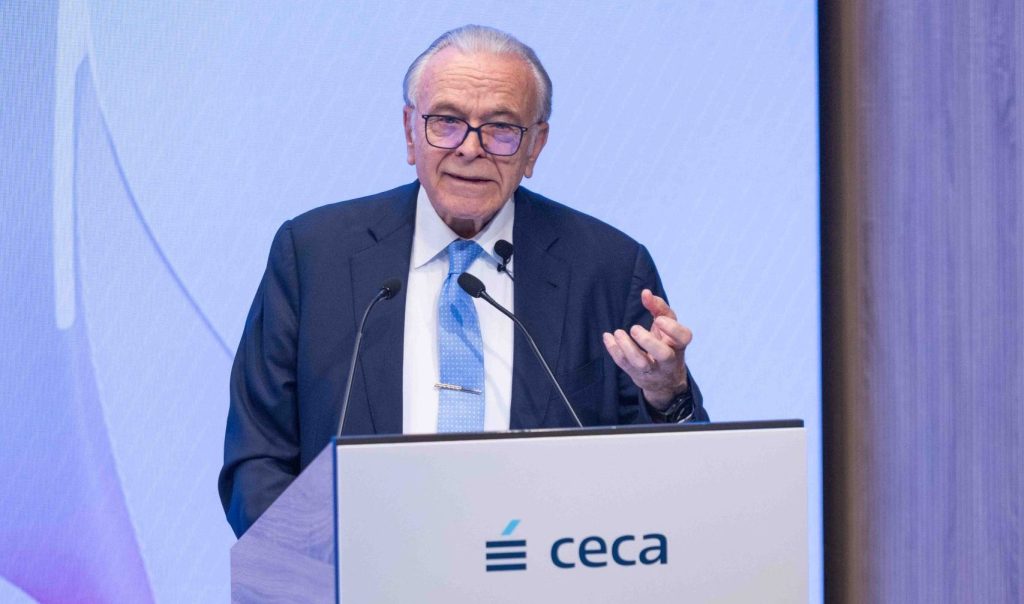
CECA held its 119th General Assembly today, presided over by Isidro Fainé, President of CECA, the “la Caixa” Foundation, and the World Savings and Retail Banking Institute (WSBI).
The meeting was attended by representatives from all the banks and savings banks forming the association, which represent approximately 40% of the Spanish financial system, as well as presidents and managing directors of the foundations affiliated with CECA, entities responsible for the design and implementation of the Social Work.
The President of CECA expressed during his speech: “Social Work, since our origins, has been the deepest hallmark of our sector. In 2025, total investment in Social Work in Spain surpassed 1 billion euros. This is an emblematic figure that confirms our entities as the largest private social investor in the country.”
Furthermore, he emphasized their commitment to the country’s economic development, especially in the current context: “In a world marked by geopolitical tension and accelerated technological change, our entities continue to champion the essential values we have always upheld. Because we are a banking sector that listens and supports. A banking sector rooted in the territory and committed to people. A banking sector that promotes financial inclusion. And we are also a sector perfectly prepared to lead the transformation of the banking business, based on four major competitive levers: technological innovation, sustainability and respect for the environment, quality of service, and enduring trust-based relationships with all stakeholders.”
On the international front, the President of CECA highlighted the solid collaboration and shared values with the European Savings Banks and Retail Banking Group (ESBG) and the World Savings and Retail Banking Institute (WSBI), underlining the importance of advancing towards a stronger, more competitive, and cohesive Europe.
The Improvement of Competitiveness, a Strategic Priority for Europe
The General Director of CECA, Antonio Romero, addressed the main challenges and opportunities in the sector in an international context marked by geopolitical tensions and the escalation of trade conflicts, highlighting the robustness of the Spanish financial system.
Romero emphasized: “the necessity to reinforce Europe’s competitiveness through regulatory simplification that allows for a more agile and efficient framework, capable of boosting economic growth and strengthening the ability of financial entities to support families and businesses.”
In reference to the evolution of Social Work, Romero celebrated the volume of investment, which exceeds 1 billion euros, a milestone that reinforces the sector’s commitment to social cohesion, promoting research and protecting the cultural and historical heritage of our country.
CECA has also renewed its commitment to improving financial literacy by allocating 5 million euros to Funcas Educa, consolidating this program as one of the sector’s main initiatives to promote financial education in society.
The Foundations of the CECA Sector Consolidate Their Role as Catalysts for Territories and Communities in Spain
Prior to the Assembly, the Commission of Foundations and Social Work took place, which is the main forum for exchanging experiences, cooperation, and study in the area of Social Work. It is a statutory and consultative body of the association that brings together representatives from banking and ordinary foundations in the sector.
This edition featured the participation of the President of Cáritas, Manuel Bretón, who presented an overview of social exclusion in our country, which served to frame the activity of the CECA foundations.
In 2025, the endowment for Social Work amounted to 1,004.92 million euros, through which 92,858 activities have been carried out, benefiting 35.9 million people, especially those belonging to vulnerable groups. Since the approval of the Law on Savings Banks and Banking Foundations in 2013, the accumulated investment exceeds 9.734 billion euros.
The Social Work carries out activities in multiple areas, aiming to address the main needs of society and focusing on the most vulnerable people.
Social Programs continue to be the main area of action, with an investment of 362.9 million euros (36.12% of the total), directed towards initiatives aimed at reducing poverty and inequality, as well as improving the living conditions of people. It is followed by Culture and Heritage, as the second area with the largest allocation, with 218.9 million euros (21.78%), focused on access to culture and the preservation of heritage.
Next, investments in Research stand out, with 151.8 million euros (15.10%), mainly centered on health and science projects, and in Local Development, Employment, and Entrepreneurship, with 120.3 million euros (11.97%), aimed at supporting SMEs, freelancers, and boosting the productive fabric.
The rest of the areas complete the social action of the sector, with 97.6 million euros in Education (9.71%), aimed at promoting training and financial culture; 27.5 million euros in Environment (2.73%), and 26 million euros in Sports (2.59%), contributing to sustainability, social cohesion and promoting healthy habits, as well as the integration of vulnerable groups and active aging.
Otras Notas de Prensa
La Obra Social de las entidades asociadas a CECA supera el umbral de los 1.000 millones de euros de inversión, una cifra que reafirma su rol como impulsoras del bienestar y el crecimiento económico
Los españoles consideran que las entidades bancarias son las instituciones mejor preparadas para protegerlos de las ciberestafas