


Spaniards believe that banking entities are the institutions best prepared to protect them from cyber fraud
- Banking entities generate the greatest trust among Spaniards to protect their data, according to a study by Sigma Dos.
- This perception is supported by the high security attributed to digital banking, the trust generated by entities in the protection of personal data, and the positive evaluation of their cybersecurity measures.
- Bizum has become the digital operation with which Spaniards feel safest.
- Digital fraud does not originate within the reinforced security perimeter of digital banking, but through other digital channels.
- Almost half of citizens acknowledge conducting digital transactions in a somewhat irresponsible manner or being aware of their potential danger.
In a context of high digitalization and a growing perception of the risk associated with cyberattacks, Spaniards trust banking entities against digital scams. Banking entities are the institution best prepared and that generates the most trust, with a score of 7.1 out of 10, among Spaniards of all ages to protect their personal data, ahead of the State Security Forces and Corps, technology companies, or public administrations.
This evaluation responds to the commitment that citizens attribute to the banking sector regarding the protection of their personal and financial data, and the high security of digital banking, according to the «Survey on Cybersecurity» conducted by Sigma Dos and presented this morning at the event ‘Cybersecurity, a Shared Challenge’, organized by the Spanish Banking Association (AEB) and CECA.
Thus, the vast majority of citizens believe that their bank cares about the security of their personal and financial data, and they feel secure when using digital banking. Moreover, they positively evaluate the cybersecurity measures taken by their institution to protect their confidential data.
Spaniards highly value the protection of personal data offered by banks, with a score of 7.3, showing an increase of nearly five percentage points compared to 2023, in the number of Spaniards who feel safe (very or quite) when operating with digital banking. Bizum has become the digital operation with which Spaniards feel safest.
Digital fraud does not originate within the reinforced security perimeter of digital banking, clearly perceived by users, but through other more vulnerable digital channels: 65% of Spaniards acknowledge having received fraudulent emails or SMS, 50% deceptive calls, and 25% contacts via social media. Those aged 65 and over are the age group with the lowest incidence of cyber fraud.
Furthermore, the study reveals that digital banking is ingrained as an everyday service in Spanish society, as 83.5% of the population uses it. In fact, as explained by the General Director of Sigma Dos, Rosa Díaz, «its use is above other digital transactions such as procedures with public administrations or access to free content.»
Six out of ten Spaniards acknowledge that they do not have sufficient knowledge in cybersecurity, although a very similar percentage believes that they take adequate protection measures. This means that many citizens think they are protected when, in practice, it is not always the case: more than a quarter do not take sufficient measures to protect their security, and more than a third of young people aged 18 to 29 mistakenly think that the bank can request access codes or passwords via SMS, email, or WhatsApp.
These data underscore the importance of continuing to promote initiatives like those undertaken by the banking sector in digital training and financial education: platforms such as Aula Financiera y Digital, which has a dedicated cybersecurity space, with immediate access advice and initiatives, or awareness campaigns, such as ‘In the digital realm, take care equally,’ deployed on social media and in the media.
The president of the Spanish Banking Association (AEB), Alejandra Kindelán, emphasized that «cooperation between authorities, companies, and institutions is essential. No one can face this challenge alone«. For his part, the General Director of CECA, Antonio Romero, explained that «digitalization is a beneficial transformation for the economy, but it entails a series of challenges. Cybersecurity is crucial for financial stability. We need to ensure trust in cybersecurity for economic advancements to continue«.
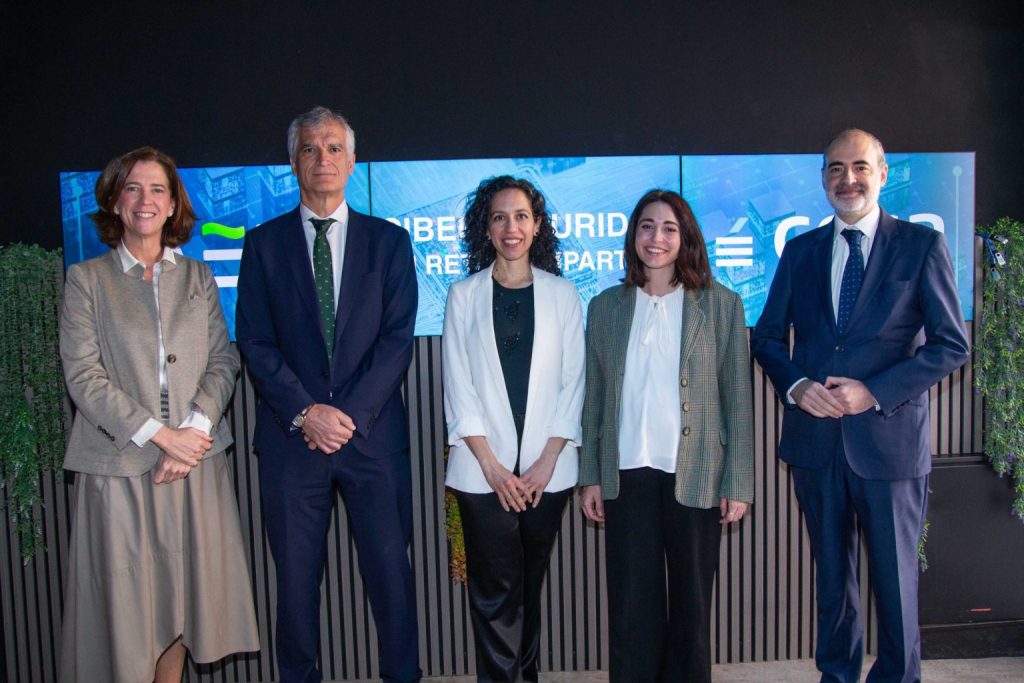
The event also featured the participation of Ana Puente, Deputy Director General of Sustainable and Digital Finance; Carlos Sanz Luengo, Director of Payment Systems at the Bank of Spain; Miriam Verde, Secretary General of INCIBE; Rosa Díaz, General Director of Sigma Dos; and Elisa Espinosa, Research Director at Sigma Dos.
Otras Notas de Prensa
La Obra Social de las entidades asociadas a CECA supera el umbral de los 1.000 millones de euros de inversión, una cifra que reafirma su rol como impulsoras del bienestar y el crecimiento económico
Los españoles consideran que las entidades bancarias son las instituciones mejor preparadas para protegerlos de las ciberestafas