



Banking financing capacity would increase by 2 trillion euros with regulatory simplification

- The Spanish Banking Association (AEB), CECA and the National Union of Cooperative Banks (Unacc) have presented the report ‘Banking for a Stronger Europe. Simplification, integration and competitiveness’ in Brussels.
- The implementation of the eight measures set out in the document would enable GDP growth of 2.7% in the Eurozone and the creation of 2 million jobs.
- The goal is not deregulation, but to make financial stability objectives compatible with more efficient, proportionate and coherent regulation and supervision, and with deeper European financial integration.
Brussels, 23 June 2026. The simplification of European banking regulation would increase financing capacity by 2 trillion euros, according to the report ‘Banking for a Stronger Europe. Simplification, Integration and Competitiveness’, produced by the Spanish Banking Association (AEB), CECA and the National Union of Cooperative Banks (Unacc) in collaboration with EY.
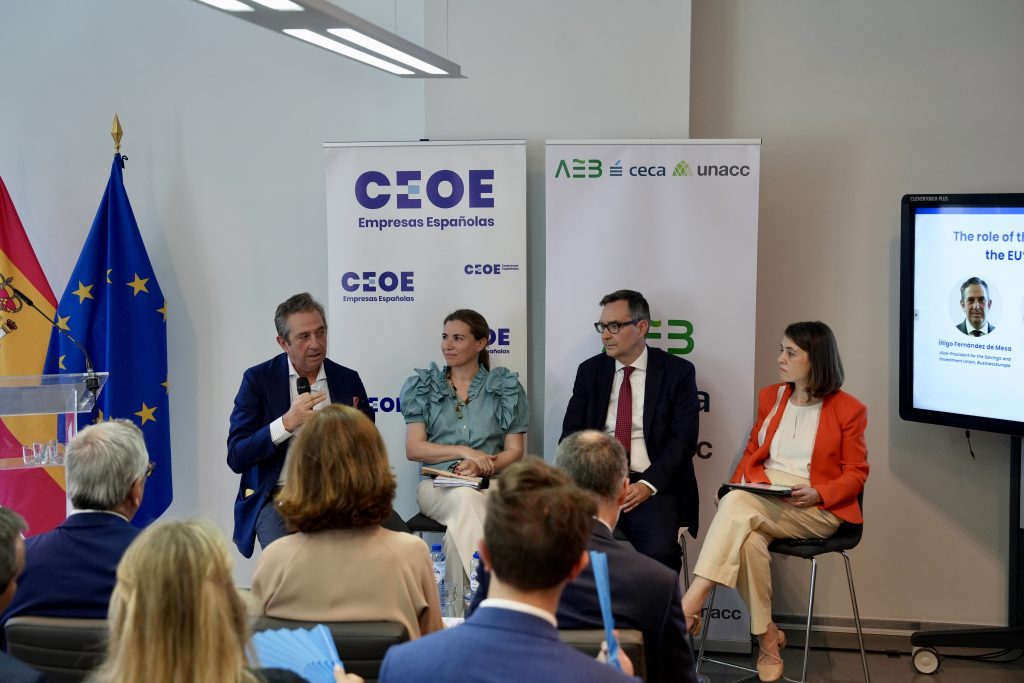
The document, presented this evening at the «Competitiveness for Growth» conference, sets out a diagnosis of the current context, eight measures for a more competitive banking sector, and a detailed assessment of the impact of the banking regulation simplification agenda.
The implementation of these eight measures would enable GDP growth of 2.7% in the Eurozone and the creation of 2 million jobs. In addition, the completion of the Banking Union would contribute between 40 and 115 billion euros per year to the European Union’s GDP, while the development of an effective Capital Markets Union would have an impact of between 45 and 120 billion euros.
Boosting the competitiveness of the banking sector is a lever for economic growth, given the central role of banks in meeting the European Union’s investment needs –which exceed 1.2 trillion euros per year– to become a benchmark for progress, innovation and prosperity.
AEB, CECA and Unacc have argued that the simplification agenda does not mean deregulation, but rather making financial stability objectives, consumer protection and operational resilience compatible with more efficient, proportionate and coherent regulation and supervision, and with deeper European financial integration.
The President of AEB, Alejandra Kindelán, stated that «Europe needs to regain competitiveness. It needs to transform knowledge into innovation, and innovation into industry. And for all of this, the banking sector is a cornerstone. A more efficient regulation and supervision means more credit, more investment, and better financing conditions. And that has a direct impact on households and firms».
«We are facing a growing problem of regulatory complexity. While robust rules are essential for financial stability, excessive length and intricacy can reduce transparency, increase compliance costs, and ultimately hinder the capacity of banks to finance the economy effectively. Europe would make a serious mistake if it fails to address the competitiveness challenge decisively», said the Managing Director of CECA, Antonio Romero.
The Secretary General of Unacc, Cristina Freijanes, expressed expectations regarding the measures to be reflected in the Commission’s report, underlining the importance of their effective implementation for the real economy and stressing the need to develop the principle of proportionality for Spanish cooperative banks.
The event, held at the CEOE Delegation in Brussels, also featured José Carlos García de Quevedo, Financial Services Counsellor at the Permanent Representation of Spain to the EU; Íñigo Fernández de Mesa, Vice-President for the Savings and Investment Union at BusinessEurope; Mario Delgado, Partner at EY and lead author of the report ‘Banking for a Stronger Europe’; María Abascal, Director General of AEB; and Luis Teijeiro, Deputy Managing Director of CECA.
Otras Notas de Prensa
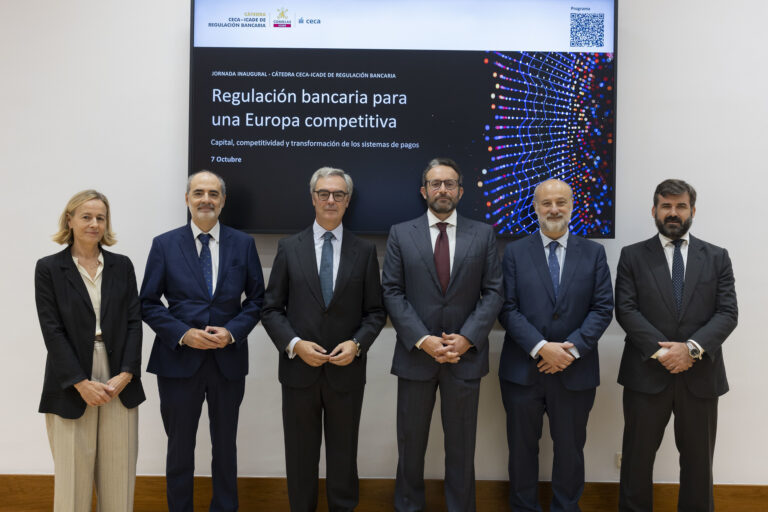
CECA y la Universidad Pontificia Comillas presentan la primera Cátedra de Regulación Bancaria en España

Las entidades de crédito destacan su rol y contribución en la lucha contra el blanqueo de capitales