

The Banking Sector Promotes Public-Private Collaboration for the Prevention of Money Laundering and Terrorist Financing
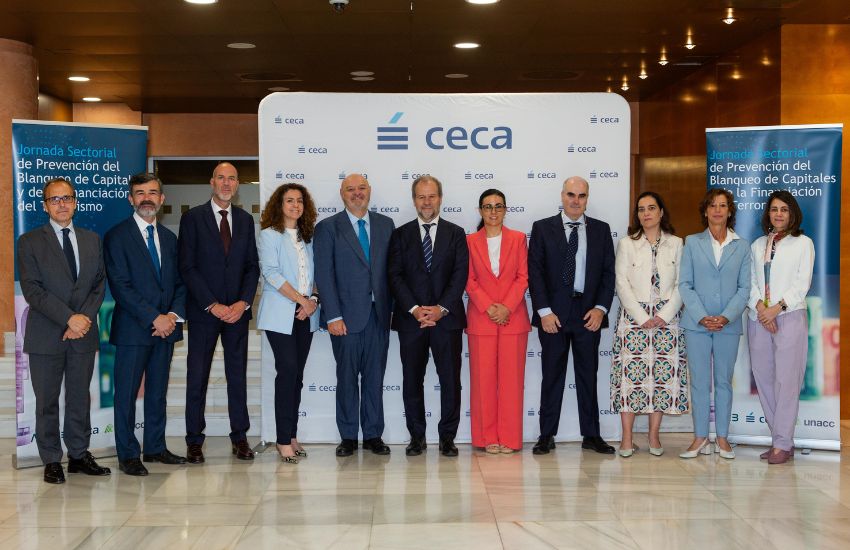
Once again, CECA, AEB, and Unacc, in collaboration with Sepblac, have organized the seventh Sectoral Conference on the Prevention of Money Laundering and Terrorist Financing.
The meeting brought together prominent representatives from the General Directorate of the Treasury and Financial Policy, Sepblac, DGSFP, the Bank of Spain, CNMV, and credit institutions and sector associations.
The conference aims to promote dialogue between the private and public sectors to address the main innovations and topics of interest in AML/CFT.
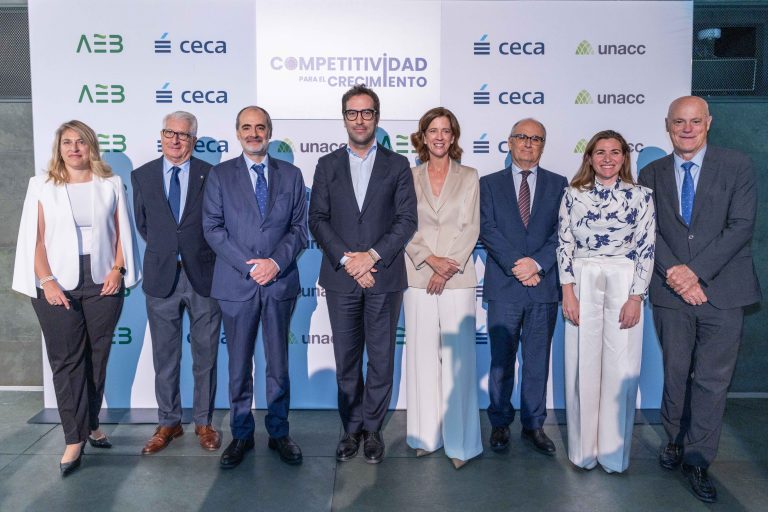
The banking associations CECA, AEB, and Unacc, in collaboration with Sepblac, have organized, for the seventh consecutive year, the Sectoral Conference on the Prevention of Money Laundering and Terrorist Financing, which brings together leading experts in this field from Spain’s banking sector, supervisory bodies, and regulatory authorities.
The meeting, held in CECA’s auditorium, aims to boost dialogue between the private and public sectors in the area of money laundering and terrorist financing prevention. Credit institutions in Spain stand out particularly for their diligence and compliance in collaborating with the authorities in the fight against these crimes, a fact recognized by reports from international specialized organizations.
Representatives from nearly all the credit institutions affiliated with the organizing associations, all specialized in AML/CFT, attended the annual meeting. This new edition highlighted the main regulatory developments, the latest risk typologies and trends in money laundering, supervisory approaches, and other current topics such as the impact of the new MiCA regulation and the implementation of the new European regulatory package, emphasizing the impact of the creation of the new European authority, the Anti-Money-Laundering Authority (AMLA), which poses significant challenges for all of Europe.
The event was inaugurated by Lourdes Jiménez Ramos, Deputy Director General of Inspection and Control of Capital Movements at the Treasury, who emphasized all the updates regarding international financial sanctions, the impact of the new European regulation relating to the transposition of the Fund Regulation, and the new European authority AMLA, as well as its impact on Spanish prevention legislation, in terms of both the legislative package and the new FATF standards.
Subsequently, three round tables were held focusing on supervision, financial intelligence, and regulation, respectively, with participants from both the public and private sectors.
The first round table, presented and moderated by Raquel Cabeza, Corporate Director of Risks and Compliance at CECA, was dedicated to updates and analysis of inspections conducted in the area of AML/CFT by various supervisors. Participants included Juan Casillas, head of the Banking, Insurance, and Securities Inspection Unit at Sepblac; Federico Cabañas, head of the Money Laundering Prevention Group at the General Directorate of Supervision of the Bank of Spain; José María Díaz Taboada, head of the Anti-Money Laundering Unit at CNMV; and Carolina Lameiro Medina, coordinator of the General Sub-Directorate of Inspection at DGSFP.
The second round table, which addressed updates and challenges in financial intelligence, was moderated by Cristina Freijanes, Secretary General of Unacc. The speakers, Adolfo Bescós, head of the Operational Intelligence Division at Sepblac; Juan Carlos Calleja, head of the Strategic Intelligence Division at Sepblac; Juan Alfonso Domenech, Compliance Director at ABANCA; and Francisco Sabe, AML Officer of Financial Crime Prevention at BBVA, discussed various topics such as new crime typologies associated with money laundering or the innovative public-private exchange protocol (IPP) against money laundering and fraud, emphasizing the importance and necessity of continuing to design coordination instruments between authorities and obligated subjects due to the effectiveness they can bring to the prevention of criminal activities.
The third and final round table, moderated by María Peco, Legal Affairs and Money Laundering Prevention Advisor at AEB, focused on current regulatory issues both in Spain and in the European Union, such as the upcoming European legislative package and the future implementation in Spain of the Markets in Crypto-Assets Regulation (MiCA). Other relevant matters such as the new obligation to declare virtual IBANs and the recently published report on sanctions imposed on obligated subjects were also discussed. Participants included Sergio Tresguerres, Deputy Director of the General Sub-Directorate of Inspection and Control of Capital Movements at the Treasury; José María Díaz Taboada, head of the Anti-Money Laundering Unit at CNMV; Antonio Paredes, head of the Non-Financial Entities Inspection Division and Technical Secretariat at Sepblac; and Gemma Serrano, from the Anti-Money Laundering Unit of Caja Rural del Sur.
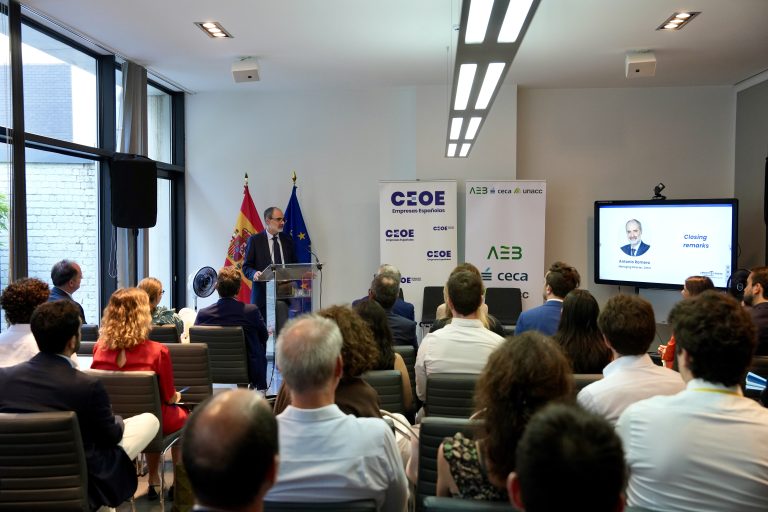
The sectoral conference concluded with a presentation by Pedro Comín, director of Sepblac, who summarized the main topics addressed in each of the tables and highlighted each of the experts. “Public-private collaboration is key, as well as coordination among supervisors. An example can be seen in the usefulness of these sectoral conferences to collectively ‘close doors’ to criminal organizations,” he explained.