


The entities associated with CECA advocate at ARCO for the value of their artistic and cultural heritage
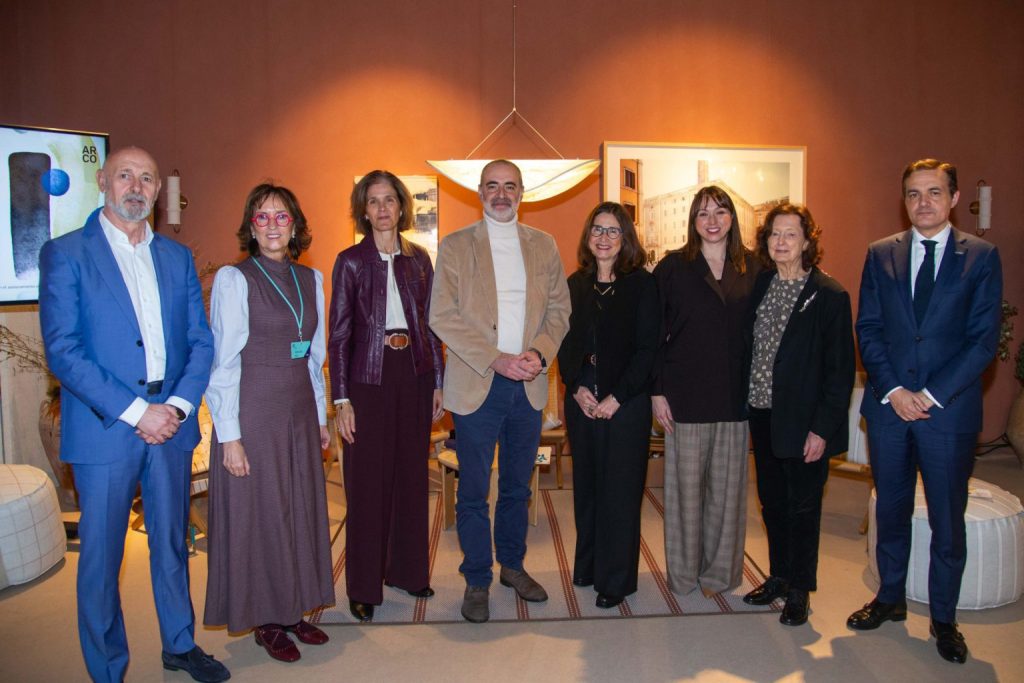
Representatives from ABANCA, Fundación ‘la Caixa’, Fundación Ibercaja, Fundación Mediterráneo, and FUNDOS shared at ARCOmadrid the role of the entities in the conservation of heritage and the promotion of contemporary creation
The CECA sector allocated 172 million euros to culture and heritage in 2024, reaching over 11 million beneficiaries
The entities and foundations of the CECA sector have emphasized the role they play in the conservation of artistic heritage, support for contemporary creation, and access to culture throughout the territory during a meeting held at ARCOmadrid last weekend.
Under the title Collections that transcend. A century of culture and commitment from CECA entities and foundations, the meeting brought together representatives from five entities in the sector — ABANCA, Fundación ‘la Caixa’, Fundación Ibercaja, Fundación Mediterráneo, and FUNDOS — in a public conversation to reflect on the social value of institutional collecting and the role of CECA entities in the Spanish cultural ecosystem.
The round table featured Fernando Filgueiras (ABANCA), Mayte Ciriza (Fundación Ibercaja), Nimfa Bisbe (Fundación ‘la Caixa’), Carmen Morales (Fundación Mediterráneo), and Raúl Fernández Sobrino (FUNDOS).
During the session, the speakers shared some of the most relevant projects their institutions are currently developing related to the conservation, activation, and dissemination of their artistic collections, as well as their commitment to access to culture, artistic education, and the decentralization of cultural offerings.
“The contribution of CECA entities to the world of art manifests in many ways: through promotion, creation, and dissemination, but especially through their extensive network, as they have more than 700 centers for art dissemination that are a living heritage of our territories. Our contribution to culture is part of a broader context, that of our Social Work, in which CECA entities invested over 900 million euros in 2024. Of that, around 172 million went to the promotion of culture and art, demonstrating that this commitment is a structural element of our social responsibility,” explained Antonio Romero, General Director of CECA.
Collections that generate cultural and social value
For their part, the speakers highlighted how CECA sector entities manage significant collections of art and heritage that, besides being preserved and researched, are activated through exhibitions, educational programs, cultural centers, and projects supporting artists.
First, Fernando Filgueiras, coordinator of the Art Collection of ABANCA and head of Sustainability at Afundación, emphasized the role of corporate collections as tools to connect culture, territory, and society.
“The ABANCA Collection is a living heritage that the bank is honored to safeguard and, above all, has the responsibility to share with the public through various exhibitions, but also through the multiple channels that technology offers us,” he added.
Meanwhile, Mayte Ciriza, director of Culture at Fundación Ibercaja, highlighted the historical role of the institution in cultural promotion and announced some key milestones for the coming year.
“Fundación Ibercaja will celebrate its 150th anniversary in 2026 and reaffirms culture as the axis of transformation and development of the territory. The opening of the new Goya Museum in October represents a significant contribution to art and to the international projection of Zaragoza, with a major exhibition dedicated to Goya, a precursor of modern art. Additionally, the Fundación Ibercaja Award for Young Painting, a national benchmark, promotes emerging talent and strengthens our commitment to contemporary creation,” she stated.
In the case of Fundación ‘la Caixa’, their collection manager emphasized the trajectory of their contemporary art collection, one of the most significant in the European realm.
“Our Collection is celebrating forty years of history,” stated the director of the Contemporary Art Collection, Nimfa Bisbe. “Since its establishment in 1985, it has always had a clear public and international projection, coupled with an intense exhibition activity, which we will soon complement with the ArtHub project, the new headquarters we are building in L’Hospitalet (Barcelona), designed to preserve, activate, and share the Collection and aimed at enhancing its cultural and social impact,” she revealed.
Additionally, Carmen Morales, director of Fundación Mediterráneo, focused on the heritage value of their collection and its public dissemination.
“The Contemporary Art Collection of Fundación Mediterráneo comprises works from essential creators of Spanish art from the democratic Transition to the beginning of the 21st century. Our presence at ARCO, alongside CECA, marks the first opportunity to present nationally this part of our heritage built with rigor and public vocation, and is thus a very special occasion for us,” she shared.
Likewise, Raúl Fernández Sobrino, director of Culture and Heritage at FUNDOS, spoke about the scope and future projection of the heritage managed by his foundation.
“For FUNDOS, it has been a great satisfaction to present our collections at the round table convened by CECA, in which various organizations from our sector participated. Our Foundation has collections of fine arts, decorative arts, and ethnography that surpass 14,000 pieces. For their management, we have just incorporated into our infrastructure FUNDOS Studio, a pioneering logistics center for cultural heritage in Castilla y León,” he explained.
CECA: a cultural network with presence throughout the territory
The meeting also served to highlight the dimension of the cultural ecosystem formed by the entities and foundations of the CECA sector, a network that combines historical heritage, artistic collections, cultural centers, and educational programs spread across the country.
In 2024 alone, the cultural and heritage area concentrated over 172 million euros in investment, materialized in 25,987 cultural activities that reached more than 11 million beneficiaries.
These figures reflect the sustained commitment of CECA entities and foundations to culture, heritage, and access to knowledge, as well as their role as one of the main private drivers of cultural life in Spain.
Others Press Releases
Credit Institutions Highlight Their Role and Contribution in the Fight Against Money Laundering

The CECA sector doubles its investment in financial education, exceeding 6 million euros in 2025
