


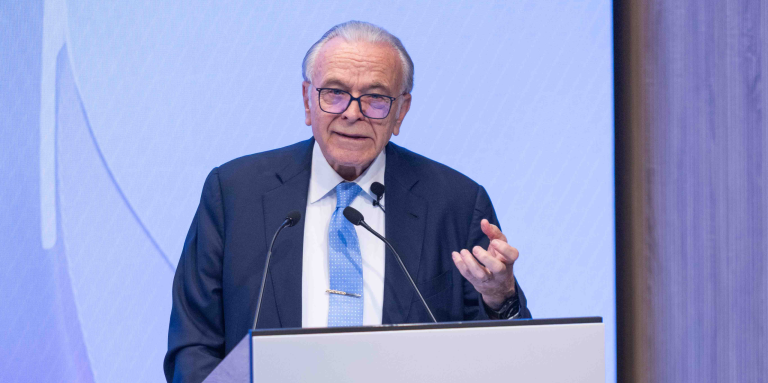
CECA gathers in Madrid the Accounting and Auditing Committees and Sustainable Finance of the European Association of Savings Banks and Retail Banks
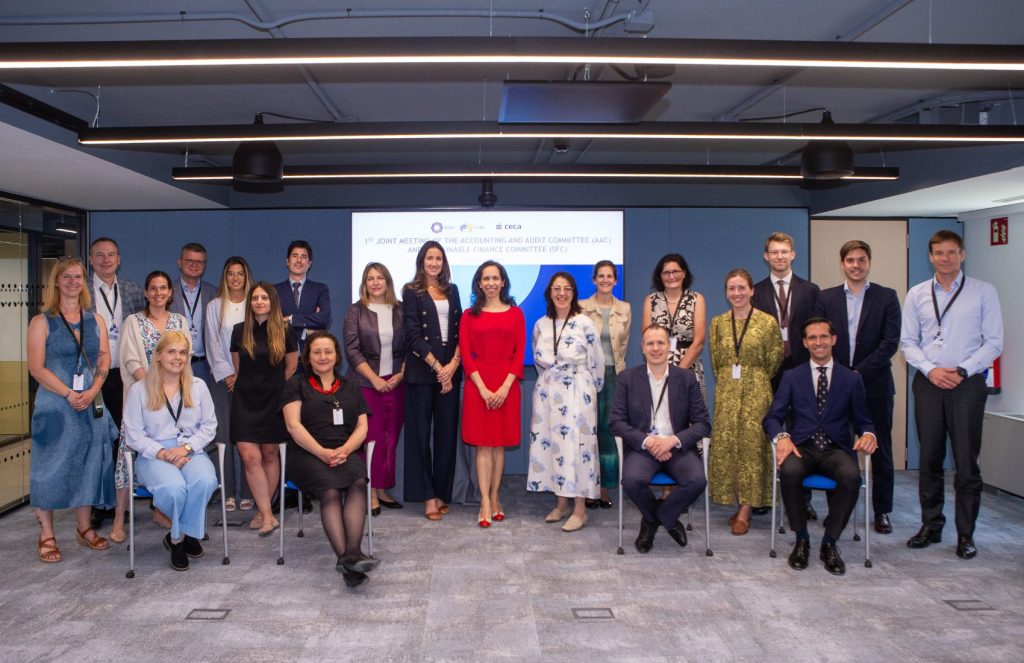
Ana Puente Pérez, Deputy General Director of Sustainable and Digital Finance of the Ministry of Economy, Trade and Industry of Spain, participated in the meeting, which included more than 25 representatives from different associations of European countries.
The Accounting and Auditing Committees and the Sustainable Finance Committee met in Madrid to address the major challenges facing European banking regarding accounting regulation and sustainability.
The event analyzed key reforms in international accounting, the treatment of ESG loans, and the integration of climate risk into financial statements.
Madrid hosted the two-day meeting organized by CECA and the European Association of Savings Banks and Retail Banks (ESBG). The forum tackled the main challenges of the financial industry in accounting and regulation of sustainable finance. Ana Puente Pérez, Deputy General Director of Sustainable and Digital Finance of the Ministry of Economy, Trade and Industry of Spain, participated in the meeting.
The session was dedicated to analyzing the Omnibus Package for regulatory simplification in sustainability matters, presented by the European Commission at the beginning of the year, addressing modifications in the Directive on Corporate Sustainability Reporting (CSRD) and the Directive on Sustainability Due Diligence (CSDDD), aimed at incorporating environmental and social criteria into the value chain.
In her intervention, directed to the members of both Committees, she stated, “The climate or environmental objectives set by the European Union are not being questioned; the Green Deal remains in force. Neither is the role we want the financial sector to have in channeling resources towards sustainable activities being questioned. What we are reviewing is how to achieve those objectives, identifying if compliance obligations jeopardize the competitiveness of companies or financial entities.” Additionally, she emphasized, “We support the simplification exercise proposed by the European Commission, to improve the legal framework for sustainable finance.”
Sustainability, the central axis of the European debate on the future of the financial sector
The day started with the 60th meeting of the Accounting and Auditing Committee (ACC), which focused on the latest developments in international accounting regulations, with particular attention to the growing role of financial sustainability in an increasingly demanding regulatory environment.
The meeting addressed a wide range of key topics related to the evolution of international accounting standards, including the proposals of the International Accounting Standards Board (IASB) on business investments, provisions, hybrid financial instruments, and business combinations.
Initiatives to standardize financial statements, better integrate climate risks addressing the developments in Dynamic Risk Management (DRM), and advance transparency on sustainability were also reviewed. All with the aim of adapting accounting frameworks to the new financial, regulatory, and environmental challenges facing the European banking sector.
The Sustainable Finance Committee held its 8th ordinary meeting, with an agenda focused on the recent developments of the EU green taxonomy, the review of the SFDR Regulation, and the new guidelines on ESG labeling in financial products. Other novel topics such as ESG-focused defense financing, green mortgages, and climate risk management within the supervisory framework of the ECB and EBA were also discussed. These sessions reinforce the role of ESBG as a reference forum for the practical integration of sustainable finance in European retail banking.
CECA is a member of the ESBG and WSBI (World Savings and Retail Banks Institute), an organization that represents 6,400 savings banks and retail banks serving more than 1.7 billion customers in 78 countries.
Others Press Releases
Spaniards believe that banking entities are the institutions best prepared to protect them from cyber fraud

The entities associated with CECA advocate at ARCO for the value of their artistic and cultural heritage