

The CECA Social Action Committee Promotes Culture for Social Development
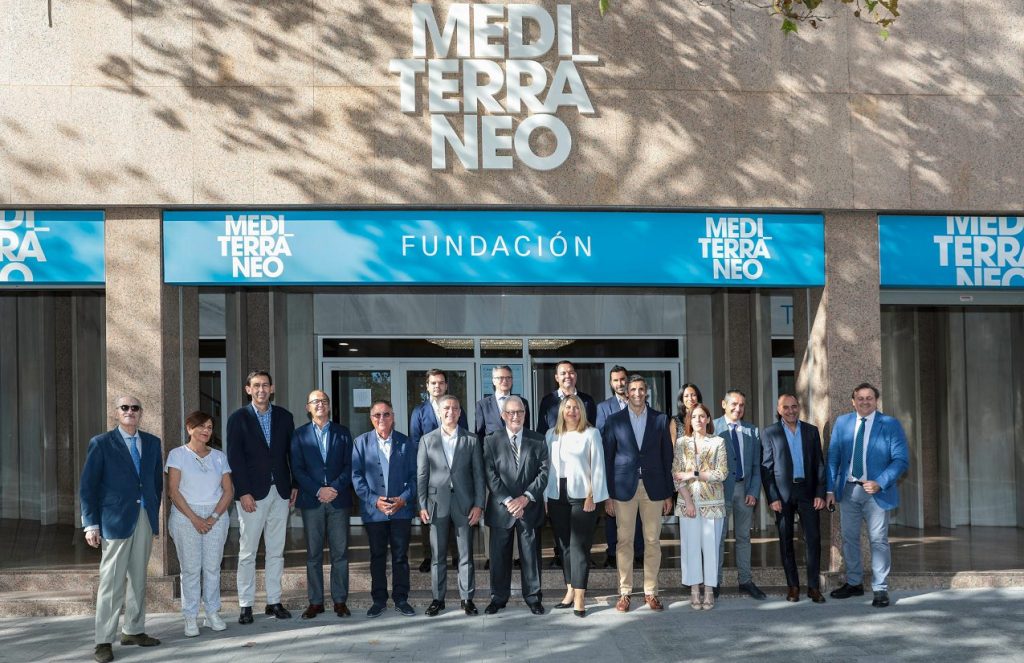
The foundations and savings banks associated with CECA gathered at the Fundación Mediterráneo headquarters on October 10 and 11 to discuss Social Action in Spain.
Culture as a tool for social inclusion, the promotion of financial education in educational curricula, and the importance of establishing alliances were the topics analyzed.
The CECA sector, composed of more than thirty foundations known for their philanthropic character and nine credit institutions, held its Executive Committee on Social Action and Foundations on October 10 and 11 at the headquarters of the Fundación Mediterráneo in Alicante. This annual meeting brings together the foundations and savings banks that are part of the CECA association to exchange best practices, assess actions taken in the field of Social Action, and reflect on the sector’s priorities for the coming months.
This year, the Committee focused on the work done by the working groups, paying special attention to developing cultural projects and exploring new revenue streams to fund more Social Action programs. The importance of financial education was also highlighted, coinciding with the celebration of Financial Education Week.
Promoting Social Development Through Culture
The opening of the Committee was conducted by Luis Boyer, president of Fundación Mediterráneo, the host entity, and Rafael Barbero, president of the Executive Committee on Social Action and Foundations and general director of Fundación Caja de Burgos, and was attended by Rafael Simón, general secretary of Fundación Mediterráneo.
Throughout the days, attendees had the opportunity to visit the exhibition “De par en par,” an initiative that brings culture closer to society through a carefully curated selection of valuable items from the Archive of Fundación Mediterráneo, viewed from a contemporary, social, committed, educational, and transversal perspective. Additionally, recognizing the importance of promoting financial culture among the youth, they attended the lecture “Pending Subject: Financial Education in Mandatory Education,” presented by Elisa Chuliá, senior researcher in Social Studies at Funcas. Throughout her presentation, she discussed the Funcas 2024 Survey on Financial Culture and Education, whose results indicate that 90% of Spanish families with children in secondary education believe it is necessary to increase the emphasis on financial education during that school stage.
Among the key agenda items, special emphasis was placed on the work carried out by the working groups. On one hand, the progress made in generating and exploiting cultural content was analyzed, and on the other, there was reflection on highlighting the various programs and activities that CECA sector entities carry out in each area of Social Action.
The Committee highlighted the important role of culture as a transformative element of society and a driver of social cohesion. Preserving, promoting, and disseminating culture is an unwavering commitment of the entities associated with CECA, aiming to foster social inclusion. Notingly, Culture and Heritage is the area of Social Action that has the most significant impact on society. Almost three out of ten initiatives in the CECA sector’s Social Action are focused on promoting culture and heritage conservation, having reached 128 million beneficiaries over the past ten years. Since 2014, Social Action investment in this area has totaled nearly 1.483 billion euros, which in 2023 corresponds to 77% of the budget allocated to museums in the General State Budgets.
Furthermore, CECA and its associated entities are aware that alliances are fundamental; therefore, they believe that collaboration between the public and private sectors is an essential cooperation lever to promote transformative projects that create a positive impact on society. Under this premise, representatives of the foundations and savings banks visited the headquarters of the Provincial Council of Alicante.
The meeting included participation from representatives of CECA and Funcas, as well as extensive involvement from the associated foundations and savings banks: Fundación Mediterráneo, Fundación Caja de Burgos, FUNDOS, Fundación CAI, Fundación “la Caixa,” Fundación Caja Navarra, Fundación Círculo, Fundación Caja Extremadura, Fundación Ibercaja, Fundación Ávila, Fundación La Caja de Canarias, Fundación Unicaja, Fundación Caja Rioja, and Caixa Ontinyent.
CECA Sector’s Social Action, Unceasing Efforts for the Welfare of Society
The Social Action driven by entities associated with CECA has established itself as a key player in the educational, scientific, cultural, economic, and social progress of Spain. As the largest private social investor in our country, it has demonstrated its essential role and relentless efforts in favor of societal welfare and equal opportunities for vulnerable groups.
In 2023, the entities associated with CECA allocated more than 851 million euros to Social Action projects, an increase of 6.37% compared to the previous year; of the total investment, 58.8% was directed towards specific groups. This funding supported 80,964 activities that reached more than 30 million beneficiaries in the areas of Social Action, Education and Research, Culture and Heritage, Local Development, Employment Creation, and Sports, Leisure, and Environment.
Over the past decade, Social Action has played an important role. Thus, since the publication of Law 26/2013, of December 27, on Savings Banks and Banking Foundations, the investment has reached 7.823 billion euros, with 930,002 activities developed and an annual average of beneficiaries of 31,632,304.
The CECA Sector Supports Financial Education with Over 6,000 Activities in 2023
Enhancing the financial culture of society, especially among the most vulnerable individuals, is a shared commitment by all entities affiliated with CECA (an association of savings banks, banks created by them, and foundations), which include: CaixaBank, Kutxabank and Cajasur Banco, ABANCA, Unicaja, Ibercaja Banco, Caixa Ontinyent, Colonya Pollença, and Cecabank. Evidence of this is the 17.9 million euros that have been allocated in the last six years to financial education programs, of which 12.79 million pertains to the ‘Funcas Program for Stimulating Financial Education (Funcas Educa).’
This investment has facilitated the development and strengthening of financial education in Spain, benefiting various groups and contributing to sustainable development. For 2024, the allocation for Funcas Educa has reached 2.5 million euros.
Today, financial education is more important than ever. The entities associated with CECA, aware of this, make numerous programs related to this area available to society, favoring the stability of the financial system, financial inclusion, and social cohesion. In 2023, 6,362 activities were conducted, representing an increase of more than 50% compared to the previous year.
Others Press Releases
Banking financing capacity would increase by 2 trillion euros with regulatory simplification
Simplifying regulation would increase the banking sector’s financing capacity in Spain by €250 billion