



99.4% of the population in Spain has access to face-to-face banking services in their municipality
- Since 2021, the population without access to in-person services has decreased by 55.1%, according to Ivie.
- Spain already has more than 83,900 points of physical access to banking services.
- The measures of the Roadmap for Financial Inclusion have benefited 361,999 people.
- The banking sector reaffirms its commitment to accessibility through the comprehensive adaptation of all available channels.
Madrid, July 24, 2026. Financial inclusion is advancing in Spain, which already has more than 83,900 physical access points to banking services, covering 99.4% of the population.
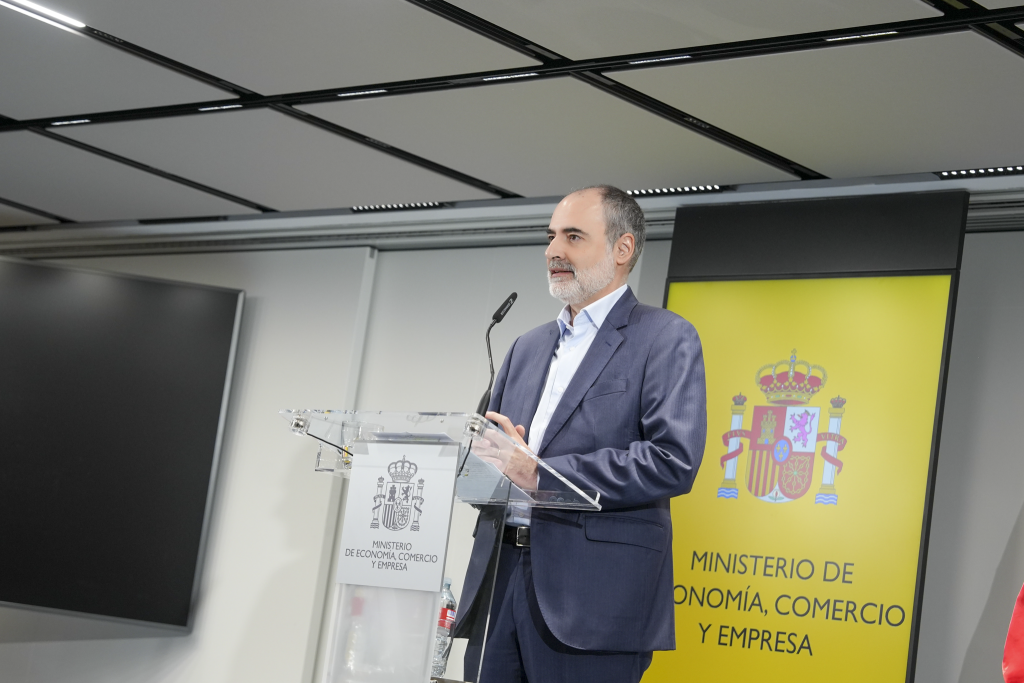
The Spanish Banking Association (AEB), CECA, and the National Union of Credit Cooperatives (Unacc) have held a meeting with the First Vice President and Minister of Economy, Trade, and Business, Carlos Cuerpo, where they presented these advances in financial inclusion in Spain.
Since 2021, the population without access to in-person services has decreased by 55.1%, and by 35.9% in the case of municipalities without a physical access point, according to the ‘Report on Financial Inclusion in Spain’, prepared by Ivie. The measures of the Roadmap have benefited 361,999 people and 1,158 Spanish municipalities.
In the case of municipalities with more than 500 inhabitants, once the ongoing tenders are completed, only six municipalities (3,392 inhabitants) will remain unresolved, compared to the 243 identified in 2021. Thus, the adopted measures cover 97.5% of the places and 98.4% of the inhabitants without access to in-person services detected in 2021.
The Ivie report emphasizes that Spain has the third densest network of offices in the European Union and the fourth densest network of offices and ATMs in the eurozone.
The banking sector has detailed its firm commitment to accessibility, beyond compliance with regulations, through the significant mobilization of resources and initiatives across all available channels, considering it a strategic and transversal priority.
Specifically, the entities have advanced in the comprehensive adaptation of their offices, ATMs, digital channels, products, and customer service to ensure an autonomous, safe, and accessible experience for all users, especially for the most vulnerable groups.
In the field of financial education, the associations have presented the balance of ‘Financial and Digital Classroom’, which already has more than 700 initiatives. In the last year, the platform has undergone the largest educational expansion since its launch in 2022, with 157 new initiatives, representing a 25% increase.
‘Financial and Digital Classroom’ offers an ad hoc space on cybersecurity, with a decalogue, guides, and more than 120 expert tips. In addition, the banking sector is promoting information and awareness campaigns on cybersecurity, alongside the efforts of the entities to strengthen the cybersecurity of their systems.
Banking entities are the institutions that generate the most trust among Spaniards to protect their data, scoring 7.1 out of 10, ahead of the State Security Forces and Corps, technology companies, or public administrations, according to a study by Sigma Dos. The Financial Inclusion Forum has also featured the participation of the Ombudsman, Ángel Gabilondo, the president of Correos, Pedro Saura; Carlos San Juan, and representatives from the Bank of Spain, ONCE, the Spanish Committee of Representatives of Persons with Disabilities (Cermi), the Financial Users Association (Asufin), and the Platform of Seniors and Pensioners (PMP).
Others Press Releases

Credit Institutions Highlight Their Role and Contribution in the Fight Against Money Laundering

The CECA sector doubles its investment in financial education, exceeding 6 million euros in 2025
