


The National Police Intensifies Public-Private Collaboration in the Fight Against the Financing of Terrorism and Radicalism

This morning, various experts from the National Police, the public sector, and private entities have gathered in Madrid as key actors in the prevention and fight against the financing of terrorism and radicalism.
The event, attended by more than 200 guests, has been organized by the General Information Commission as part of its commitment to investigating and neutralizing serious threats to National Security.
This third edition has been sponsored by TRM Labs and collaborated with CECA, AEB, UNACC, and ASNEF.
As a new feature compared to previous editions, the fight against New Destabilizing Threats to Domestic Security (NADSI) has been addressed.
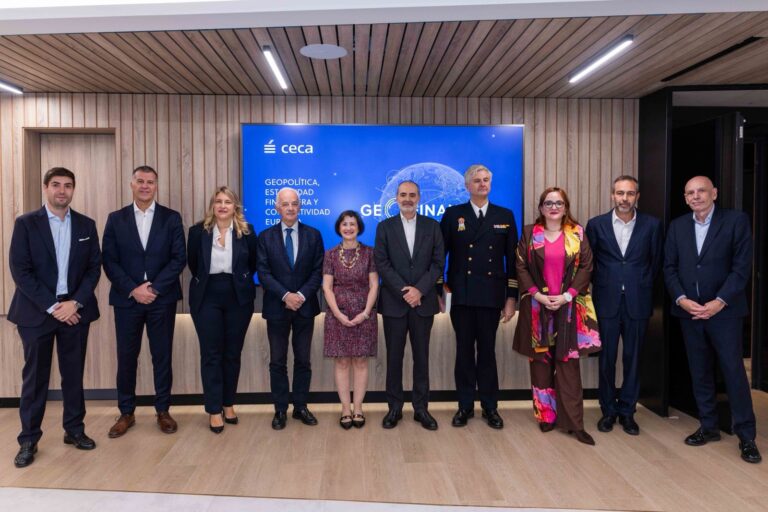
The National Police has organized the III National Congress on Public-Private Collaboration in the Fight Against the Financing of Terrorism and Radicalism in Madrid, at the CECA auditorium. The meeting has brought together numerous specialists in the prevention, detection, and fight against terrorist financing. The day has been organized by the General Information Commission, with the collaboration of the association of retail banks and savings banks (CECA), the Spanish Banking Association (AEB), the National Union of Credit Cooperatives (UNACC), and the National Association of Financial Credit Establishments (ASNEF), and sponsored by TRM Labs.
Reinforcing the Public-Private Link
In the framework of this theme, various national working groups have promoted the celebration of this congress with the objective of strengthening ties with entities involved in the prevention and detection of terrorism financing and radicalism. This third edition has addressed topics such as the financing of the proliferation of weapons of mass destruction, terrorism financing and international sanctions, the race for compliance in crypto-assets, new destabilizing threats to domestic security (NADSI), and illicit radicalism. The speakers participating in this meeting, experts in the field, represent the various organizations and entities, both public and private, that play an essential role in this fight against terrorism.
The General Commissioner of Information of the National Police, Javier Antonio Susín Bercero, inaugurated the session alongside Carla Díaz Álvarez de Toledo, Director General of the Treasury and Financial Policy, and Pedro Comín Rodríguez, Director of SEPBLAC. All highlighted the importance of collaboration between the different entities, which is fundamental for preventing the issues addressed.
Subsequently, Cristina Freijianes Presmanes of UNACC moderated the first panel, which discussed the financing of the proliferation of weapons of mass destruction, featuring experts from the General Information Commission, the Deputy Directorate of Customs Surveillance, and the General Subdirectorate for Inspection and Control of Capital Movements.
The second panel, which focused on terrorism financing and international sanctions, was moderated by María Peco González of AEB, who addressed the importance of legal actions in collaboration with other international states from a global perspective, alongside experts from the National Police and SEPBLAC. “The race for compliance in crypto-assets: evolution of threats and the need for a comprehensive approach” was the title of the third panel, led by TRM Labs.
New Destabilizing Threats to Domestic Security (NADSI)
The session concluded with a final panel that emphasized the strategy of the General Information Commission against NADSI (New Destabilizing Threats to Domestic Security), which encompasses hybrid threats, proxy crime, and those organizations capable of penetrating political, economic, social, technological, ecological, and societal fabrics.
This panel, moderated by Raquel Cabeza Pérez, Corporate Director of Risks and Compliance at CECA, also discussed the importance of collaboration from the private sector as an essential tool for both preventive activities and the neutralization of threats and financing.