


Fainé: “The Social Work is the vaccine against inequality, social exclusion, and the risk of poverty”
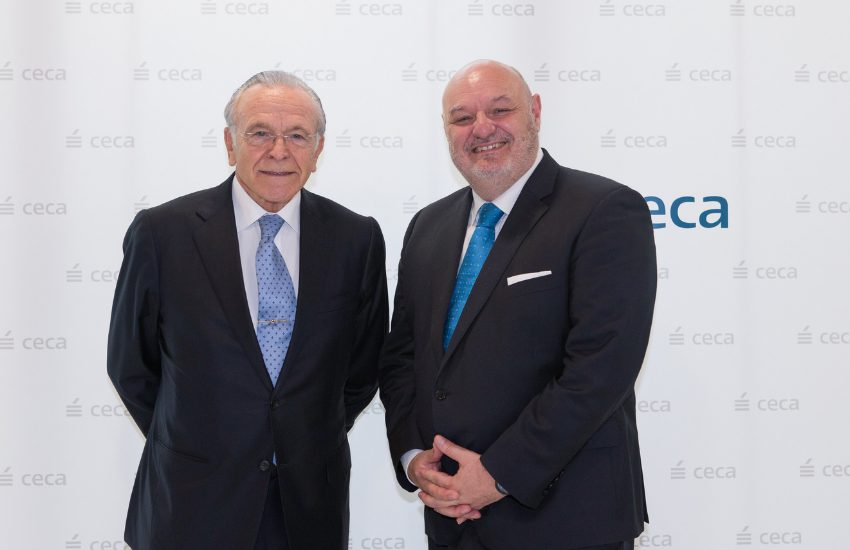
Today the 115th General Assembly of CECA has been held, presided over by Isidro Fainé.
The investment in Social Work by CECA entities reached 778 million euros in 2021, once again making them the largest private social investor in Spain.
The sector has implemented several measures to address the economic and humanitarian crisis caused by the military conflict in Ukraine.
CECA held its 115th General Assembly today, presided over by Isidro Fainé. The event was attended by the banks, savings banks, and foundations affiliated with CECA. The eight groups of credit institutions represented by CECA account for more than 40 percent of the Spanish financial system in terms of deposits. Additionally, CECA groups 30 banking and ordinary foundations.
During the meeting, a review of the sector’s activities in 2021 was conducted, and reflections were made on future challenges. Uncertainty remains high, and the risks that have conditioned growth in the second half of 2021, such as the evolution of the pandemic, manufacturing “bottlenecks,” or inflation, remain latent, with new risks emerging in early 2022, such as the military conflict between Ukraine and Russia.
In this context, the sector’s ability to adapt, develop support mechanisms for the productive fabric, and promote recovery has been highlighted. Isidro Fainé, president of CECA, emphasized at the 115th General Assembly that “the entities of the CECA sector have wanted to be part of the recovery process of the country and have continued to support society with all our economic and human resources. We have become a kind of vaccine against inequality, against social exclusion, and against the risk of poverty.”
In 2021, as evidenced in the Assembly, the entities affiliated with CECA focused much of their efforts on contributing to the economic recovery. In this way, they have continued to facilitate the provision of liquidity and financing to the private sector and have collaborated in implementing measures that cushion the impact of various economic shocks in an increasingly complex environment.
Support for Ukraine from the sector
With the aim of helping to alleviate the humanitarian crisis caused by the military aggression that Ukraine is suffering, the CECA sector has once again demonstrated its ability to assist society. Thanks to the deeply social vocation shared by the banks, savings banks, and foundations that are part of the CECA sector, and their coordinated work, initiatives have been developed that aim to respond to humanitarian and economic-financial needs.
Among the first initiatives is facilitating fundraising and donations, providing associations and groups with platforms to channel aid, a wide network of volunteers to support various NGOs, the collection of essential goods, different solidarity events, and the promotion of the hosting of families of Ukrainian refugees.
As for the main economic measures, efforts are focused on providing basic payment accounts to Ukrainian refugees, enabling them to access key banking services. Additionally, transfers to Ukraine and Moldova are offered at no cost, as well as the use of ATMs for clients of Ukrainian banks.
The CECA sector, again the leading private social investor in 2021
Today, the Commission of Foundations and Social Work was also held. This is a statutory and advisory body of the association that brings together representatives of the banking and ordinary foundations in the sector. The president of the Economic and Social Council, Antón Costas, participated in the opening, highlighting in his speech that “The Social Work of CECA is the second pillar of the Welfare State in Spain. An essential pillar for promoting and supporting initiatives from civil society in favor of the most vulnerable groups in our society. Therefore, in these times of pandemic and war, I want to express my most enthusiastic support and encourage the leaders of CECA to maintain and increase their Social Work.”
In 2021, sector entities allocated 778 million euros to Social Work activities, placing us again at the forefront of private social investment in Spain. With this funding, more than 51,000 activities were carried out, benefiting over 25 million people, especially the most vulnerable groups in our society.
As in previous years, the Social Programs (which include Social Action, Local Development, and Job Creation) received the most significant investment, over 416 million euros, 53 percent of the total investment, which benefited more than 5.3 million participants in activities related to welfare programs, health and well-being, inclusion, social dining, and volunteering.
The Research and Health area (Education and Research) has ranked second and improved its efficiency. Thus, the 195.1 million euros received (25%) have reached a larger number of beneficiaries, nearly 10 million people (38.85%). Through these programs, the entities promote progress and innovation with training, education, research, and scientific dissemination projects, fostering our country’s position at the forefront of health protection and advanced biomedical research.
On the other hand, the Culture and Science area (Culture and Heritage) with a funding of 142.2 million euros (12.2%), remains the most efficient, surpassing 8.5 million beneficiaries. Since its inception, it has been a fundamental pillar for the conservation of historical and cultural heritage in our country.
Finally, Education and Scholarships (which includes Environment and Sports and Leisure) have received more than 24 million euros, benefiting 1.6 million people. Notably, the promotion of study scholarships, which are an effective tool for social mobility and talent promotion.
The Social Work in the last 8 years (2014-2021)
Since the approval of the Law on Savings Banks and Banking Foundations in 2013, the Social Work of CECA entities has invested 6.172 billion euros, with which more than 776,500 activities have been carried out.
The stable legal framework and closeness to community needs have allowed the Social Programs (which include Social Action, Local Development, and Job Creation) to receive the largest share of resources, more than 3.381 billion euros (54.7%).
By demographic groups, between 2014 and 2021, more than 1.526 billion euros have been dedicated to individuals under 25 years old, approximately 1 billion euros to people at risk of exclusion, 452 million euros to the elderly, 383 million euros to people with special needs, and nearly 200 million euros to 8.6 million entrepreneurs.