



Banking Strengthens Personalized Attention for the Elderly with New Measures
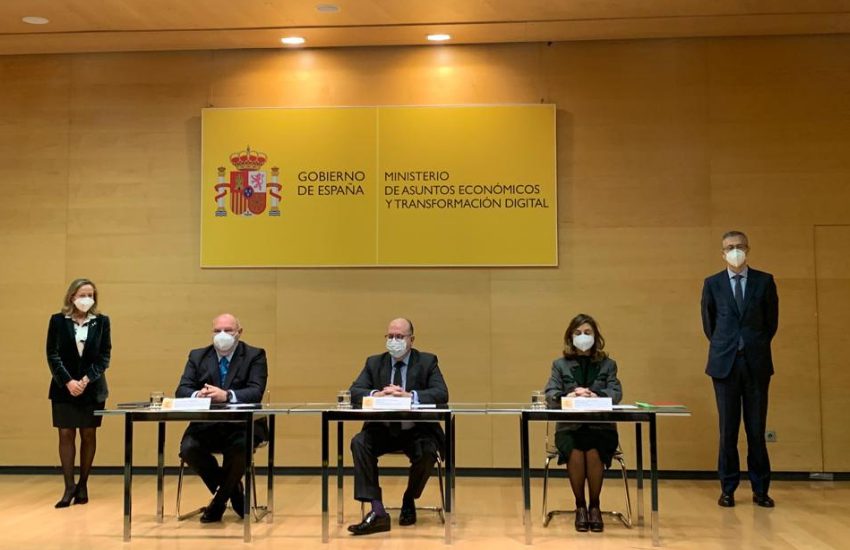
AEB, CECA, and Unacc promote a set of guidelines to improve personalized attention for the elderly and people with disabilities.
Branches will extend their in-person customer service hours for cash services.
The elderly will receive preferential treatment at branches and by phone.
ATMs, applications, and websites will be adapted with simplified language and views.
With the aim of contributing to accelerating progress towards an inclusive economy and not leaving any group unattended, the banking associations AEB, CECA, and Unacc adopt a set of measures to make progress in the short term on personalized attention for the provision of financial services to seniors and those with different abilities, who require special dedication.
The associations commit to ensuring that their members carry out an assessment of the current situation and adopt the measures contained in this set of guidelines as soon as possible, and no later than six months, tailored to their business model to ensure that individuals over 65 years of age and individuals with disabilities receive personalized, satisfactory attention without unjustified delays.
GUIDELINES FOR PERSONALIZED ATTENTION TO THE ELDERLY
1. Extension of in-person service hours to cover at least from 9:00 AM to 2:00 PM for cash services. This service will be provided at the counter or through ATMs.
2. Preferential treatment for the elderly in branches, prioritizing cases of high public attendance.
3. Mandatory specific training for commercial network staff on the needs of this group.
4. Preferential telephone attention at no additional cost or directly through a personal contact.
5. Telephone support hours will be at least between 9:00 AM and 6:00 PM for clients who receive off-branch services.
6. Ensure adaptability, accessibility, and simplicity of channels based on their use, providing these clients with versions with simplified language and views.
7. Repair of out-of-service ATMs to ensure cash supply within a maximum of 2 business days and information on the nearest alternative ATM.
8. Offering clients financial education, digital skills, and fraud prevention through the most suitable channel.
9. Entities will communicate to the elderly client group the measures adopted to inform them of the improvements available.
10. Expansion of the scope of the Financial Inclusion Observatory to adequately monitor the measures adopted by entities for the personalized provision of financial services.
The banking sector thus reaffirms its firm commitment to continuously improving service to all its clients, especially the senior group, to which specific measures were already dedicated, such as advanced pension payments, physical and digital accessibility programs, and providing access to non-financial entity offices for various operations in municipalities without branches, among many others.
The guidelines for improving attention for the elderly are part of a wide range of measures to promote financial inclusion, especially in rural areas and for groups at risk of exclusion, which the three banking associations have signed after informing its content and development to the General Secretariat of the Treasury of the Ministry of Economic Affairs and Digital Transformation.
Read the “Strategic Protocol to Reinforce the Social and Sustainable Commitment of Banking”