

CECA holds the Executive Committee of Social Work and Foundations in León
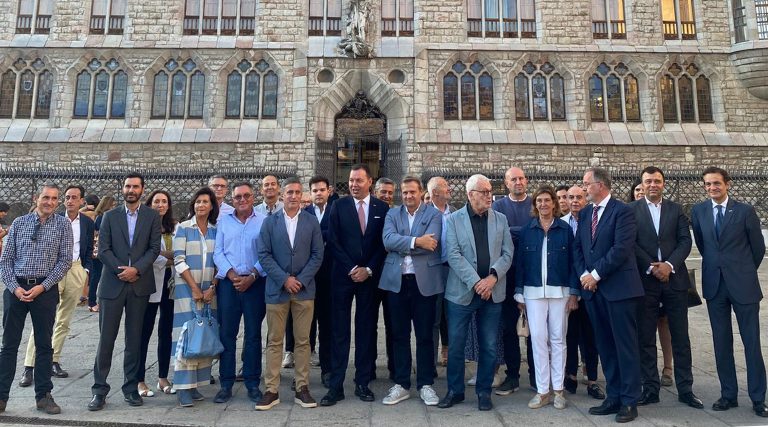
The foundations associated with CECA gathered at the headquarters of FUNDOS, the host entity, from September 14 to 16 to address the challenges and opportunities of Social Work in Spain.
The dissemination of culture and heritage, the energy transition, and the importance of promoting education in cybersecurity were the central themes of the event.
CECA, the association of Banks, Savings Banks, and Foundations, held its Executive Committee of Social Work and Foundations on September 14, 15, and 16 at the corporate headquarters of the Fundación Obra Social de Castilla y León (FUNDOS). This annual meeting brings together the foundations that are part of CECA to share visions and discuss the activities carried out within the framework of Social Work and the priorities of the sector in the coming months. This year, the Committee focused its efforts on creating working groups to promote the launch of cultural projects and to seek new income streams that allow for the financing of more Social Work programs. Additionally, the Committee is working on a new map of foundations since the approval in December 2013 of Law 26/2013 on savings banks and banking foundations, which led to a restructuring of the sector and generated a new ecosystem, ten years have passed and it is necessary to update this map, as well as to size and systematize the work that the foundations have been undertaking.
Main themes of the meeting: energy transition, cybersecurity, and dissemination of culture and heritage
The welcome of the Committee was given by José María Viejo, General Director of FUNDOS, and Rafael Barbero, President of the Executive Committee of Social Work and Foundations and General Director of Fundación Caja de Burgos.
Throughout the meetings, attendees enjoyed a conference where the Palentino journalist and President of the Fundación Santa María la Real, Ignacio Fernández Sobrino, discussed the energy transition with Arsenio Terrón, Professor of Botany at the University of León and former director of the Fundación Ciudad de la Energía, and a presentation on the value of cultural content by Raúl Fernández Sobrino, Director of Culture and Heritage at FUNDOS.
Among the highlighted topics on the agenda, the creation of two working groups has been proposed, one to explore possible additional income avenues and the other for the generation and exploitation of cultural content. Furthermore, for CECA and its associates, the link between financial literacy and the digital environment is key to helping citizens manage their finances securely in the online world. Based on this premise, the representatives of the foundations visited the headquarters of the National Cybersecurity Institute (INCIBE), an essential body for the development of cybersecurity and digital trust at the national level.
The meeting was attended by representatives of CECA and Funcas, as well as extensive participation from the associated foundations: Fundación Caja de Burgos, Fundación La Caixa, Fundación Montemadrid, Fundación Caja Navarra, Fundación Círculo, Fundación Caja Extremadura, Fundación Ibercaja, Fundación Ávila, Fundación La Caja de Canarias, Cajacanarias Fundación, Fundación Mediterráneo, Fundación Unicaja, Fundación Kutxa, and Fundación Caja Rioja.
The Social Work of CECA, a driver for fostering progress and inclusion
The Social Work promoted by the entities associated with CECA has proven essential as one of the main avenues of contribution to the development and equality of opportunities for the most vulnerable groups. As the largest private social investor in Spain, it acts as a backbone of society and a lever for educational, scientific, cultural, economic, and social progress.
In 2022, the entities associated with CECA collectively allocated 800 million euros to Social Work projects, an increase of 2.8% compared to the previous year. This funding was aimed at promoting more than 72,000 activities that reached over 32 million people, with 57% belonging to specific groups, in areas such as Social Action, Education and Research, Culture and Heritage, Local Development, Employment Creation, and Sports, Leisure, and Environment.
Others Press Releases
Banking financing capacity would increase by 2 trillion euros with regulatory simplification
Simplifying regulation would increase the banking sector’s financing capacity in Spain by €250 billion