


The banking sector and Correos collaborate to improve access to cash in rural areas

The banking associations AEB, CECA, and UNACC have signed a collaboration agreement with Correos (the Spanish postal service) to facilitate cash withdrawals and improve access to basic financial services in rural areas throughout Spain.
The signatories of the General Protocol of Action for the Promotion of Financial Inclusion in Rural Areas aim to ensure that all citizens, regardless of where they live, have access to cash with minimal travel.
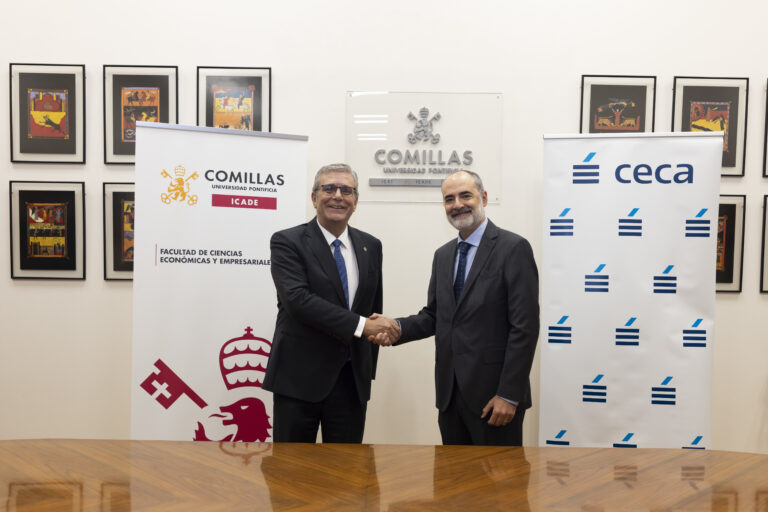
The agreement, signed this morning by the president of Correos, Juan Manuel Serrano; the president of AEB, Alejandra Kindelán; the director general of CECA, José María Méndez; and the president of UNACC, Manuel Ruiz; includes the development of new solutions to achieve broader coverage of banking services across Spain.
According to Alejandra Kindelan, “we have been exploring solutions for months, and today we are taking a significant step within the roadmap that the sector is developing to respond to the needs of those who live in small towns across our country, especially those who are furthest removed from the technological landscape.”
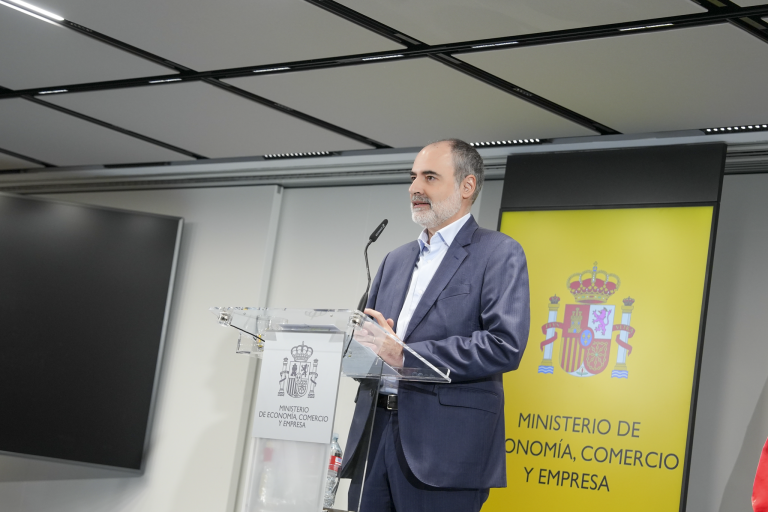
At the meeting, José María Méndez, CEO of CECA, explained: “The agreement we are signing here today complements the existing access points to cash, reaching those 600,000 people who are currently excluded from existing access points. Through a universal service, such as the postal service, we are expanding the coverage of physical access points to our financial services. This is an innovative action that is part of the comprehensive response that the banking sector is providing to the problem of depopulation, which affects the provision of all types of services.”
The president of UNACC stated in his speech that “the banking associations’ commitment to financial inclusion has led us to work on finding different solutions that provide physical coverage where the network of branches, ATMs, agents, and mobile offices doesn’t reach.”
For his part, Juan Manuel Serrano pointed out that with this collaboration, “Correos is making available to the banking sector not only its extensive network of offices and service points, but also its 6,000 rural postmen to facilitate access to cash throughout Spain, thus guaranteeing public service to all citizens and contributing to territorial cohesion and the economic development of individuals and businesses, especially in rural areas.”
Aware of the concerns in certain parts of rural Spain regarding the difficulty of withdrawing cash, the three associations are offering their member institutions the opportunity to reach agreements with Correos to provide access solutions for citizens living in these areas.
Correos is making its extensive distribution network throughout Spain available to the banking sector. In this way, customers of all banks operating in Spain will have access to Correos Cash services, which include cash withdrawals and deposits at the logistics company’s 4,675 customer service points, including more than 2,300 post offices and another 2,282 rural locations.
Furthermore, through its 6,000 rural mail carriers, who are equipped with electronic devices (PDAs), it is possible to access cash and carry out other transactions offered at post offices right at home, even in the smallest municipalities of rural Spain. This service is provided by the mail carrier, who also offers personalized assistance without requiring customers to have any technological resources or knowledge.
This General Protocol for Action in Rural Areas reflects the commitment of banking associations to accelerate progress toward an inclusive economy and ensure that no group is left behind, a commitment already outlined in point 5 of the Strategic Protocol to Strengthen the Banking Sector’s Social and Sustainable Commitment, updated in February 2022.
It also aligns with Correos’ strategy to bring services closer to the public, offer new solutions that simplify their daily lives, and establish itself in rural areas as a valuable tool for contributing to economic development, combating depopulation, and promoting financial inclusion.