

Isidro Fainé Presides Over the Board of Directors and the Social and Philanthropic Council of the World Institute of Savings Banks and Retail Banks (WSBI) in Brussels
The meetings have set the Institute’s objectives for the upcoming months, with special attention to digital transformation, innovation, sustainable finance, and institutional matters.
The Social and Philanthropic Council serves as a platform for WSBI members to exchange ideas and share best practices, fostering concrete investments that strengthen communities and empower the most vulnerable people.
During the meeting, progress was presented on numerous social initiatives from WSBI-associated entities in countries such as India, Botswana, Tanzania, Uganda, Peru, Colombia, Chile, El Salvador, Morocco, the United States, Belgium, and Germany, among many others.
WSBI allocates $3.5 billion annually to social projects worldwide, a figure it plans to increase to €5 billion in two years.
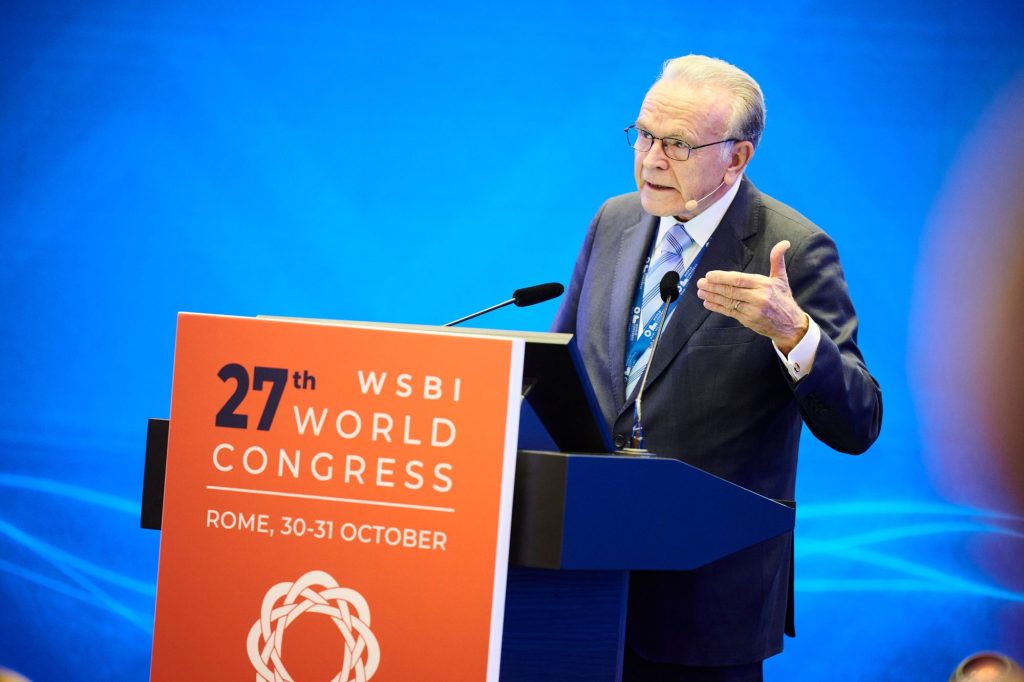
This week, Isidro Fainé, the President of the World Institute of Savings Banks and Retail Banks (WSBI), presided over the 61st Presidents Committee, the 44th Board of Directors, and the third meeting of the Social and Philanthropic Council of the international institute in Brussels. The meetings brought together over 30 high-level delegates from 23 countries, representing nearly 20 member institutions, and aimed to establish the objectives of the organization for the coming months, with a particular focus on digital transformation, innovation, sustainable finance, and institutional matters.
The event also provided an opportunity to update the main activities, achievements, and ongoing initiatives since the last WSBI General Assembly held in October 2024 in Rome. During this period, WSBI has maintained its commitment to supporting its members through promotion, training, and knowledge exchange.
Furthermore, participants analyzed how to deepen knowledge exchange through initiatives such as international study visits planned for 2025, as well as a new initiative, the WSBI Social Week, which will serve to promote dialogue and practical exchange on innovation, digitalization, cybersecurity, and sustainable development.
The importance of inclusive finance with a gender perspective was also emphasized, with the increasing participation of members in the World Bank’s Code for Women Entrepreneurs, which has become a key component of WSBI’s global efforts.
The next statutory meetings of WSBI will take place next October in Washington D.C., coinciding with the annual IMF summit.
III Social and Philanthropic Council
Within the framework of the meetings, the III Social and Philanthropic Council of WSBI, chaired by Isidro Fainé, was held. This Council embodies principles rooted in the savings banks and retail banks associated with WSBI, such as social investment and contributions to philanthropy. It also constitutes a roadmap for its partners aimed at generating innovative solutions that promote social investment and contributions to philanthropic projects.
Moreover, the Council serves as a platform for members to exchange ideas and share best practices. In this sense, it fosters concrete investments that strengthen communities and empower the most vulnerable individuals. Its areas of work encompass six areas: poverty reduction, youth support, education improvement, women’s empowerment, care for the elderly, and environmental sustainability.
During the meeting, progress on various social initiatives from associated entities in countries such as India, Botswana, Tanzania, Uganda, Peru, Colombia, Chile, El Salvador, Morocco, the United States, Belgium, and Germany, among others, was presented. Among the initiatives highlighted was the Work for Progress program, a job creation program for youth and women, resulting from the collaboration between the ”la Caixa” Foundation, Caja Huancayo (Peru), Fundación Grupo Social (Colombia), and Al Barid Bank (Morocco).
Social projects developed by the Peruvian Caja Huancayo were also disclosed, such as community kitchens for vulnerable families and the sustainable development of Amazonian communities, among other initiatives from banks like the State Bank of India or Botswana Savings Bank.
Isidro Fainé, president of WSBI, CECA, and the ”la Caixa” Foundation, stated: “The Social and Philanthropic Council is a platform for collaboration and the exchange of ideas, which enhances the impact of the social programs conducted by our associated entities worldwide and reminds us that together, we have the power to drive transformative change and create a brighter and more equitable future for generations to come.”
Antonio Romero, Director General of CECA, participated for the first time as a member of the WSBI Board and Vice President of ESBG.
WSBI entities allocate $3.5 billion annually to social initiatives worldwide. This figure, which has doubled since Isidro Fainé’s previous term as WSBI president (from $1.8 billion annually in 2021), demonstrates the commitment of the savings and retail banking sector to support and channel private funds towards sustainable economic development. At the last WSBI General Assembly held in Rome in October 2024, Isidro Fainé expressed the intention to increase this figure to $5 billion in the next two years.
As part of this organization, there are significant international actors such as the ”la Caixa” Foundation and CECA from Spain, Fundación Grupo Social from Colombia, Al Barid Bank from Morocco, GSB Foundation of Savings Banks from Thailand, State Bank of India, and Sparkassenstiftung from Germany, among other entities.
WSBI Social Week: A Champion of Global Philanthropy
The WSBI Social Week is a new global initiative that will take place from September 8 to 12, 2025, aimed at amplifying the philanthropic efforts of WSBI members through a shared commitment to volunteering and community action.
The initiative is inspired by the Bangkok Declaration, adopted during the first meeting of the Social and Philanthropic Council (CSF) held in the capital of Thailand in April 2024. This document emphasizes the importance of collaboration, sustainability, and inclusion as guiding principles for the role that financial entities can play in addressing global challenges and driving progress.
The Social Week will focus on the work areas of the Social and Philanthropic Council: commitment to youth, poverty alleviation, education, women’s empowerment, care for the elderly, and sustainability. It will also highlight how the collective efforts of WSBI savings banks and retail banks can contribute to greater progress in society.
Designed as a structured and flexible platform, it will allow associated entities of the World Institute to tailor their participation to specific goals and priorities. Members will be able to choose to organize various activities throughout the week or concentrate their efforts on a single impactful project.
Regardless of the approach, the main objective is to advance best practices and successful social impact actions that WSBI entities develop in the local communities where they are present, while simultaneously contributing to building a global philanthropic movement that allows associated entities to increase their impact beyond their territories.
The initiative will be a catalyst for long-term change, fostering collaboration and knowledge exchange that drive significant progress in financial inclusion, social development, and sustainability.