

Fainé: “In light of the COVID emergency, public-private collaboration becomes even more necessary”
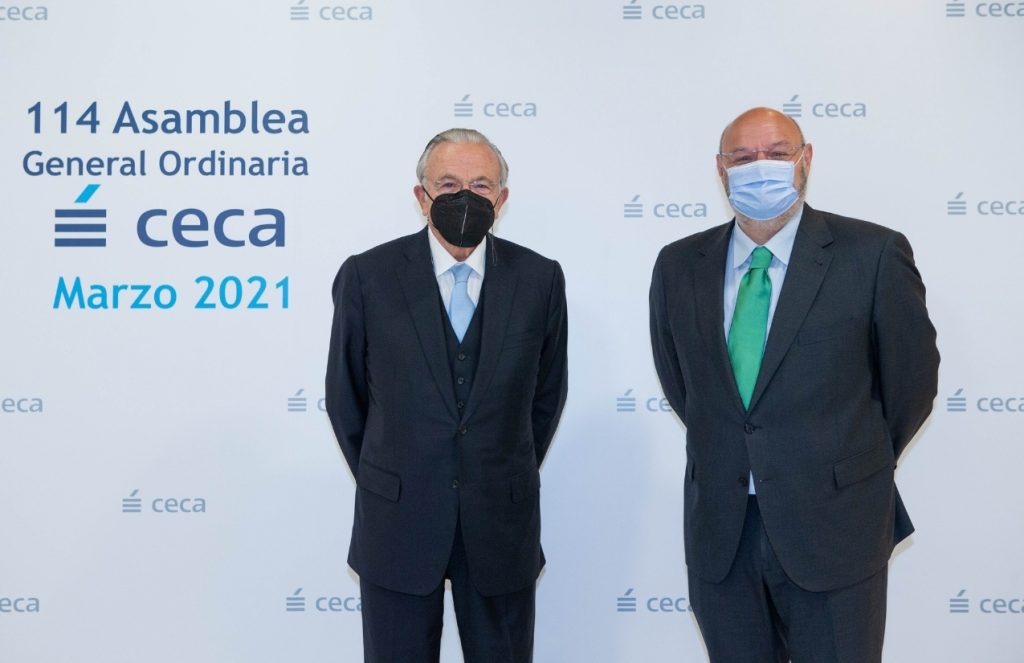
Today the 114th General Assembly of CECA has been held, presided over by Isidro Fainé
The investment in Social Work by the CECA entities reached 772 million euros in 2020
In 2020, marked by the health crisis, the CECA sector obtained a net attributable profit of 2.155 million euros
The outbreak of COVID-19 has highlighted the service vocation of credit entities in searching for solutions and their eagerness to collaborate with public entities to overcome the impact of the coronavirus crisis. Measures such as legal and sector moratoriums, advance unemployment benefits and pensions, or “ICO lines” demonstrate the importance of defining public-private collaboration frameworks for the recovery of economic and social welfare.
Isidro Fainé, president of CECA, emphasized at the 114th General Assembly of CECA that “the banking system is undoubtedly called to play a fundamental role in the recovery for various reasons: the deep knowledge of the productive fabric, thanks to its proximity to clients (especially SMEs) and its extensive reach across the national territory; experience in risk analysis and management; and the possibilities provided by co-financing, which can help to increase the scope of the measures promoted by the Government.”
This public-private partnership should also extend to the social field in which CECA entities and their foundations are especially active. Thus, the President of CECA stated that “the traditional public-private collaboration increasingly opens up to spaces of cooperation with third sector entities that have a multiplying effect on our activities, in defense of the most disadvantaged and with the aim of reducing the economic and social gap.”
In fact, the main private social investment in Spain is the Social Work of the entities adhering to CECA, which reached 772 million euros in 2020, allowing for the maintenance of critical projects in a crisis context provoked by the pandemic.
Some of the areas in which the most notable actions have been carried out include the fight against child poverty; the promotion of local development and job creation; support for groups with special needs or at risk of exclusion; specialized assistance for our elderly; education and research.
The Assembly also highlighted that, in this atypical year, the sector has demonstrated great flexibility, adapting its Social Work programs, cultural activities, research, and financial education to the real needs demanded by citizens at that moment, thus strengthening its commitment to society.
The CECA sector obtains a result of 2.155 million euros in 2020
In a year marked by the health crisis, with a sharp deterioration in economic activity, high market volatility, and interest rates at historical lows, the entities associated with CECA have achieved a total attributed result of 2.155 million euros in 2020, a decrease of 37.1% compared to the previous year. This decline in results is largely explained by the significant increase in provisions made to anticipate the impact of the crisis on the portfolios.
For its part, the operational margin increased by 20% thanks to the slight improvement in the gross margin, driven by an increase in fees and operating income, and a reduction in operating expenses. All of this has allowed for an improvement in the efficiency of the CECA sector by almost 7 percentage points.