


Banking, Key to the Modernization of the Spanish Productive Fabric
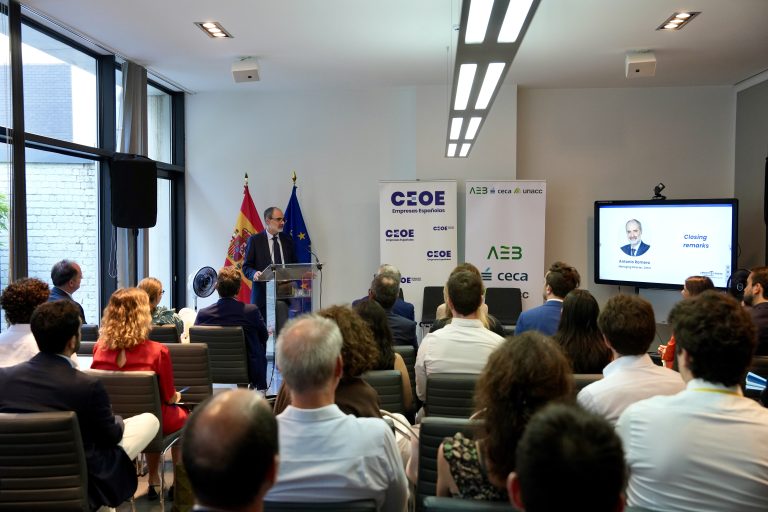
- Today, an event organized by CECA and AEB took place in Madrid, bringing together more than 120 people in both physical and virtual formats, aiming to analyze the role of the banking sector in the Spain Can recovery plan and the current international context.
- The meeting, another corporate event organized by both associations with the aim of creating forums for debate and spaces for reflection and dissemination for the improvement of the banking sector and its contribution to society, included the participation of Carlos Bastarreche.
Carlos Bastarreche is an external advisor to both associations on European matters and to promote the collaboration of banks in the Spain Can plan, key to the modernization of the Spanish productive fabric.
Bastarreche is a Spanish diplomat with extensive European experience since 1979. Between 2002 and 2010, he served as Spain’s Permanent Representative Ambassador to the European Union. He has also been Spain’s Ambassador to France and the United Kingdom.
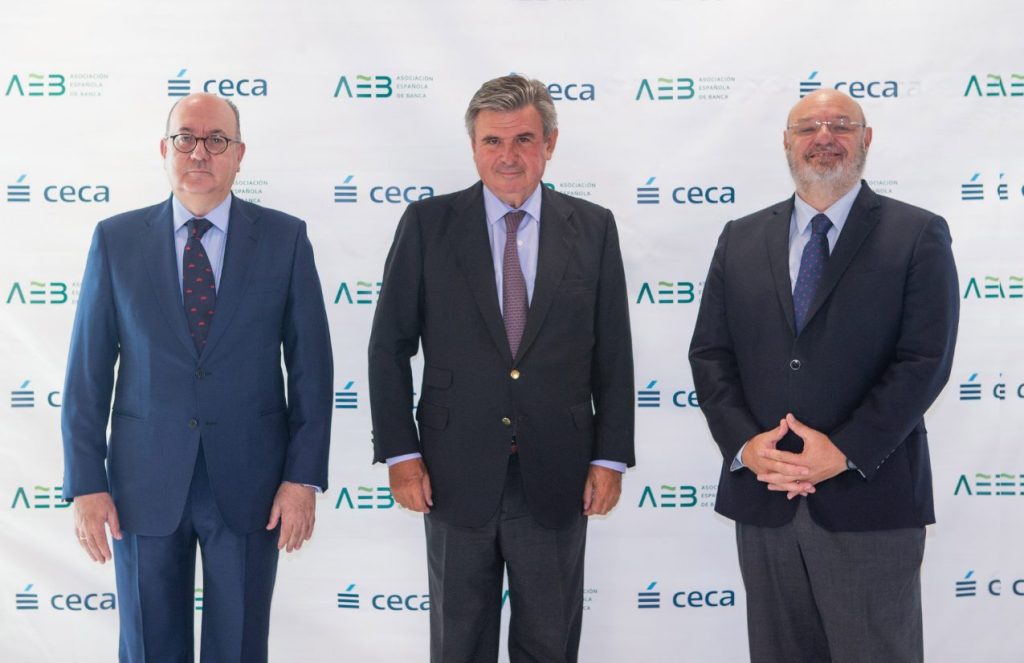
The meeting began with a presentation by José María Méndez, General Director of CECA, who highlighted “the key role that the banking sector has played in mitigating the effects of the COVID-19 crisis by channeling monetary policy and public initiatives to boost the real economy while maintaining liquidity provision to businesses and families. Measures such as moratoria (both legal and sectoral) benefiting almost 1.5 million people, pension advances and benefits from SEPE, or financing to more than 1 million companies linked to ICO guarantee lines, among others, demonstrate the effective contribution made by the banking sector in recent months.”
The entities associated with CECA and AEB want to play an equally active role in the implementation of the National Recovery, Transformation, and Resilience Plan. In this regard, the role of banking can be fundamental as a channeler of European funds.
José María Roldán, president of AEB, believes that “the execution of the NextGeneration European aid program represents an unprecedented challenge for the Spanish economy. In this context, the distribution capacity that banks have through their networks, as well as their experience in project analysis and risk assessment, can become a very useful tool to ensure these funds reach those who can best contribute to this great project of transforming the Spanish economy. Our entities demonstrated with the ICO guaranteed credit program that public-private collaboration has great potential and can work very well, and now they are once again making their resources and capabilities available to the Next Generation program.”
In this sense, the president of AEB emphasized that “one of the major challenges posed by channeling European funds is reaching SMEs, which account for 90% of the Spanish economy and are the largest job creators in our country. The economy needs modernization.”
For his part, Carlos Bastarreche highlighted that Europe has endured the recent crises and has made progress in Banking Union, and the lessons learned during the pandemic will translate into advancements in integration. Thus, the NextGenerationUE funds are the beginning of a real fiscal and monetary capacity of the European Union. The EU’s response has been very positive.
“Spain’s credibility in the distribution of European funds is at stake; it is essential to do things right, which is not easy, but we can do it. The economy needs modernization, with digitization and energy transformation. Spanish banks can, want, and must be part of the development of the Next Generation EU program in our country, and they must do so in an orderly and structured manner,” stated Carlos Bastarreche.