


The I Geofinance Conference of CECA Addresses Geopolitical Risks, European Sovereignty in Payments, and the Strategic Autonomy of the EU
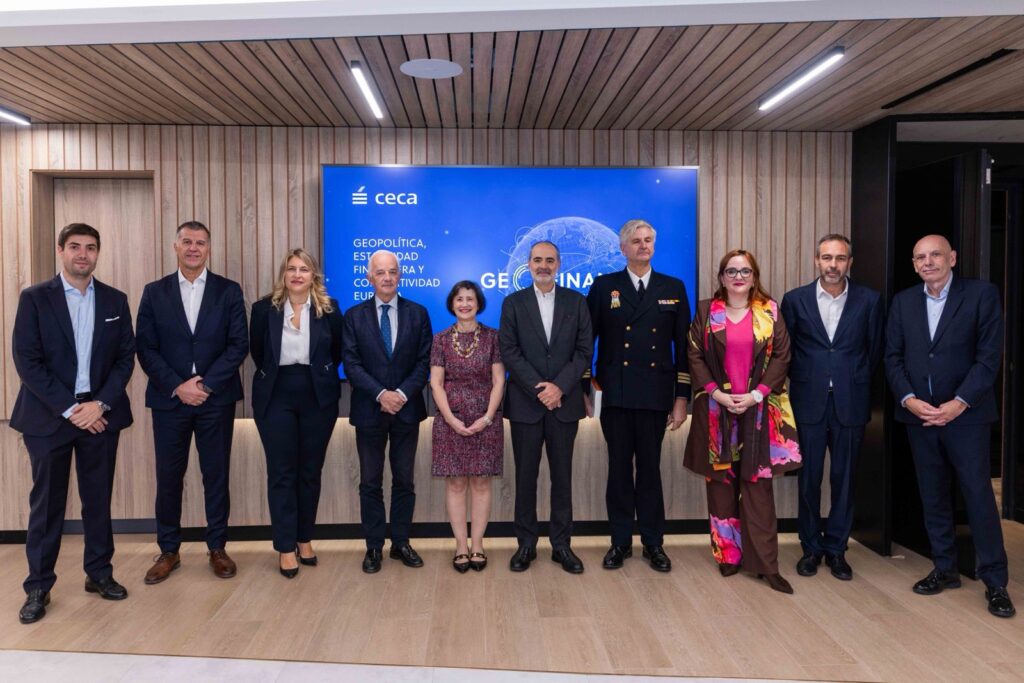
- CECA celebrates the first edition of this forum, which serves as a meeting point between authorities, the financial sector, the defense sector, and geopolitics
- Mercedes Olano (Bank of Spain), Fernando Restoy (BIS), Judith Arnal (Elcano and Bank of Spain), and Ángel Nigorra (Bizum), among the main participants
CECA held its I Geofinance Conference on Thursday, a high-level forum that brought together supervisory authorities, representatives of Spanish financial institutions, geopolitics experts, and renowned economic analysts to discuss these challenges and their implications for Europe.
The conference featured prominent speakers, including Mercedes Olano, General Director of Supervision at the Bank of Spain; Fernando Restoy, President of the Financial Stability Institute (FSI) of the Bank for International Settlements; Judith Arnal, researcher at the Elcano Royal Institute and advisor at the Bank of Spain; Gregorio Bueno, Vice Admiral and former representative of the Spanish Armed Forces at NATO’s Allied Command; and Federico Aznar Fernández-Montesinos, Senior Analyst at the Spanish Institute of Strategic Studies (IEEE).
Also participating in the first edition of this forum were Ángel Nigorra, General Director of Bizum; Christian Castro, Head of Public Affairs at CaixaBank; Raymond Torres, Director of Economic Situation at Funcas; Miguel Otero and Carlota García Encina, Senior Researchers at the Elcano Royal Institute; and Francisco Rodríguez, Director of the Financial and Digitalization Area at Funcas.
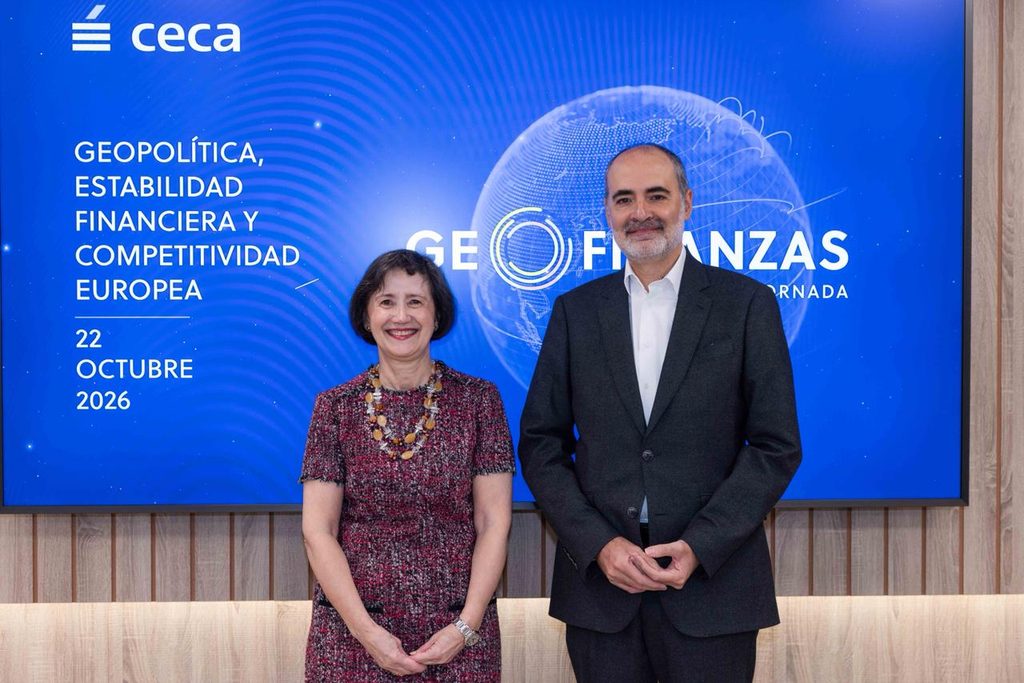
The conference was opened by Antonio Romero, General Director of CECA, who emphasized that in a time of structural transformation of the international order like the present, it is crucial to create spaces for reflection on the direction that the economy and politics in Europe must take.
“Understanding the environment is no longer an academic exercise, but a necessity for business decision-making. This forum is intended to be a space for dialogue where we can analyze how geopolitical transformations are impacting finance and how finance, in turn, plays an essential role in the responses that Europe, as a geopolitical actor, must provide to many of these challenges,” he added.
Geopolitics, a Strategic Variable
Throughout the conference, key issues for the future of Europe and the financial sector were addressed, such as geopolitical risks to financial stability, sovereignty in payment systems, the financing of European defense, and the growing strategic competition between the United States, China, and Europe.
Geopolitics has become a strategic variable for business decision-making. Factors such as rivalry among major powers, the fragmentation of international trade, energy security, tensions in supply chains, the technological race, and the increase in defense spending are increasingly shaping companies’ investment, financing, and internationalization decisions.
In this new environment, understanding the risks and opportunities arising from geopolitical changes has become an essential element for strengthening competitiveness and business resilience.
Others Press Releases
Credit Institutions Highlight Their Role and Contribution in the Fight Against Money Laundering

The CECA sector doubles its investment in financial education, exceeding 6 million euros in 2025
