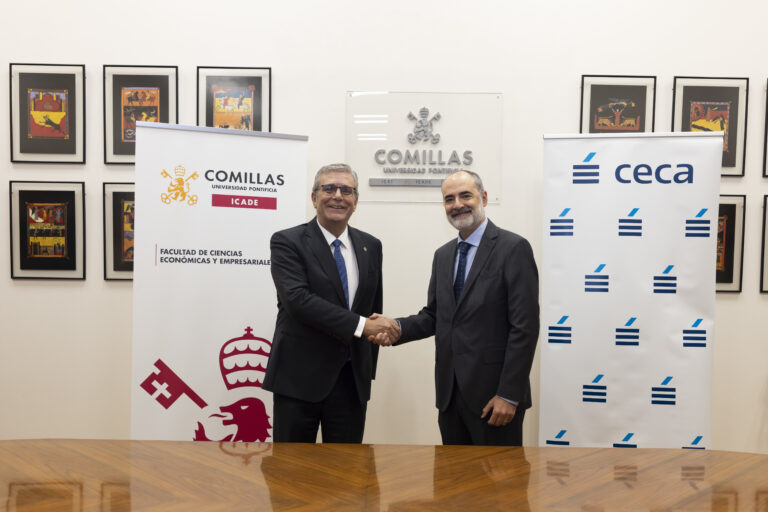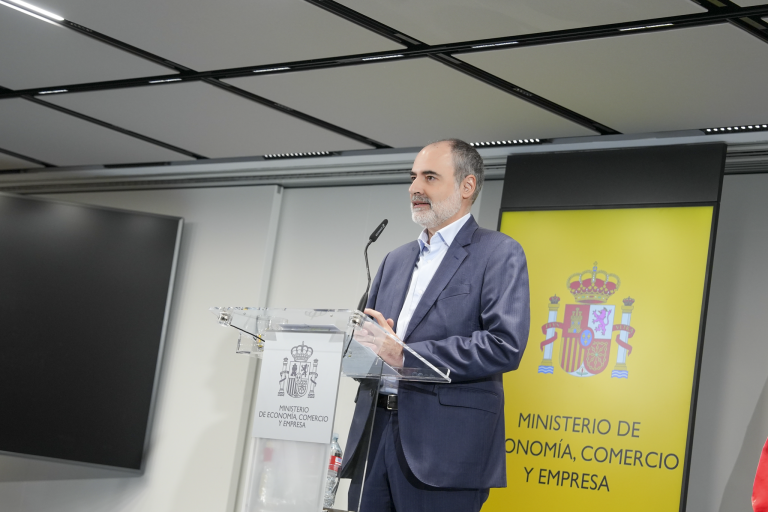



CECA has held its 109th General Assembly today, presided over by Isidro Fainé, following his reelection as President of the association
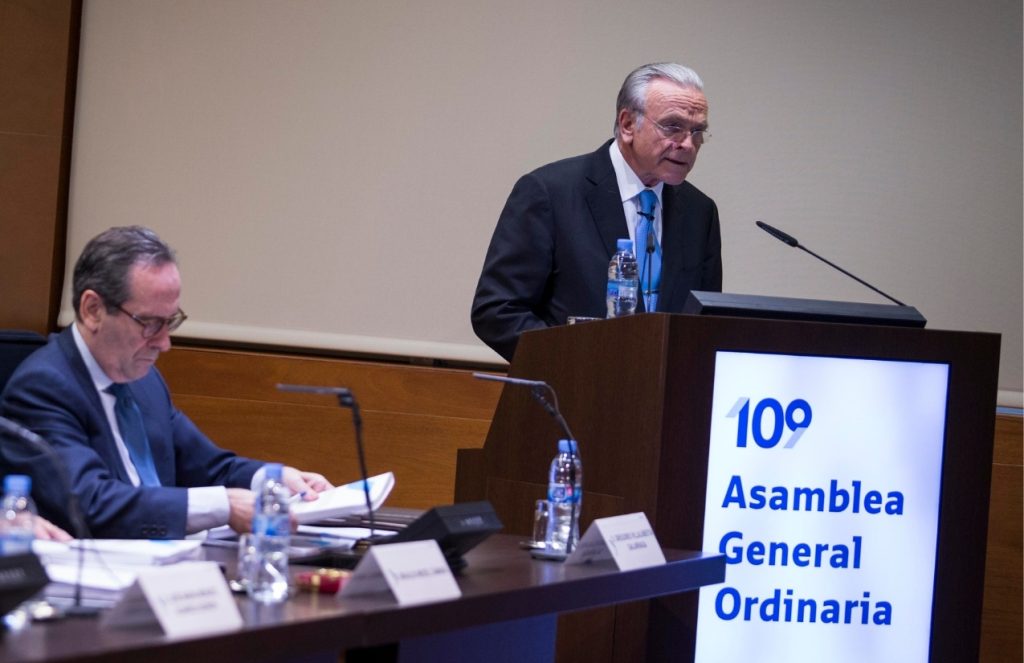
The highest representatives of the Banks, Savings Banks, and Foundations affiliated with CECA have gathered today to celebrate its 109th General Assembly. The event was presided over by Isidro Fainé.
CECA is the association that represents the interests of the Savings Banks and the Banks created by them. The market share, in terms of retail deposits from the credit institutions integrated into CECA, stands at 43%. Foundations originating from the Savings Banks are also affiliated with CECA.
Financial Environment
During the Assembly’s proceedings, the current macroeconomic and financial environment was analyzed. Isidro Fainé emphasized that “the proper functioning of the financial sector is crucial to support the recovery process of the Spanish economy.”
Fainé insisted that “the banking sector needs to deepen the reforms to ensure its competitiveness and face the challenge of profitability, its main challenge in the current environment of low interest rates and increased capital requirements.” Indeed, the President of CECA considers that profitability “is the main source of concern not only in Spain but also in the majority of European banking institutions, among shareholders and supervisors.”
In addition to improving profitability margins, Fainé also reminded that “it is essential to restore citizens’ trust in the financial sector.” He pointed to shadow banking, digitalization, and the new habits of multi-channel customers as the main trends that will shape the future evolution of the banking sector in the coming years.
CECA, ESBG, and Cecabank
During his speech, Isidro Fainé highlighted CECA’s role in dialogue with supervisors and regulators, national and international public administrations, parliamentary groups, trade unions, and other business or social organizations.
In this regard, he emphasized the role of the ESBG (European Savings Banks Group) and the WSBI (World Savings and Retail Banking Institute), with which – Fainé noted – “we feel very identified and they effectively accompany us in defending our model of Relational and Proximity Banking.”
Regarding Cecabank, Fainé recalled that 2016 will be the fourth year of the bank’s operations, and during this period, “Cecabank has become a leading entity in Securities Services and other banking services, and, more importantly, an instrument for the sector as a whole to continue gaining efficiency through the outsourcing of banking processes.”
Results of Group Entities
The Banks and Savings Banks affiliated with CECA have obtained an attributed profit of 2,950 million.
The interest margin decreased by 3.8% over the year, in line with the decline recorded by total assets. This decrease occurs in a context of historically low-interest rates.
Conversely, in 2015, net commission income increased by 4.3%, primarily supported by the growth of off-balance-sheet products, and also the income from the investment portfolio experienced a significant recovery of 34% over the year.
On the downside, dividend income fell by 6%, and results from financial operations decreased by 7.9%, mainly due to lower capital gains obtained from the sale of government debt portfolios.
Notably, the volume of provisions and write-offs made during the period is 2.9% lower than that made in 2014. The decline is located in the losses from the impairment of financial assets (mainly write-offs of credit investments), which decreased by 10.8% over the year, as a result of the progressive reduction in the risk cost by institutions in a scenario of falling credit default rates by more than 2.5 p.p. (down to 9.3% at the end of 2015).
Overall, the sector achieved a pre-tax profit of 3,148 million, 10.7% higher than that obtained in 2014, with a return on assets of 0.35%, 5 b.p. more than the previous year.