


The Attorney General’s Office, banking associations, and the Bank of Spain sign a protocol to ensure the financial autonomy of people with disabilities
The agreement aims to guarantee the financial inclusion of people with disabilities and adapt the practices of banking entities to the new legislation on the matter.
The agreement has been signed by the Spanish Banking Association (AEB), by CECA, and by the National Union of Credit Cooperatives (UNACC), representing the sector, and by the Attorney General’s Office, with the involvement of the Bank of Spain as an observer.
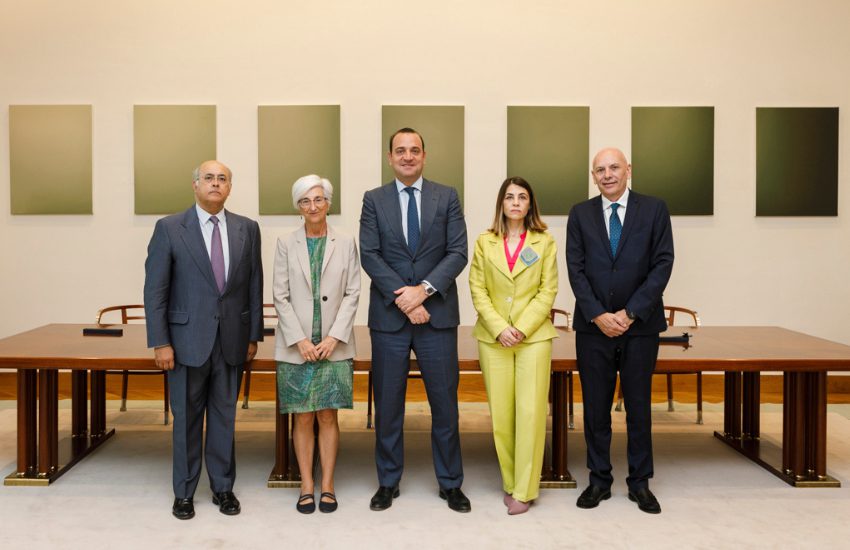
The Attorney General’s Office, the banking associations (AEB, CECA, and UNACC), and the Bank of Spain have today signed a collaboration protocol to ensure the autonomy of people with disabilities regarding banking services and products. The agreement was signed by the General Director of Financial Conduct and Banknotes of the Bank of Spain, Alberto Ríos; the Senior Prosecutor for Disability and the Elderly, María José Segarra; and the General Secretaries of the three banking associations: Javier Rodríguez from AEB; Fernando Conlledo from CECA; and Cristina Freijanes representing UNACC.
The agreement establishes the pathways for banking practices to adapt to the new legal treatment of disability marked by legislation (Law 8/21), which enhances the ability of people with disabilities to make their decisions autonomously, and aims to collaborate in the progressive promotion of the necessary adaptations for them to operate independently in the banking realm, including, among others, information in accessible language.
The agreement also provides for the establishment of a stable working group to study the role of the new support figures recognized by disability law and to analyze the practical issues arising from its implementation, harmonizing them with the legal certainty required for banking activities.
The aforementioned law eliminated incapacitations and thus legal guardians, depersonalizing the lives of people with disabilities and establishing a system of support provision, in which the informal support figure acquires special relevance. This figure constitutes a type of informal support, without judicial endorsement, that is typically exercised by the family and whose role in banking operations has already been channeled in a consensus document, which will be published shortly.
The signed protocol contemplates a dynamic functioning of the working group that will address the issues that compliance with the law reveals in the daily operations of banking, so that not only solutions are proposed but also applied in an agile and efficient manner for the benefit of the collective, the defense of whose rights is one of the tasks of the Attorney General’s Office.
The signing event took place at the headquarters of the Bank of Spain. This institution, which signed the agreement as an observer, will participate as such in the working group, given its supervisory functions regarding the compliance with customer protection regulations of credit entities and to promote the inclusion of vulnerable people in banking services.
Protocol for asset protection
The Attorney General’s Office and the banking associations have also signed a second complementary protocol aimed at protecting the property interests of people with disabilities or those in certain situations of vulnerability.
This agreement facilitates fluid communication between banks and the territorial Prosecutor’s Offices for reporting situations that may jeopardize the economic security of the holder by revealing circumstances of abuse or undue influence over their will, which will trigger an investigation by the Public Prosecution Service.