


The banking sector has continued to advance in 2023 to reinforce financial inclusion and its social commitment

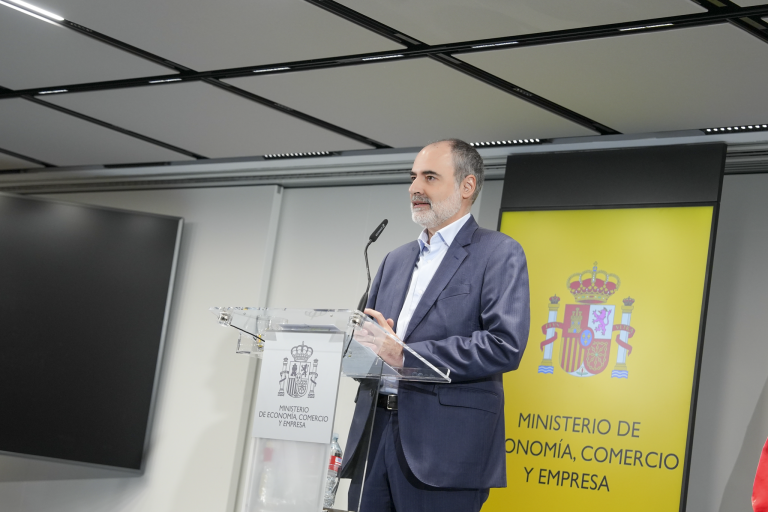
AEB, CECA, and Unacc have met with the Ministry of Economy, Trade, and Industry to evaluate progress in their commitment to supporting society. The sector has provided data revealing compliance with key commitments made as part of its social vocation: promoting financial inclusion in rural areas, adapting banking services to the needs of the elderly, and protecting vulnerable families who hold mortgage loans.
The entities in the sector have developed financial and digital education initiatives that have reached 277,000 individuals over 65 years of age during the first six months of the year. Additionally, 93% of municipalities with more than 500 inhabitants, which a year ago did not have physical access points to essential financial services, will now have them.
AEB, CECA, and Unacc held a meeting with the Ministry of Economy, Trade, and Industry where notable advancements made by the banking sector in its social commitment were confirmed, improving financial literacy in society and promoting financial inclusion for elderly individuals and in rural areas. Furthermore, the Ministry proposed to deepen support for mortgage borrowers facing difficulties.
The banking associations highlighted during the meeting the goals assumed and fulfilled in the area of financial inclusion under the Strategic Protocol to Reinforce the Social and Sustainable Commitment of Banking. Within this framework, they underscored the efforts made to promote financial and digital education, including the creation of a web platform for educational resources, fostering training for the elderly so that 277,000 have accessed educational initiatives on financial knowledge and digital skills during the first six months of the year.
Additionally, the development of the Decalogue of Measures to Improve Personalized Attention for the Elderly and Individuals with Disabilities has allowed 82.2% of branches to offer services with extended hours, benefiting 5.6 million elderly individuals during the first half of this year.
Regarding commitments made in the Roadmap to Reinforce Financial Inclusion in Rural Areas, AEB, CECA, and Unacc reported that 93% of municipalities with more than 500 inhabitants, which did not have a physical access point to essential financial services a year ago, will now have one—whether already available or in process—marking a significant advancement in financial inclusion for rural areas and confirming the ultimate goal of providing a physical access point to financial services through various channels in all Spanish municipalities.
During the meeting, the Government informed about the extension of mortgage support measures, such as raising the income threshold required to comply with the Code of Good Practice for Mortgages (CBPH) to alleviate the rise in interest rates on mortgage loans for primary residences or extending the fee exemption for changing mortgage loan modalities.
The sector reiterates the preventive nature of the measures outlined in the CBPH, in a context of significant economic uncertainty, and one year after their implementation, many uncertainties have been resolved. On the one hand, interest rates have entered a phase of clear stabilization, and on the other hand, employment is showing better resistance than expected. Evidence of this is that the level of delinquency is now lower than it was when these measures were approved a year ago.
Furthermore, banking entities continue to offer tailored solutions to borrowers who may be experiencing liquidity problems beyond what is strictly stipulated by the codes. This is evidenced by the figures showing renegotiations, which have increased by over 300% compared to the same period last year, reaching 2.2 billion euros in the first half of 2023.
The success of measures like this is that those who have a problem have a solution. And in this case, the solution lies within the CBPH or in the bilateral relationship with the entity.
Associations reiterate that it is also important to have a secure and predictable framework, that families know what they can do and how to do it, which is why it is essential that what was agreed upon today remains unchanged during the validity period of the CBPH.
In any case, the sector reaffirms that measures like this highlight the banking sector’s willingness to continue advancing in social inclusion, especially with measures directed at the most vulnerable groups.