



READING MATERIALS OF INTEREST
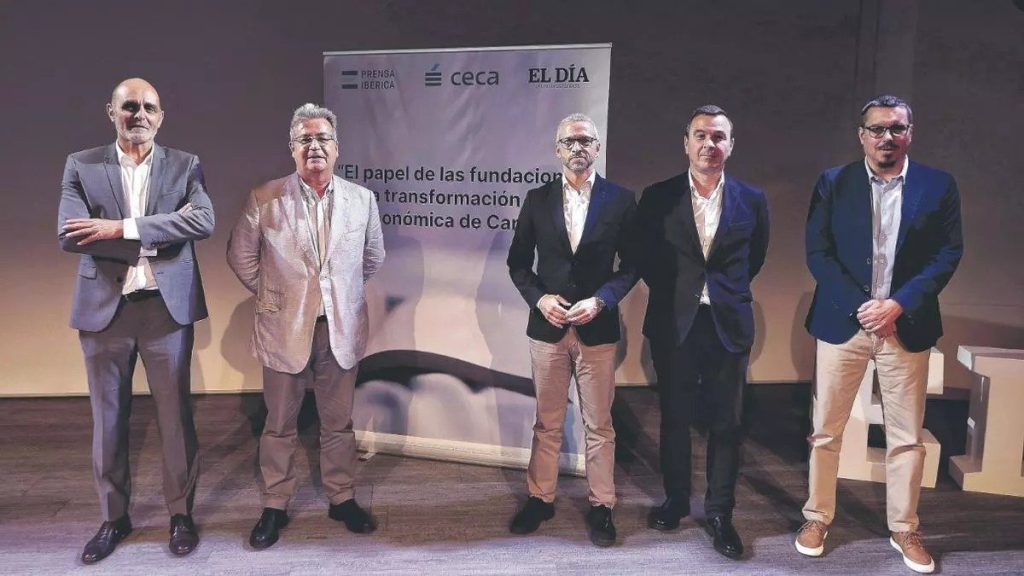
The entities associated with the CECA sector invested a total of 7.8 billion euros in 930,000 social work projects throughout Spain in the last decade.
The social work of financial entities has historically been associated with savings banks, and today, this type of project with social purposes has shifted towards the foundations of the CECA sector, that is, the association of savings banks and the banks created by them. A commitment that dates back to the 18th century with the emergence of the first charitable-social entities created to help the most vulnerable individuals.
This is the foundation upon which the Fundación CajaCanarias, Fundación La Caja de Canarias, and Fundación ‘‘la Caixa‘‘ are built. In the last decade, this effort represented an investment of 7.8 billion euros across Spain to promote 930,000 activities that reached an average of 31 million beneficiaries annually. For this reason, the Grupo Prensa Ibérica and its two newspapers in the Canary Islands, EL DÍA and LA PROVINCIA, together with CECA, have organized an expert panel on the role of foundations in the social and economic transformation of the Canary Islands.
The data presented by Alberto Aza, spokesperson for CECA, is compelling. In 2023, this sector invested more than 850 million euros. The investment in the social action area was the largest, with an allocation equivalent to 57% of the State Budget designated for family protection and child poverty.
“Our dedicated, silent work, away from the media spotlight, has endured for three centuries thanks to the cooperation among various foundations,” Aza stated.
All experts who participated in the debate emphasized that the social work supports Canary Island families through social and assistance programs; education and training initiatives, scientific research aid and R&D; cultural activities and actions for heritage conservation; promotion of employment and programs related to sustainability, the environment, and climate change. Undoubtedly, the foundations have contributed, and continue to foster, the social and economic transformation of the Archipelago in recent decades.
“We are heirs to a system of savings banks and pawnbrokers, and the strategic alliance among us, as well as with entities in the Third Sector, is in good health, so we will not turn our backs on all the people who need us,” assured Fernando Fernández-Morales of Fundación La Caja de Canarias.
Attention to groups of people with pressing needs, the prevention of such situations, and support for policies against social exclusion are the main action axes of these foundations that met at the event, some with their own programs for direct aid to families, and others through the allocation of resources to Third Sector entities, both nonprofit private and public.
“We understand the importance of the Third Sector and the people who work on the ground. Without them, we could do little,” argued Mauricio González Rodríguez, delegate of Fundación ‘‘la Caixa‘‘.
“We attend to people with real needs, and the entities in the Third Sector are in the neighborhoods,” added Fernández-Morales.
“What has changed is that we no longer directly depend on the results account of the savings banks which the foundations relied on. The funds are our own, and with them, we also develop our own mission,” insisted the delegate of Fundación ‘‘la Caixa‘‘.
“The social work represents a particular way of doing banking, in which banking business and social contribution are two sides of the same coin. The proof is that the CECA sector is the largest private social investor in Spain,” Aza defended. “And we are not only talking about a quantitative contribution but also a qualitative one, as thanks to its territorial rooting and proximity to the assisted groups, we can complement public policies, personalizing programs to the specific needs of individuals,” he added.
“Foundations have a proximity to the territory that should not be overlooked, and if we manage to align ourselves with sustainable development goals and create synergies between public and private actors in the region, we will be important actors in the economy and society of the Canary Islands as a whole,” argued Óliver González, head of Fundación CajaCanarias.
An example of this proximity to the territory is the CaixaPro Childhood program, which González Rodríguez defended: “it is implemented through nearby spaces in each municipality and its districts to provide opportunities and fight against child poverty in the most disadvantaged social classes.”
The objective is that “poverty is not inherited, and children can progress in the social ladder. It is a program that attacks social vulnerability but being aware that we alone cannot change reality either.”
This initiative is an example of the multidisciplinary work of social work, as it is not only aimed directly at minors but also at their families, since it seeks to ensure an optimal level of well-being in their environment that favors their growth and education. To achieve this, educational equipment is financed, summer camps and family educational workshops are promoted, attention is given to child nutrition and hygiene, and even psychological support or glasses and hearing aids are provided. It is a commendable and sustained effort over time, as in these special programs, each child remains for two or three years within a coordinated plan to promote and guide that minor. In total, CaixaProinfancia assisted more than 6,200 minors from 4,500 families in the Archipelago.
A similar action is carried out by Fundación La Caja de Canarias with its educational aid: “it reaches 32 of the 34 municipalities in the eastern province and last year executed 99.2% of its budget covering needs ranging from providing uniforms to tablets to try to alleviate the digital gap that became evident during the pandemic,” argued Fernández-Morales.
This program, specifically, helped 1,321 minors from 676 families in the Gran Canaria province.
“The fact that citizens consider foundations as something of their own helps us to better understand our work. This proximity allows us to develop our programs continuously over time, a necessary premise to contribute to the transformation of our society,” insisted González Rodríguez. In this regard, Fernández-Morales emphasized that “the 584,000 beneficiaries of social aid are not only those directly affected but also their families, who need both help and a break from their regular tasks towards the beneficiary. They also include all those who attend a cultural exhibition or a play that we promote.”
The data is irrefutable; labor integration projects facilitated 1,849 jobs in the Islands in collaboration with 435 companies; the Reincorpora program for incarcerated individuals enabled around one hundred integrations; 512 patients and 1,152 family members entered the Integral Assistance Program for People with Advanced Illnesses, and more than 5,700 Canarians participated in the 408 activities promoted by the active aging program of Fundación ‘‘la Caixa‘‘.
Specifically, and analyzing everything carried out for elderly individuals, Fernández-Morales emphasized that “the concept of the Elderly has changed a lot; now we talk about the Fourth and even Fifth Age, which is why these individuals need new motivations, because we believe in evolutionary training.” “All foundations have done a good job with the elderly because life is life until the end, and what we must achieve is to delay as long as possible their access to dependency,” Aza affirmed.
Speaking of social work should not only be synonymous with aid to vulnerable groups; this work of the foundations also aims at programs to foster research talent, with projects that are monitored and that, as González stated, “even inspire other researchers.” “Young people are the future of the islands,” insisted Óliver González, head of Fundación CajaCanarias.
A debate on social work among the highest officials of the foundations could not conclude without mentioning the program through which, in the words of the person in charge of Fundación CajaCanarias, they want to “promote Canary Island talent in the arts and culture.”
The International Festival of Canary Scenic Arts (CAE) has been committed for seven years to bringing theater to children and young audiences to contribute to their personal and educational development through the performing arts and, particularly, to create new audiences that mitigate the effect of falling attendance at cultural manifestations. The CAE, which “could not happen in any other way without the steadfast support of Fundación ‘‘la Caixa‘‘ and Fundación CajaCanarias,” offers a programming of performing arts, music, literature, and audiovisual arts that contribute to cultural exchange and coexistence among artists, audiences, and cultural agents, responding to the new challenges of dialogue and social, multicultural, diverse, and plural encounters, and fosters culture among children, young people, at-risk groups, and individuals with disabilities or functional diversity. This important festival is complemented by the promotion of exhibitions that contribute to the individual and collective development of the Islands.
In short, and as was confirmed during the expert panel and summarized as a conclusion by CECA spokesperson Alberto Aza, “the social work is our hallmark and its success fills us with pride and satisfaction.”
Tu navegador envía la señal Global Privacy Control: «Aceptar todo» no activa Marketing cookies. Puedes activarlas aquí si lo deseas.
These cookies are essential for the website to function and cannot be disabled. They are generally set in response to actions you take, such as setting privacy preferences, logging in, or filling out forms.
They enable enhanced functionality and personalisation, such as videos, live chat, preferred language and region.
They allow us to count visits and traffic sources in order to measure and improve the performance of our site. They help us to know which pages are the most and least popular.
These cookies are used to show ads relevant to you and your interests. They are also used to limit the number of times an ad appears and to measure the effectiveness of advertising campaigns.