


READING MATERIALS OF INTEREST
“The sector is much more solid than in the past and is in better conditions to face whatever comes; I do not rule out more delinquency”
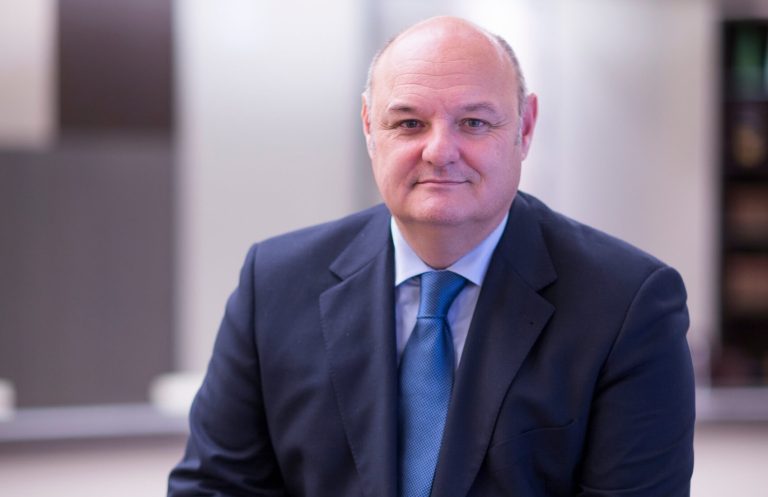
Alberto Aza, spokesperson for the banking association CECA, which groups together banks born from the transformation of the former savings banks and the only two entities of this type that still exist in Spain today, does not foresee a “liability war” with increases in deposit profitability due to rising rates like those that occurred in the past, but rather improvements for attracting customers. Aza, closely tied to Asturias and originally from the region (he is the son of the Asturian diplomat Alberto Aza Arias, who was Secretary General of the Royal Household), argues that Spanish banking is “much more solid than in the past and is in better conditions to face whatever comes.” He considers the new tax on banking a mistake because it will damage, he claims, financial stability, economic activity, and employment. He believes that Spain is one of the countries with the highest financial inclusion and has the third densest network of offices in Europe despite the closures of branches. He asserts that economic forecasts should be taken with utmost caution as they are subject to energy and geopolitical developments.
–The rise in rates benefits banks because it expands their margins, but it could also push delinquency and curb credit demand. Will the resulting situation be favorable or detrimental for the sector?
We have been in a decade of negative rates that have drastically narrowed intermediation margins, impacting profitability. Now margins are starting to widen, but we do not believe we will return to the positive rates of the past, so banks will need to continue working on improving their efficiency and operations. It will be more expensive for banks to finance themselves, and we could also see a rise in delinquency and a decline in credit demand.
–Will the balance of pros and cons be positive?
It will depend on the intensity of the rate increases, the energy market, and how geopolitics evolves. We must be very cautious with forecasts, but today’s banking is much more solid than in the past and is in better conditions to face whatever comes.
–The cost of mortgages is already rising with Euribor, but the remuneration of liabilities is lagging behind. Will the existing excess liquidity delay the remuneration of savings?
There is a lot of liquidity due to the expansive measures of the European Central Bank (ECB). However, we are already seeing that banks in the eurozone are starting to make offers, and Spain is one of the most competitive markets. It is possible that this trend of improving savings remuneration will be accentuated.
–Can specific timelines be given for bank accounts to regain profitability?
Yes, it is premature. But we are in a competitive market. While I do not believe we will see a liability war as in the past, there will be improvements to attract clients.
–Do you perceive delinquency to rise due to inflation, interest rate increases, and economic slowdown?
Delinquency remains low. It has not increased. However, we do not rule out that it may rise due to the international context and uncertainty.
–Can we talk about real estate risk due to the increase in the mortgage market?
No. The banking balance is very healthy, and the real estate sector does not have as significant a weight as it did in the past.
–How do you perceive the Spanish economy?
Any forecast should be taken with caution, as it may need to be revised. It seems that the economy is slowing down, although it will continue to grow. This year, Spain is projected to grow by 4.5%, according to Funcas, which is a very high rate, but we will see. Funcas forecasts a growth of 0.7% in 2023. Both growth and inflation predictions must be approached with great caution because we do not know how energy and geopolitics will evolve.
–You say that the banking market is very competitive, but the sector is accused of becoming oligopolistic after the major merger process that banking underwent since 2011.
The highly competitive nature of the Spanish banking sector is recognized internationally.
–Is there room for more mergers?
These are individual decisions made by each bank based on business criteria. They also depend on efficiency, which is already very high. By this criterion, we shouldn’t expect more large mergers. But this will depend on each entity. We have an intermediate level of concentration in the European context and a very efficient banking system.
–The significant reduction of offices and employment has caused discontent in less attended territories.
Despite the intense reduction in the network of offices and ATMs, Spain has, according to a recent IVIE study, the third densest network in the EU, behind Bulgaria and France, taking into account the population. While there are 3,232 inhabitants per office on average in Europe, in Spain the ratio is 2,463. In terms of ATMs (based on 2020 data), we have a ratio of 957, which is 27% lower than the EU average (1,312), but we are the fourth country in the area with the highest density after Austria, Portugal, and Croatia.
–However, there are reports of increasing banking exclusion, especially in rural areas and in what is called the “emptied Spain.”
The IVIE report shows that we are one of the countries with the highest inclusion. 98.4% of the Spanish population lives in municipalities with at least one access point to financial services. We start from a very solid network and structure. Moreover, we have the second most digitized entities in the world. In rural areas, the entities are developing alternative channels, such as mobile offices, financial agents, and agreements with non-banking operators, such as postal services and various businesses, to dispense cash. We are in talks with the Ministry and have a working group to respond to those municipalities with more than 500 inhabitants.
–Elderly individuals who are not well-versed in new technologies complain about restrictions on personalized assistance.
In February, a ten-point plan was launched to reinforce personalized attention for older clients. It is reviewed every six months with the Bank of Spain. In the first evaluation, 100% of the entities had already implemented measures, and 81% of the offices extended their hours from 9 AM to 2 PM for 6 million clients. Phone assistance has been implemented, and 92% of ATMs have been simplified. We are complying above what we had committed to.
–Are you concerned about competition from new technology-based financial service companies (“fintech”)?
Competition is good and necessary. And the “fintech”s are players that drive competition. But it is essential that we all play by the same rules. “Fintech” companies are gradually gaining market share because they are not subject to the same regulation. Banking regulation is very strict. Regulation is designed to protect clients, but what would happen if clients of operators not covered by the Deposit Guarantee Fund were left unprotected?
–The long-demanded European banking unity is delayed. Is an agreement on the horizon?
Work continues on this. There are still unknowns to be resolved. But there is a desire to advance. Many regulations need to be harmonized.
–What do you think of the new tax on banking?
It is a clear mistake. The banking sector is one of the sectors that pays the most taxes. Our tax rate is 53% when adding taxes and contributions to the Deposit Guarantee Fund. The new tax affects financial stability because it will lead to a sharp drop in results, reduce credit, and thus harm the real economy and job creation, and it clashes with constitutional principles. It taxes a supposed extraordinary benefit that does not exist. Some estimates predict a job cut between 5,000 and 25,000, but the Institute of Economic Studies (IEE) forecasts a decrease of 0.4% of GDP and a reduction of 72,000 jobs.
–Have you considered merging the three associations of the sector?
Associations make sense as long as their members find it so, and in CECA, there is recognition of their importance. But we collaborate with the other two associations and jointly defend the interests of our members. Each has distinct features. In our case, it is the existence of social and cultural initiatives, which in the case of banks originating from savings banks are developed by the banking foundations that participate in their capital. Social and cultural initiatives continue to be, year after year, the largest social investor, supporting families in times of difficulty, and, due to their territorial proximity, they can anticipate and capture needs.
These cookies are essential for the website to function and cannot be disabled. They are generally set in response to actions made by you, such as setting your privacy preferences, logging in or filling in forms.
They enable enhanced functionality and personalisation, such as videos, live chat, preferred language and region.
They allow us to count visits and traffic sources in order to measure and improve the performance of our site. They help us to know which pages are the most and least popular.