


READING MATERIALS OF INTEREST
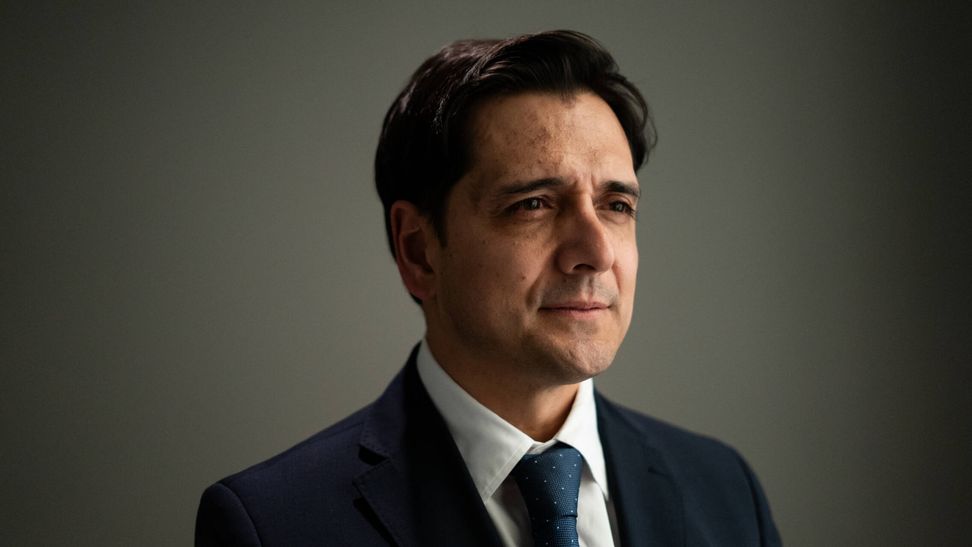
For a century, the Fundación Grupo Social has been operating in Colombia. It was created by a Spanish priest to meet the needs of the poorest. Since then, it has become an empire that maintains its foundational objectives.
It is not the parable of the talents, but it is quite similar. The parable teaches that the gifts granted by the Lord to His subjects must be given to the bankers to bear fruit. 113 years ago, the Spanish Jesuit priest, José María Campoamor, fulfilled the mandate narrated in the Gospel of Saint Matthew, and the result today is the Fundación Grupo Social. The Foundation is one of the first financial entities in Colombia without having lost its foundational ideals. Its president, Juan Carlos Gómez Villegas, just visited Madrid, at the headquarters of the CECA, the association of savings banks and banks created by the boxes themselves, such as CaixaBank, Unicaja, or Ibercaja, which is also a member of the World Savings and Retail Banking Institute (WSBI, for its acronym in English), presided over by Isidro Fainé. This international association is the largest retail banking entity in the world and offers financial services primarily to SMEs and families. The WSBI member entities have a total of 13.25 trillion dollars in assets, employ 2.1 million workers, and serve 1.4 billion clients in 69 countries through a network of more than 200,000 offices.
QUESTION. How is it possible that an institution like yours continues to operate more than a century later?
ANSWER. The organization was created by Father José María Campoamor, greatly influenced by what he saw in the circles of Catholic workers in Europe and savings banks. From the very beginning, he saw that promoting productive activity was key for the development of less fortunate people. The first thing he did upon founding the Círculo de Obreros de San Francisco Javier was to create the savings section of the Círculo de Obreros, which is Banco Caja Social. The Foundation has two modes of action in society, one is direct work with communities and the other is of an entrepreneurial nature. The companies are not simply financiers of the Foundation’s work but are an integral, essential part of the Foundation’s social work. This has worked for 113 years because it has managed to consolidate a solid governance system, because the Foundation, like all foundations, has no owner.
Q. Is anyone in charge?
A. We have two boards, in addition to three governing bodies. The three bodies are the Social Council, composed of seven highly qualified individuals who are completely independent of the organization’s administration, and an Executive Council, which serves as the board of directors of the organization, also with seven individuals completely independent from the organization’s administration. Finally, we have the presidency of the Foundation, which is the executive body of the policies made. They operate with a system of checks and balances among themselves. One is a technical authority and the other is more an axiological authority, directing. This did not exist from the beginning, but it has been consolidating and today we have a robust and mature system that has allowed us to achieve what we have.
“The Foundation believes that companies must generate an impact in society and fulfill a social function”
Q. Which carries more weight, the financial division or strictly the entrepreneurial management of the day-to-day operations of the businesses?
A. The Foundation is both an NGO and the parent of a business group. The companies exist because the Foundation creates them for its purpose. The purpose is to help overcome the structural causes of poverty to build a just, supportive, productive, and peaceful society. That is our purpose in the organization. This is what the 9,300 of us who work there every day dedicate ourselves to. The financial sector has always been very important since the time of Campoamor, as savings are the lever for a poor family to overcome its conditions of exclusion and poverty. But we are also involved in other sectors, such as housing construction and are making a small inroad into the tourism sector. We have also been very strong in the insurance sector since the time of Campoamor, with mutuals established by the workers themselves. They focus on death insurance, as they say in Spain, or unemployment insurance. Also for retirement protection, even before a social security system was established in Colombia.
Q. How do you reconcile the pursuit of social interest with profitability and financial solvency?
A. That is a great question. The businesses in the Foundation are not simply sources of financing; they are an integral part of its work. They are not an accident; they are deliberately chosen and fulfill a social function. The Foundation has believed that companies must generate an impact in society and fulfill a social function. The first is to solve real needs. Not simply to ask what I can sell, but what solution I will offer in front of a real problem people have. This involves selecting sectors, such as finance or social protection. What we do is identify the base segment of the social pyramid. Families with low incomes and small productive units. The smallest, even informal businesses. These are served by Banco Caja Social Colmena Seguros, which is another of the companies in the construction organization. The companies then focus on sectors or segments that others either do not want or cannot serve.
Q. Being a bank regulated by authorities, it must not be easy to ensure solvency.
A. It is not that it operates at a loss. Many people confuse what nonprofit entities are. The one who should not profit is the owner or who establishes the entity or who administers it.
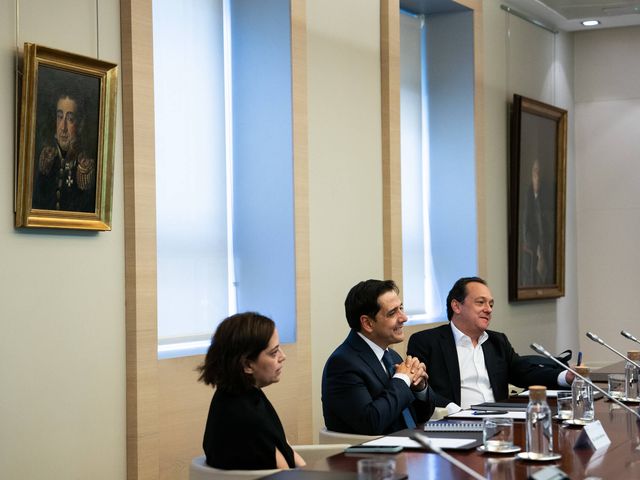 Gómez Villegas during an event at CECA, in Madrid. (A. B.)
Q. Are they profitable?
A. Our companies must be profitable. And so there goes the second function of the companies. The first is to meet needs. The second is to generate wealth, maximizing it for society, and fairly for the owner. It is non-negotiable for a company not to provide the maximum possible output for society. It is like the parable of the talents. Yes, there are the talents; they must be put at the service of society. And in a way, a businessperson is the holder, one might say, of the talents. It is non-negotiable that they do so as best as they can and produce. The Foundation itself has questioned what is the fair return on its capital investments and has found a rate for each type of company in each sector, which it considers a fair return that aligns with the risks of the type of activity each company is in and also contemplates a utility. We have a calculated reserve rate. Not even our companies know what rate we expect. It is something we manage in the Foundation and allows us some latitude. If there is extra profitability in the medium and long term, we have more to distribute. Companies must generate the maximum possible wealth for society as a whole and fairly for the owner. The third reason why the Foundation has companies is to form a community of people. When comparing, for instance, our companies with those in the sector, and I especially refer to Banco Social as an example, while 80% of the Colombian financial system serves corporate banking, even state banking, or high-income banking, I would say 90% of Banco Social is dedicated to families earning between two and four minimum wages and the smallest productive units.
“The Foundation was supportive. By the third month, seeing that COVID was going to last, we said: ‘those who can pay should pay, and we forgive 30%’.”
Q. How do you confront crises, which always hit the poor harder than high incomes?
A. The pandemic is an example. Let me describe it with an illustration. In April 2020, one month after the pandemic began, we faced very severe restrictions in the country. And then, as is logical, our clients, who are at the bottom of the social pyramid, were confined in their homes without the means to get out. Not even to get what was needed to do their grocery shopping, to pay for services, and less to pay their credit installments. What are we going to do?, we asked. And we remembered our slogan, the friendly bank. What does a friend do? We told our clients: ‘take care of your health, take care of yourself: we will talk later.’ We said the same to those who had loans with us. And what we did was forgive 50% of the interest on the monthly payment in April. The Foundation was supportive with its clients. By the third month, seeing that everything was going to last, we said: ‘whoever can pay should pay, and we forgive 30% of the interests on the installment. What happened was that a large number of the bank’s clients came to pay their loans.
Q. I fear that with how demanding the supervisory authorities are, this would be unthinkable in Spain or Europe.
A. The prudential regulations in Colombia are very strict as well, and this never put the solvency or liquidity of the bank at risk to meet all its obligations. At that time, the Financial Superintendency of Colombia, the bank’s authority, approved some regulations to assist debtors, which Banco Social, like the entire banking sector, embraced, and they were very positive, very positive. The donation of 30% was within our capabilities, and at that time, clients began to pay. However, we saw that the vaccines were far away, and many of our 600,000 clients continued to have problems. So we asked ourselves what we could do, but more structurally. We discovered that by relieving our clients’ cash flow for six months, many were able to get ahead. We calculated, and the Foundation, as the owner of the bank, decided to pay on behalf of all 600,000 clients 25% of the installments for half a year without demanding anything in return.
Q. Did delinquency increase?
A. We only required that clients meet their 75%. And that’s what happened. That was a huge effort for the Foundation that reached 100 million dollars. After those six months, clients returned to resuming their 100% installments. 96% of the bank’s clients resumed their payments. The foundation never collected a peso of what it had put in on behalf of its clients. That year, the bank was one of the least profitable in the entire Colombian financial system, with an ROE (return on equity) close to zero. But the following year, it returned to normal. Today it is a very profitable bank, one of the three or four most profitable in the system and we responded to our slogan: the friendly bank.
Q. What are its relationships with the rest of the private financial sector? Although your model is not the same as the old savings banks, in Spain there were tensions between them and banks, which accused them of unfair competition.
A. There was a regulatory reform in the 90s that forced the savings banks of that time, which were two or three, to turn into banks, so we no longer have savings banks; we have banks dedicated to the retail segment in Colombia. I would say that the Colombian financial sector is competitive. Our bank, Banco Social, is the best in our segment.
Q. I understand that your business model has nothing to do with that of cooperatives. In Spain, we have successful cases.
A. In Colombia there are successful cases too, but no, it is not a cooperative model. It is a bank that operates as a corporation. The owner is the Fundación Grupo Social. There are some entities that operate cooperatively, but they are few.
Q. How is the economic situation in Colombia?
A. Without being an expert on the subject, we have a high inflation situation, close to 9%, with still very high interest rates. The intervention rate is at 11.75, although with a downward trend. Today we see that the economy is gradually starting to recover. But it is a complex situation. Companies have less appetite to take on debt at such high rates. Delinquency has increased. With this economic framework, private investment has slowed down.
Q. Has economic policy changed much with Gustavo Petro?
A. Yes, I would say that there is a set of reforms being proposed by the Government that have generated a lot of uncertainty for investors. But economic policy in Colombia so far has remained, let’s say, firm, adhering to fiscal rules and a certain prudence in public finances. This Government tends toward subsidies, etc. Let’s say that of the economic variables, much more than the economic public policies, those have not changed. There are announcements suggesting a search for some change in the model, but nothing has materialized from that yet. However, one major issue is the uncertainty that investors have faced in relation to the reforms but also regarding the economic climate.
Q. Returning to the Fundación Grupo Social, is it a kind of compassionate capitalism, I say that in quotes.
A. It could be said so. The Fundación Grupo Social believes in the economic system based on companies and in entrepreneurial freedom. It believes deeply in that and its companies are designed to operate there. To compete in a free market economy. The Foundation is not a typical foundation; it does not have a charitable character. The Foundation does not give away, does not assist, does not subsidize. What the Foundation does is support communities and people with fewer opportunities so that they themselves can become managers of their own development. And it does this in all dimensions, in business and in direct programs it has in various territories across the country, but also with its collaborators in its integral management. It serves as a resource for underprivileged individuals to advance and to take control of their destiny. It plays that role of giving that little push and accompanying communities. You should not give the fish, but teach to fish. And I would say that the Foundation goes one step further; we fish together. The dignity of the human being is very important.
Q. Can it be said that the Foundation reaches where the welfare state does not?
A. I would say yes, but the foundation cannot replace the State. The foundation must be able to demand from the State what the State is supposed to do, both in terms of businesses and in direct work programs with communities.
Q. How do these communities function?
A. These are our territories of progress scattered throughout the country. We have non-touristic Cartagena, which is located across the swamp, and is extremely poor and vulnerable. Neco, a municipality in Antioquia, located on the Caribbean coast, and also in Nariño. We have another small municipality, Tangua, and we have two initiatives in Bogotá in very excluded and marginalized areas, and in Algeciras in Huila, located in the center of the country. What we do is select particularly poor territories, and when we talk about poverty, we refer to monetary poverty and multidimensional poverty, specific exclusion conditions, but in areas where the Foundation can operate. If we used to work by activities, now we work in territory with all the people in that territory. Our officials start to roam around and know details about what is happening there. This is a multi-year plan, spanning many years. It is not only about material issues but also about community living, environmental aspects, conflict resolution, etc. When we arrive, we begin to measure, and then periodically, every two years, we measure what is happening in those territories to see if we are achieving the impact we want to achieve because our commitment to those communities is to leave when they have started a path of progress. When we see that there is no turning back, we leave and settle elsewhere.
These cookies are essential for the website to function and cannot be disabled. They are generally set in response to actions made by you, such as setting your privacy preferences, logging in or filling in forms.
They enable enhanced functionality and personalisation, such as videos, live chat, preferred language and region.
They allow us to count visits and traffic sources in order to measure and improve the performance of our site. They help us to know which pages are the most and least popular.