



READING MATERIALS OF INTEREST
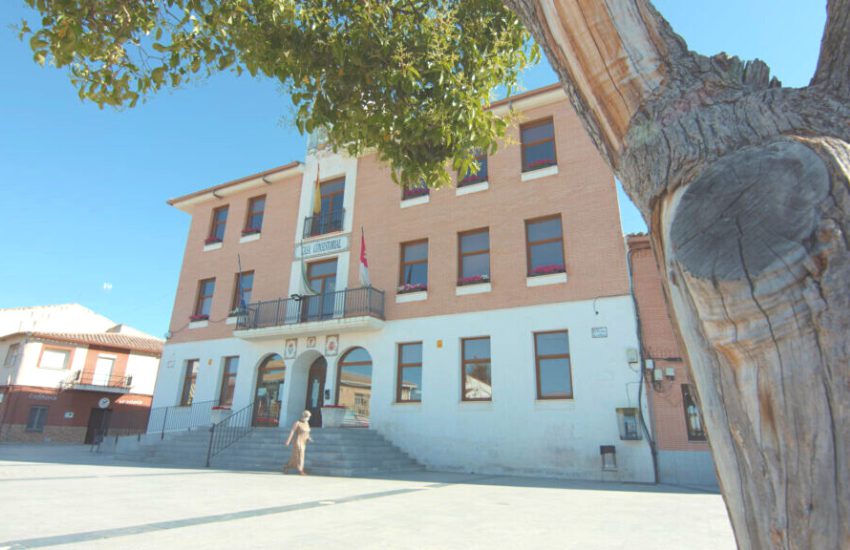
They are the mirror in which to see the origins of banking: they have a strong territorial connection and offer personalized and quality service, especially to those who need it most. We traveled to the small town of Las Ventas de Retamosa to learn about their work.
The future was not about every person having flying cars at their doorstep or living in a floating house. It was not about traveling in a blink and appearing on the other side of the world. The future was depersonalization, spending hours of precious time stuck in traffic, and becoming dependent on machines. We go shopping, fill our gas tanks, purchase online… And we do it all without interacting with anyone. This has been completely normalized in medium and large cities, but a better world exists. It can be found in a place known as Empty Spain, which is often unjustly underestimated.
In rural areas, those greatly forgotten, a trace of humanity still remains, an immeasurable attachment to social relationships, without networks, without likes, without ephemeral stories. People who greet the baker by name. Patients who don’t need to wait for the doctor to read their history on the computer because they know their background by heart. Bankers who inform you of an upcoming payment due. What matters are the people.
A COMMITMENT TO A MORE HUMAN AND PERSONALIZED SERVICE
In these towns in Empty Spain, the large supermarket chains have not arrived. The traditional grocery store survives, run by Antonia, Paco, or perhaps Herminia’s granddaughter, who tried her luck in the big city and discovered that capitals were not meant for her, that life in the village was better.
And she returned, thereby adding her story to the heart of a town that, although time may want to kill it, continues to beat with more passion than ever. Because those who stay here, who forge their history on the cobbled paths of their village, are the ones who truly love the place. It does not matter if they sign their lives away in that municipality, if they return after a few years away, or if they take it on loan for a time. In these villages, everyone is welcome, and everyone is part of the family.
There are no hospitals, nor fast food franchises for that matter. The usual bar is the one constant, just like the regular neighbors who every Sunday afternoon continue to go for vermouth, draft beer, or soft drinks for less than a euro. And if it comes with a tapa of good local cured meat, all the better.
But there is something that is still needed in these towns: money. Although they remain stoic in the face of an increasingly capitalist world (they do not live in the rat race, thankfully), they do need money for everything. Like everyone else. The current world does not make it easy for a population that, in most cases, is aging and lacks digital tool knowledge. According to the Bank of Spain, 1.3 million people find themselves in a vulnerable situation regarding access to cash and other financial services.
For this reason, financial entities have not abandoned these areas and have continued to provide service, true to their commitment to the territories, offering it in a different way. In this regard, the entities associated with CECA (CaixaBank, Kutxabank and Cajasur Banco, Abanca, Unicaja Banco, Ibercaja Banco, Caixa Ontinyent, Colonya Pollença, and Cecabank) have initiatives that have been in place for several years to ensure access to basic services, such as cash withdrawals, direct debiting of bills, or making deposits.
This is why the role of financial agents in the towns of Empty Spain is so important, as they allow the residents to continue managing their finances normally.
THE ROLE OF FINANCIAL AGENTS IN RURAL SPAIN
Entities that operate in rural areas play a different role than branches in large cities. With a very close and personalized approach, they help the population, meet their needs, and continue to provide an essential service for all.
As Luis Dorda Echavarri, a financial agent of Unicaja Banco in Las Ventas de Retamosa, explains, in a small municipality in Toledo with only 3,600 inhabitants, working in a rural entity in such a municipality means addressing needs, especially for older people: accompanying them to the ATM, teaching them new models, or explaining how digital banking works.
Financial agents are always available, at all times and in all circumstances, because they are an essential part of the community, and that is why their vocation is to provide solutions to their neighbors and their finances, a job that is, above all, help and support.
In many cases, they are also people with a territorial connection, often locals of the municipality. They work independently, but with the support of banking entities, to offer the maximum coverage and the best quality to their inhabitants.
A quality that reduces the prominence of automation and places all its bets on personalization, on human interaction, on the trust of that financial agent, who is also a neighbor. Many of them even offer their personal mobile phone number to those in need, because, above being their clients, they are their friends.
Financial inclusion is now more important than ever. They are one of the solutions to the closure of branches in less populated areas, alongside others such as: the cash service that entities provide to customers at Post Office offices, known as Correos Cash; cash-back, a system carried out in collaboration with businesses or dining establishments, allowing citizens to pay by card an amount greater than their purchase to receive the difference in cash; and mobile offices, which guarantee service in the rural network and promote closeness with customers.
They are part of the future, those who continue to make life more pleasant, more human, less strange, as that song which has also aged said, although we heard it in what was a heartbeat for us. They contribute their grain of sand to ensure that life in the village remains an oasis in the midst of a desert of humanity, the calm in a storm marked by the frantic pace of the capitals, the hope in a world of likes and selfies because what truly matters are the people.
These cookies are essential for the website to function and cannot be disabled. They are generally set in response to actions made by you, such as setting your privacy preferences, logging in or filling in forms.
They enable enhanced functionality and personalisation, such as videos, live chat, preferred language and region.
They allow us to count visits and traffic sources in order to measure and improve the performance of our site. They help us to know which pages are the most and least popular.