



READING MATERIALS OF INTEREST
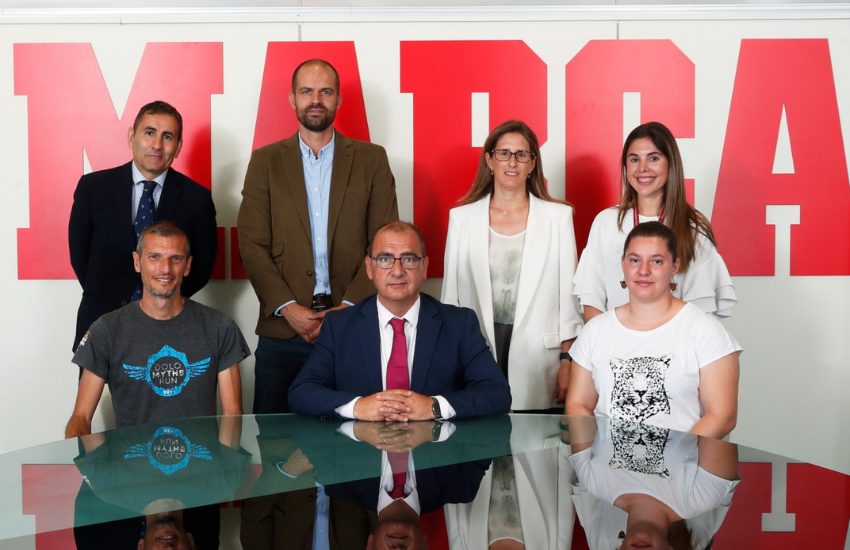
Alongside athletes Pablo Villalobos and Natalia Sánchez, CECA presents the Financial Education Project for Athletes, with the support of the Higher Sports Council.
The retirement from elite sports is one of the most challenging moments for athletes, who often face an uncertain future after years of dedication and sporting successes.
In recent days, basketball player Laia Palau, skeleton pilot Ander Mirambell, and rugby player Patricia García have announced their farewells, but now athletes have more resources and training to face a new vital stage with assurance and peace of mind.
As part of this training, numerous athletes have sought financial knowledge, a request that the entities associated with CECA (CaixaBank, Kutxabank and Cajasur Banco, Abanca, Unicaja Banco, Ibercaja Banco, Caixa Ontinyent, Colonya Pollença, and Cecabank) have developed through a Financial Education Project, driven by swimmer Ona Carbonell, ambassador of the Social Work and Financial Education of CECA, and with the support of the Higher Sports Council, through its High-Level Athlete Support Program (PROAD).
“Ona Carbonell, as an ambassador of CECA, was concerned about this issue because she has experienced it firsthand, along with her teammates,” explains Margarita Castañeda, CECA’s communication manager. “We found it very interesting because it is a need that was not being met. It is an online course that allows athletes to balance it with their training and do it in their free time. And it has been very well received. Financial education is a vital subject for everyone because throughout life, situations arise in which decisions must be made, and it is important to have that knowledge.”
Thus, over 500 athletes from different federations have enrolled in this 15-hour online course that offers appropriate and tailored content for athletes, such as topics on taxation, athlete mutuality, scholarships… “The course combines basic knowledge with specific topics for them,” Castañeda explains.
Because the objective of the project is not only for athletes to learn to manage their personal finances and income during their active sports career but also to evaluate and reflect on the day after, the moment of retirement.
This is confirmed by athlete Pablo Villalobos, one of the athletes who has taken the course and who also works in PROAD. “It was very necessary content,” he assures. “It is a course very adapted in its content for athletes, discussing scholarships, aids… It allows you to have a horizon for financially planning your career until your sports retirement. It is content that grabs athletes’ attention because they know they will use it in their day-to-day life.”
Natalia Sánchez, a hammer thrower, has also completed this training, which she deems essential in her career. “It is a flexible course that you take when you have time. It explains the content in a very approachable way. There are forums where they also resolve your doubts and it is very practical,” assures the athlete, who emphasizes the peace of mind that this type of training provides. “You already know how to manage your income, and that is very positive.” This initiative is supported by PROAD, which identified a demand among athletes for financial knowledge. “From PROAD, we believe that any resource or content that can be used by athletes to maximize the optimization of financial resources was ideal,” explains Diego Barrio, Head of Service at PROAD in the CSD. “We accompany high-level athletes throughout their sports career, with advice and training and employment resources. We provide a tailored service based on the needs of each athlete.”
These cookies are essential for the website to function and cannot be disabled. They are generally set in response to actions made by you, such as setting your privacy preferences, logging in or filling in forms.
They enable enhanced functionality and personalisation, such as videos, live chat, preferred language and region.
They allow us to count visits and traffic sources in order to measure and improve the performance of our site. They help us to know which pages are the most and least popular.