



READING MATERIALS OF INTEREST
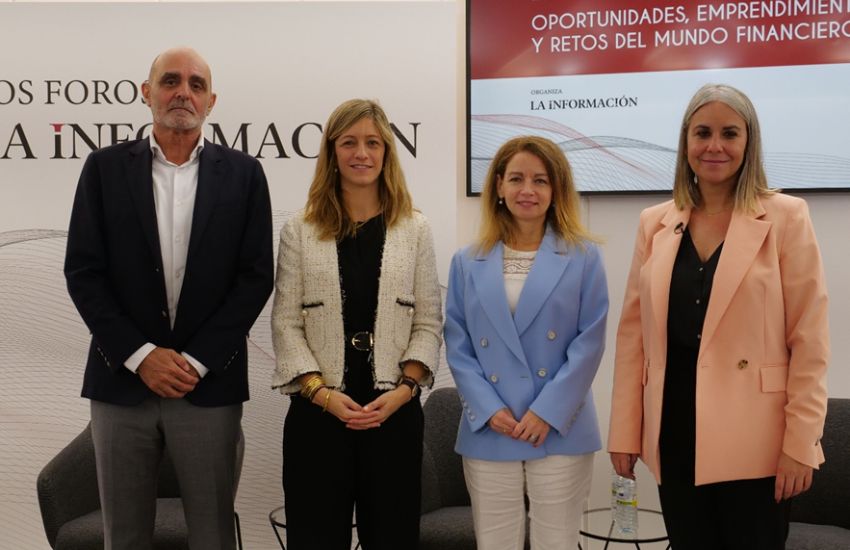
Experts assert that it is essential to establish the habit from school so that saving and investment become relevant to citizens throughout their lives, ensuring their well-being and economic health.
Spain needs to enhance the financial education of its citizens to achieve a better understanding and greater economic independence, according to participants in a roundtable discussion on the topic organized by La Información, which analyzed entrepreneurship opportunities, challenges in the financial world and training as a guarantee of personal and professional success. The meeting, held in collaboration with Mapfre at the headquarters of the EOI (School of Industrial Organization) in Madrid and moderated by Cristina Triana, deputy director of La Información, included Marta Viéitez, corporate learning deputy director of Mapfre; Alberto Aza, spokesperson for CECA (association of Banks, Savings Banks, and Foundations); and Patricia Tato, partner of Financial Instruments at KPMG in Spain.
Patricia Tato, from KPMG, stated that “financial knowledge grants economic independence to individuals, enhances competitiveness, and enables better choices.” Therefore, she advocated for “more training of this type at an early age and in high school.”
According to Marta Viéitez from Mapfre, financial education can contribute overall to “the well-being of citizens by helping them manage their personal finances appropriately.” Additionally, this expert explained that training in this area “must be developed throughout life, acquiring knowledge progressively.” Regarding the financial information of Spaniards, she noted that “it has improved over the years, but there is still a need for substantial influence, especially at early ages and in schools.” In her view, “habits are very important, and if one becomes accustomed from childhood to reading about the significance of saving and investing, they will continue doing so throughout their lives.”
For his part, Alberto Aza, from CECA, pointed out that individuals with high financial knowledge “often have planned their retirement, maintain an appropriate level of indebtedness, are provided with various sources of savings, and have a sufficient cushion to face the most challenging moments.” Meanwhile, those without this knowledge “are clearly prone to bankruptcy.” The eurobarometer published before the summer highlighted that the situation in Spain leaves much to be desired in this regard. “We are the fourth country with the lowest financial knowledge, and this requires serious reflection and the implementation of ambitious public policies in which the private and financial sectors also collaborate.”
The Risks of Digitalization
Experts agreed that digitalization has boosted financial education, but they also warned of the risks that the internet entails, prompting Marta Viéitez to emphasize the importance of cybersecurity. In this regard, Patricia Tato recalled a study conducted in 2022 concluding that 70% of the Spanish population uses digital banking. “This opens up a range of possibilities, with personalized products and offers, but also a greater risk of falling into fraud and making hasty decisions.” Therefore, “there is a need for extensive educational efforts, especially for the more vulnerable segments of the population, such as older adults.”
Alberto Aza also acknowledged that digitalization “is a window of opportunity for financial knowledge,” but expressed concern for some young people who “are suddenly becoming digital investors without having the necessary knowledge,” which can make them “easy prey for potential fraud or excessive risks.” On the other hand, he asserted that financial training also contributes to avoiding the digital divide among different population segments.
The importance of adapting to the specific needs of each group was another point debated. The spokesperson for CECA recounted a project by the FUNCAS foundation to mobilize resources and finance financial education projects, “where we identified a group that was completely neglected, high-level athletes, whose careers are often short and generate high incomes, making it essential to teach them how to manage those.”
Another segment that, in his opinion, needs attention is that of young people. “More than 50% of those under 29 invest in cryptocurrencies; and one would have to ask whether they are aware that they are putting their money into a volatile and high-risk asset.” Many of them are “influenced by the information they find on social networks and by some questionable gurus.” Furthermore, Aza stated that “according to a survey, 4 out of 10 respondents acknowledged after the pandemic that they needed to strengthen their financial knowledge.” He asserted that if many entrepreneurs had sufficient financial training, their companies could “achieve greater scalability.”
Children’s Education
The Mapfre executive noted that her company also provides “extensive internal training so that our employees know how to advise and reach clients.” However, she added that “we do not stop there, but in our sustainability plan, we have an action line that is financial education to reach all audiences, both internal and society.” Additionally, “the Mapfre Foundation works with schools to instill financial culture in younger children, doing so through various playful games that help them acquire key concepts,” she emphasized.
Meanwhile, the KPMG expert highlighted some advancements that have occurred in the regulatory sphere, especially following the financial crisis. She pointed out that “in the crypto world, there is already a directive, although it is true that it is a complex and high-risk market; and at the investor level, we have regulations such as Mifid.” Finally, she concluded that “having financial knowledge allows an entrepreneur to establish any business and access the necessary funding. It also fosters the economic evolution of any country, improves the productive fabric, avoids risks, and reduces delinquency.
These cookies are essential for the website to function and cannot be disabled. They are generally set in response to actions made by you, such as setting your privacy preferences, logging in or filling in forms.
They enable enhanced functionality and personalisation, such as videos, live chat, preferred language and region.
They allow us to count visits and traffic sources in order to measure and improve the performance of our site. They help us to know which pages are the most and least popular.