



READING MATERIALS OF INTEREST
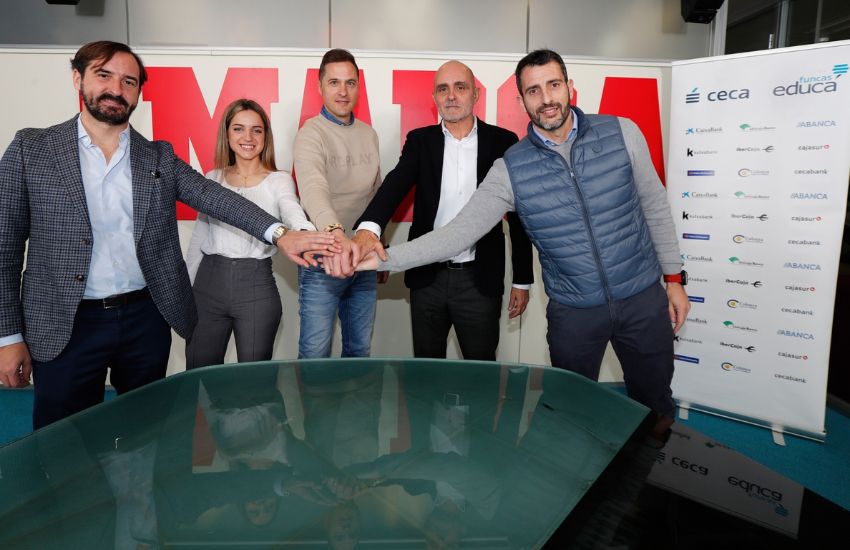
CECA, RFEF, and CEF-UDIMA develop a plan focused on the financial education of athletes.
Last week, a reflection by Javier Aguirre, coach of Mallorca, circulated rapidly on social media regarding the need to show players how to invest their money wisely. This issue is almost as old as football itself, with players being led astray by poor financial decisions—something that happens not only to those with million-dollar contracts and good advisors by their side.
In this context, the initiative led by CECA (Association of Savings Banks and Banks), the Royal Spanish Football Federation, and the Financial Studies Center (CEF-UDIMA) is situated.
The objective is to equip players with the training and information necessary for making decisions that will be vital for their future.
Alberto Aza, on behalf of CECA, explains the purpose of the courses in which more than 700 athletes are already involved. “There was a real need. Elite athletes have very complicated schedules. They dedicate much time to personal training, workouts, and competitions, and they really do not have many opportunities to keep up to date on financial matters. The aim is for them to have greater control over their financial reality and to plan beyond their successful professional career period.”
José Antonio Culebras, educational head for the lower categories of the national team, has seen it all during his time in the lockers of professional teams. “I have always had a particular sensitivity towards this issue, a lot of curiosity. Now it’s added that my work is in tutoring. There are many situations you read about, you see in reports, that really make you sad. It’s important to provide athletes with tools so they make fewer mistakes and to encourage them to count to 10 before deciding. Why wait until the day after you stop playing to manage your money wisely? Where we do not gather information, we need to gather training.”
This project does not only involve football players and coaches. The refereeing world is not excluded and plays a very active role in the program’s development. The voice of this initiative comes from Alicia Espinosa, who not only referees matches in the Liga Iberdrola but also holds a degree in Aerospace Engineering. “I find this initiative very interesting from the perspective that, as has been said, the career of an elite athlete is very short. A lot of income is received in a very short period of time. Therefore, it is important to have a long-term view. On the other hand, normally when you are exercising as a high-level athlete, you cannot work in other areas. Your labor career is almost limited to sports, also in professional refereeing because we are another athlete. That’s why I believe these types of initiatives are essential.”
The Financial Studies Center has joined this project. “We are new to this initiative. We join with enthusiasm because we believe we can do something interesting and necessary. The RFEF understands that it is a necessity, and they are the ones closest to these professionals. It is our pleasure to contribute and ensure continuity,” explains Arturo de las Heras on behalf of CEF-UDIMA.
The goal is to create a more well-rounded and educated athlete.
A Commitment from the RFEF
The Financial Education Course is open to any federation that wishes to join the initiative (comunica@ceca.es; 649463005). The Football Federation is one of the pioneers in a project in which the Higher Sports Council also plays a significant role in its work of protecting athletes beyond the period when their activity takes them into a bubble where the future is not well seen. From the Ciudad del Fútbol, Israel López, director of Training and National Coach School of RFEF, analyzes the project and its implications.
QUESTION. What does this alliance between CECA and RFEF imply?
ANSWER. Training is a strategic pillar for RFEF, necessary to remain at the forefront and continue being a reference. Thus, we are very proud to have added to our extensive training offerings the Financial Education program from CECA and CEF-UDIMA.
Q. What do finances mean for an athlete’s life?
A. Having knowledge of finances, regardless of one’s professional level, is vital for daily life, which is why we consider this project as a necessary service for our coaches, referees, and players. Regardless of having expert financial advisors, having basic knowledge in this area is fundamental.
Q. What would you highlight about this course?
A. It’s a very dynamic course, with a flexible format, real success cases of athletes, and a curriculum that fully adapts to the needs and pace of athletes, who are the target audience we are addressing from RFEF. Everything we can provide and continue to offer them in their daily lives is beneficial in terms of directly empowering them in this area. Training is a holistic process; it encompasses all fields, and this is one important area.
Tu navegador envía la señal Global Privacy Control: «Aceptar todo» no activa Marketing cookies. Puedes activarlas aquí si lo deseas.
These cookies are essential for the website to function and cannot be disabled. They are generally set in response to actions you take, such as setting privacy preferences, logging in, or filling out forms.
They enable enhanced functionality and personalisation, such as videos, live chat, preferred language and region.
They allow us to count visits and traffic sources in order to measure and improve the performance of our site. They help us to know which pages are the most and least popular.
These cookies are used to show ads relevant to you and your interests. They are also used to limit the number of times an ad appears and to measure the effectiveness of advertising campaigns.