



READING MATERIALS OF INTEREST
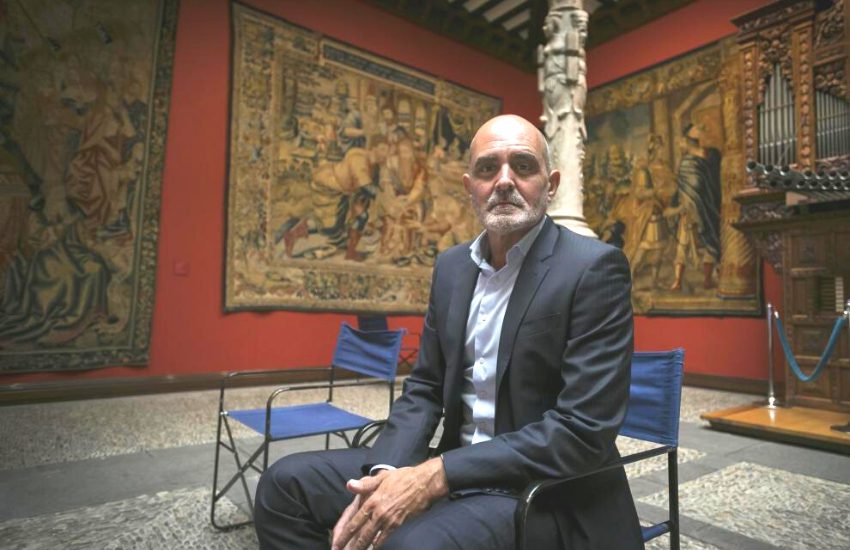
He was in Zaragoza for a day dedicated to the values of sports, the Social Work, and financial education. Savings banks became banks, but they continue to work in the social sphere.
To what extent?
Savings banks had many years of experience supporting society with actions beyond the financial scope, aiming to assist the most disadvantaged individuals and ensure social cohesion. During the pandemic, this was more evident than ever. The crisis has been extremely unequal, with the most vulnerable groups—those with the lowest incomes, unemployed youth, and immigrants—being supported through the Social Work. Therefore, I believe that the Social Work has significant importance and will continue to do so, as demonstrated during the pandemic. In this field, it has been a major private social investor. The former savings banks have mobilized 3.8 billion euros in the last five years and 772 million in 2020.
Is there still a noticeable difference between the entities of CECA and those in the Spanish Banking Association (AEB)?
The Social Work is at the origins of the savings banks and remains relevant. Following the law on savings banks and banking entities, the activities of the former savings banks were segregated into two: on one hand, there is the banking activity, which develops financial operations, and on the other, there is the foundations’ activity, which develops the Social Work. This is a distinguishing feature of the entities affiliated with CECA.
How do CECA’s actions coordinate with those of the AEB?
Now there are two banking associations. At CECA, we collaborate closely with the AEB on a daily basis, presenting joint initiatives. A very significant example is everything we managed to achieve together during the pandemic, responding with unprecedented strength. For instance, this has enabled us to mobilize an economic amount far exceeding the European funds that will be available over the next six years. Therefore, the relationship is excellent, and we share many viewpoints; however, there are indeed distinguishing elements, such as the one we mentioned regarding the Social Work.
You spoke about the coordination of financial entities during the pandemic. This shows that the banking sector behaved very differently from the previous economic crisis.
The banking sector in this crisis started from a position of financial solidity that is unlike the previous situation, with a different governance structure, which has allowed the entities to assist SMEs, self-employed individuals, protect businesses, and support families. Ultimately, the banking sector has acted as a dam against the crisis, supporting businesses and the most vulnerable groups. The question is, what would have happened if the banking sector had not been present to guarantee payments and provide technological infrastructures for us all to work from home?
What is the state of the banking sector after the economic crisis caused by COVID? Has it emerged stronger?
Public opinion has given a very positive assessment, with a score of 8 out of 10, according to GAD 3. However, the banking sector faces other challenges, including working with negative interest rates for an extended period. Another issue is that it forces banks to digitalize to meet customer demands and continue innovating. There is also the challenge posed by ‘fintech’ companies, which operate in the financial sector without regulation, thus competing under unequal conditions. These are generally the challenges, and from there, we must ask ourselves where the banking sector is heading.
And where is it heading?
Towards greater digitalization; in fact, in some entities, the number of digital customers already exceeds 80%, which is an extremely high figure. In any case, we see digitalization as a driver for innovation. The banking sector must also adapt to everything related to customer service, which was traditionally physical and product-focused, while now there is a greater emphasis on service. A value-added service very different from what was previously offered, related to operations that today are completed in seconds. Ultimately, the banking sector must make an effort to renew itself daily. It is true that Spanish banking is above the European average in terms of efficiency, but there is still a way to go, also through the reduction of installed capacity, which in light of this digitalization has shown that we are overdimensioned. This has led to restructuring processes that tend to be somewhat unpopular. Consolidating workforces is not a new issue, but technology drives us to gain efficiency and profitability. In reality, the major challenge lies in transnational mergers, which is something that has been discussed for a long time but has not materialized. In the domestic market, the level of banking concentration is higher compared to other countries, alongside superior efficiency.
These cookies are essential for the website to function and cannot be disabled. They are generally set in response to actions made by you, such as setting your privacy preferences, logging in or filling in forms.
They enable enhanced functionality and personalisation, such as videos, live chat, preferred language and region.
They allow us to count visits and traffic sources in order to measure and improve the performance of our site. They help us to know which pages are the most and least popular.