



READING MATERIALS OF INTEREST
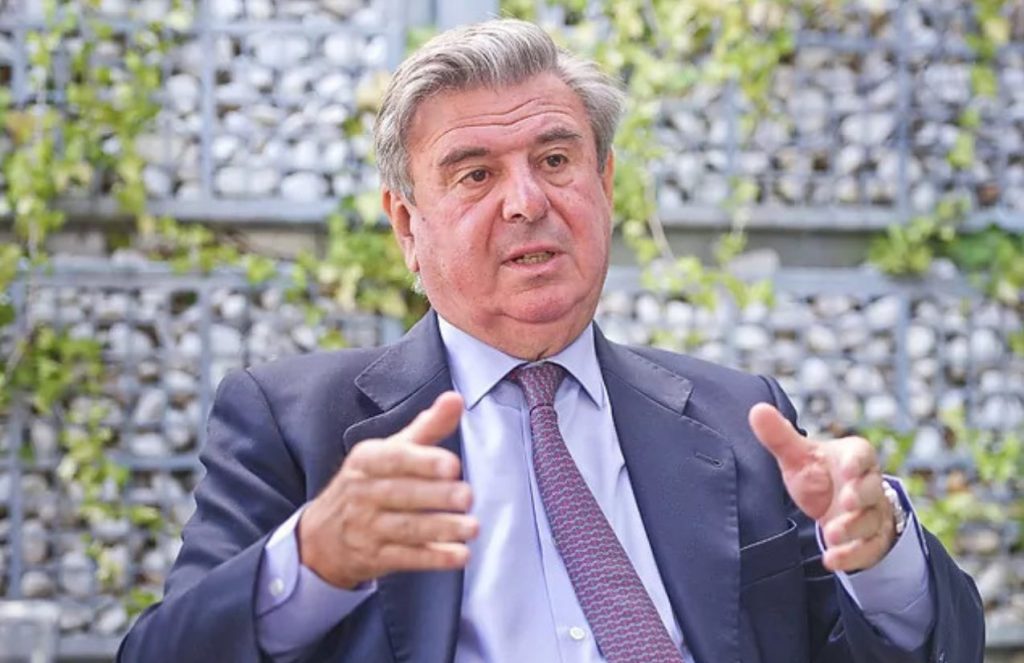
The former Spanish ambassador in London warns of the risk of not having enough time to invest the Next Generation funds. “The clock ticks,” he emphasizes.
In February, Carlos Bastarreche Sagües (Madrid, 1950) left his position as ambassador in London after a long diplomatic career that took him to Brussels and Paris, with an interval as a director at Airbus. His rest period, after living through the Brexit negotiations, was short-lived, as in May, the Spanish Banking Association (AEB) and CECA offered him a position as their senior advisor on European matters.
“I am told that I am the first person in history to have a business card with the logos of AEB and CECA,” Bastarreche points out in an interview with Expansión. His main mission is to help structure the role of the financial sector in deploying the 140 billion euros allocated to Spain under the Next Generation European funds plan.
Why have the banking associations hired you as an advisor?
The AEB and CECA collaborate on many issues, more than people think, and now they thought it would be convenient to have someone with experience in European and Spanish public administration to better understand the role of banks in European funds. Additionally, I have known José María Roldán and José María Méndez [president of AEB and director general of CECA, respectively] for some time, who contacted me, and here I am.
Do you already have a clear understanding of what the role of banks will be in the Next Generation plan?
The sector’s role is fundamental and essential for the funds to have a multiplying effect and to deploy investments above 500 billion. Without banks, the funds cannot reach SMEs, families, and self-employed individuals since the sector has the most reach, serving all types of clients everywhere. Moreover, the business of the sector consists of analyzing risks and providing credit, which will allow for anticipating and co-financing the aid that the Government allocates.
Some may think that banks are only interested in making money from European funds.
The reality is that the direct benefits for banks’ bottom lines will be irrelevant, as already happened with the ICO lines to combat the pandemic, which were a great success. Institutions have a genuine interest in ensuring that the funds are also a success for two other reasons. First, it allows them to offer a new service to their clients by helping them receive and use the subsidies, which will strengthen their solvency. Secondly, if the objectives are met, the funds could boost the Spanish GDP by 1.5 to 2 percentage points. Economic improvement is positive for banks, as their client is Spain.
However, it seems that the process of allocating subsidies is slow, and the positive effects on GDP are starting to be revised downward, at least for this year.
As Michel Barnier [former European Commissioner in charge of negotiating Brexit] would say, the clock is ticking, and there is no time to waste. There is concern because time is running fast, and the publication of regulations and awarding processes needs to be accelerated, as the funds must be committed in 2023 and used by 2026.
How can this process be expedited?
The year 2021 is a year of transition, but 2022 will be critical to truly launching the development of the funds. To achieve this, there is no secret; the publication of the corresponding decrees must be accelerated, and great transparency must be given to aid grants to stimulate demand. In fact, unlike what happened with ICO lines after the pandemic, here it is necessary to generate demand for the funds, as in many cases there is not an urgent need for companies or individuals to apply for them.
Do you see urgency in the Government to meet these deadlines?
I see a desire within the Administration to meet the deadlines, and they are aware of the need to increase the speed of the process.
It seems that large companies have an advantage and are the most prepared to apply for these funds. There is room for everyone in the funds. There are programs that require a large leading company, like when investing in building an electric vehicle factory, which can filter through to the entire economy via suppliers. But there are other plans, such as those promoting the rehabilitation of homes, plans for purchasing electric vehicles, and aid for the digitalization of SMEs, where incentives need to be launched to encourage people to apply.
Can banks help these small clients access the funds?
Another advantage of banks is that they are highly digitized, and all entities already have software programs in place to detect aid calls that are most suitable or that could best match their clients. It is a position that no other sector has. One of the plan’s objectives is to improve the business demographics of Spain, facilitating the growth of SMEs, as the current weight of companies with fewer than 50 employees is higher than that of the rest of Europe. It is a strategic objective, and banks can help achieve it.
Does the latest decree on housing rehabilitation send the right signals?
We need to see its development, but in principle, it is positive. In addition to direct aid, it includes a line of ICO guarantees and creates the figure of the rehabilitation agent, who can help homeowner associations mobilize, complete procedures, and access subsidies. In fact, it might make sense to create agreements or consortia between financial entities and construction companies to create these agents. It is important to note that currently, 30,000 homes are rehabilitated in Spain each year, and the medium-term goal would be to reach 300,000.
These cookies are essential for the website to function and cannot be disabled. They are generally set in response to actions made by you, such as setting your privacy preferences, logging in or filling in forms.
They enable enhanced functionality and personalisation, such as videos, live chat, preferred language and region.
They allow us to count visits and traffic sources in order to measure and improve the performance of our site. They help us to know which pages are the most and least popular.