



READING MATERIALS OF INTEREST
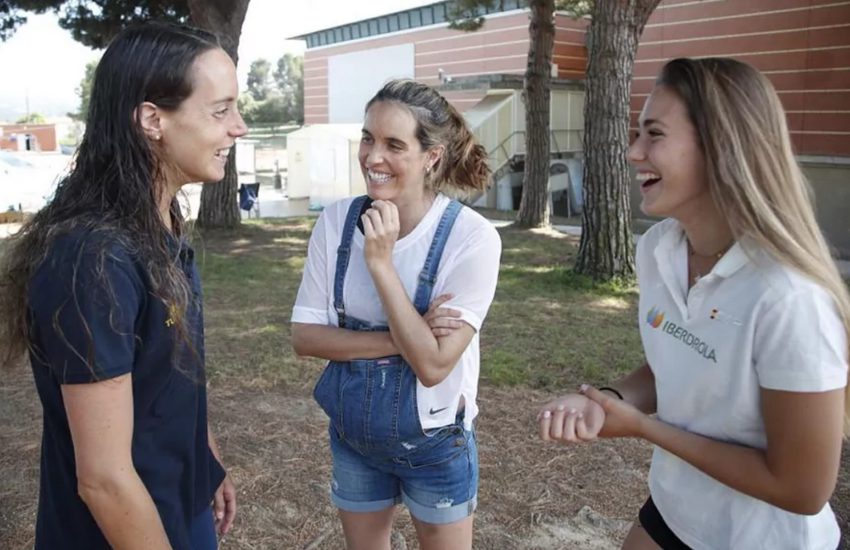
Serenity and security. Two words that define what the Financial Education Project promoted by the entities associated with CECA (CaixaBank, Kutxabank, Cajasur Banco, Abanca, Unicaja Banco, Ibercaja Banco, Caixa Ontinyent, Colonya Pollença, and Cecabank) brings to athletes. Ona Carbonell, synchronized swimmer and ambassador for CECA’s Social Work and Financial Education, Meritxell Mas, synchronized swimmer and winner of three silvers at the World Championships, and Clara Fernández, indoor under-18 pole vault champion, held a discussion and outlined ten key points regarding the importance of the course developed by the Cecabank Banking Training School.
Looking to the Future
The athletes agree that the program allows them to gain more knowledge to manage their income and consider what comes after their careers. Both Ona Carbonell and Clara Fernández have already completed the entire syllabus. “It has made me much more aware since until I was 18, my parents handled all finance matters for me, and now I feel more experienced and have my own judgment,” explains the pole vaulter.
Control Over Personal Finances
All three recognize that it provides them with tools to be more autonomous in decision-making. “It is important to have a minimum level of knowledge. It should even be a subject in school. This stability is essential for sports performance,” comments Ona Carbonell. In the same vein, Meritxell states, “It allows us to know all the options; it gives you the foundation to make informed choices,” explains the swimmer.
Decision-Making
“Knowledge is power, and financial education is crucial, whether you earn much or little. Knowing that your future is a bit more secure helps,” comments Ona Carbonell. Clara states that she now feels capable of making certain financial decisions. “I had never studied these topics and have discovered so many things that can be done,” she explains.
Quality of Life During Injuries and in the Future
Two critical moments for any athlete are significant injuries and facing the end of their career. Therefore, they emphasize that having control over their finances is vital during these two episodes. “Athletes retire very early. By the age of 30, their careers often end. Then there are injuries and many adversities that you cannot control. Having this stability and peace of mind is fundamental, and the course provides it,” acknowledges Ona. Meritxell recalls that when they did not qualify for the Rio Olympics, their scholarships were revoked, and she was forced to rely on her savings for two years. “With that prior training, I would have managed it better,” she assures.
Investment Strategies
All three highlight that the course gives them tools to manage their finances as effectively as possible and to explore the different opportunities offered by the market. Ona Carbonell notes that elite athletes used to receive no contributions at all. Meritxell, for her part, acknowledges that many times, athletes receive all their income at once, in a single payment, and they must know how to manage that amount throughout the year.
Savings Habits
“Saving is important. We do not have fixed incomes; it comes in a lump sum, depending on the season… it creates uncertainty. Having this knowledge brings peace of mind,” acknowledges Clara. Meritxell explains that scholarships vary depending on results.
Asset Management
Ona recalls that there are players from the NBA who ended up broke despite earning a lot of money during their careers. Therefore, for the swimmer, managing their income well is vital for the future.
Expense Analysis and Reduction
Meritxell mentions that it’s important to monitor your finances, how they fluctuate, where most of your spending occurs. “You don’t think about all this when you are young,” she acknowledges. At 27, she is also considering some financial moves and explains that this course, which she will begin shortly, will be useful for directing her decisions.
New Professional Stage
Ona, Meritxell, and Clara are aware that the decisions they make now will shape their future. “It’s an investment for both the present and the future,” warns Ona. Furthermore, they see financial education as an integral part of everything that encompasses an athlete, alongside physical trainers, nutritionists, coaches…
Building a Better Society
All three agree that this type of education should reach the entire society. The financial education course offered by the CECA sector is aimed at athletes, but they believe that there should be an economics class even in schools.
These cookies are essential for the website to function and cannot be disabled. They are generally set in response to actions made by you, such as setting your privacy preferences, logging in or filling in forms.
They enable enhanced functionality and personalisation, such as videos, live chat, preferred language and region.
They allow us to count visits and traffic sources in order to measure and improve the performance of our site. They help us to know which pages are the most and least popular.