



READING MATERIALS OF INTEREST
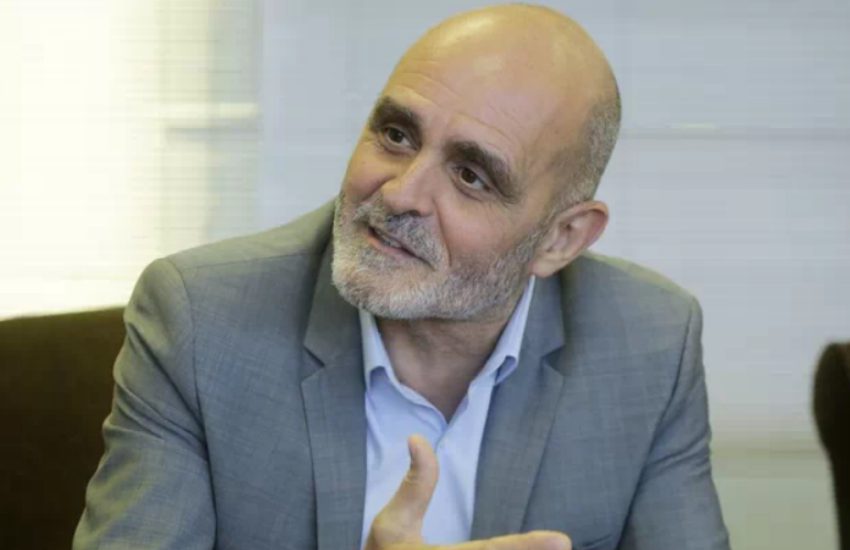
The banking sector became part of the solution to the problems generated by the pandemic. Now, they also want to contribute their part in light of the crisis opened by the war in Ukraine. Alberto Aza, spokesman for the association of savings banks and the banks created by them (CECA), assures that this sector could be key in the coming years, in which the channeling of European funds will be decisive.
What should citizens expect in the context of interest rates?
We are in a rising interest rate environment, and this will impact the cost of financial products. However, it will also have a favorable impact on savings products, making them more profitable than they were before. In aggregate terms, there may be a compensatory effect. On one hand, we will pay more for some products, but on the other, we will receive more from others. Families with mortgage loans find themselves in a scenario of great uncertainty. But if we adhere to what the markets say, the impact of rising interest rates will be manageable and bearable for families and businesses. It will be moderate.
Some wonder if this is reversible, if we will return to the era of low rates.
The main task of the ECB is to fight inflation with a target of 2%. Interest rates will evolve based on how inflation evolves. Or perhaps it should be stated the other way around. Inflation will evolve depending on the impact that monetary policy may have. Depending on how this evolves, there could be a return to a scenario of lower interest rates.
One of the factors affecting inflation is the energy component. In this circumstance, will central bank policy be effective in containing prices?
This is a crisis triggered by supply factors from tensions in international energy and raw material markets, but also by a warming of demand following the pandemic. This combination causes inflation. There are two forces that need to be observed for their evolution. Funcas forecasts suggest that we could return to moderate inflation levels in 2023, but all these forecasts must be taken with great caution, as we are in a time of great uncertainty.
With rising interest rates, will mortgage applications stop?
We have seen a significant increase in mortgage applications in recent months, anticipating these potential rate hikes. However, as long as these increases are moderate, we understand that credit activity will continue. We will have to see how it adjusts.
And how will banking be affected by all these rising rates?
We were coming from a prolonged scenario of negative interest rates. During this period, it dramatically narrowed banks’ intermediation margins, significantly conditioning their business and profitability. A rising interest rate environment could positively impact banks’ intermediation margins. However, we will never return to an interest rate scenario like the one we knew a decade ago. Therefore, while margins may recover, institutions will have to continue seeking efficiencies, which regulators have been insisting upon since 2014.
COVID has also posed a challenge for the banking sector. There have been many changes in a short period. After these two years, is the banking sector strong enough to face what comes next?
The banking sector played a key role during the pandemic, becoming part of the solution. This was possible because the banking sector entered this crisis with a financial solidity that was in stark contrast to that of previous decades. Today, banks are solvent, face no liquidity problems, have drastically improved their leverage, governance, and risk management. It is true that the pandemic has had an impact, as in any other sector. In fact, the provisions that banks made reflected an anticipation of a potentially complicated scenario. But the reality is that the sector has recovered its pre-pandemic solvency levels. It is in a strong position to tackle the challenges posed by the impacts of the Ukrainian war. The exposure of Spanish banks to Russia is very small, but it is true that as a country we will be exposed to the indirect effects that such a crisis may have.
The banking sector has been a key player in the healthcare crisis. Has it been a process of reconciliation with society after what happened in 2008?
Following the major financial crisis, the banking sector undertook a significant transformation process at all levels. From solvency, to balance sheets, governance… Today, banking is very different. It has contributed to acting as a dam during the pandemic and is now fundamental for the recovery of our country. After two years of containment, families want to recover their financial projects, release their accumulated savings, buy a house or a car, and businesses also need to grow, which requires financing. We must not lose sight of the fact that banks will play a key role with the arrival of European funds, as these public aid funds must be complemented with private financing. And the banks will be there to co-finance these investment projects and truly ensure that the desired multiplier effect of these funds amplifies the final impact on the real economy.
Periodically, we conduct an opinion poll with the polling company GAD 3 to understand how the public perceives the banking entities’ response to various issues. In the case of the pandemic, the response was very satisfactory. The population was very aware that banks were there to assist families, SMEs, and self-employed workers from the very first moment, launching containment measures such as the channeling of ICOs or mortgage moratoriums. We received an 8 out of 10, which is very good.
Is banking at risk of falling into financial exclusion with all this digitization?
The reflection should be as follows. It is clear that digitization is an opportunity for inclusion and accessibility in all services. It is also true that despite the progress it may entail, it also has a cost in terms of the digital divide, particularly affecting older people who lack the skills or technological resources. The digital divide is a widespread problem in all countries and affects many sectors. Not just financial services, but also healthcare and education… This fundamentally indicates that it is a structural problem and a national one, not a sectoral one. Therefore, it needs to be addressed with bold and effective public policies. However, despite this, the banking sector has not lagged behind on this challenge and has been the first sector to implement countermeasures to address the digital divide and its consequences. Four months ago, banks publicly released a ten-point plan to strengthen services for older people and mitigate the impact of the digital divide. They committed to further enhance financial and digital education programs so that the elderly can navigate confidently. Spain is one of the countries in the world with the highest financial inclusion rate, which is something not widely recognized. It is the second country in the EU with the most bank branches. The density of ATMs is comparable to that of Germany and significantly exceeds the European average, and we are the second most digitized banking sector in the world.
Digitization is also causing a restructuring process in banking, affecting employees…
Banking is undergoing a profound transformation process. Spain had an extreme density of branches, and digitization has made the branch network oversized. Customers prefer digital channels and in many cases no longer visit branches. Entities are in a process of adjusting their installed capacity and also reducing offices and staff. It is also true that the conditions of these restructurings are often among the most favorable in the labor market. Employees join these programs voluntarily, and the banking sector is immensely active in reallocation.
Branches are closing, but banks are responding with additional services, such as buses and universal ATMs… This is important because the problem of rural depopulation is a demographic phenomenon that is particularly intense in Spain. We must bear in mind that the digital divide is a national problem and cannot solely be blamed on banks. Especially when banks have long been implementing alternative channels to serve populations. Examples include mobile offices, financial agents that allow continued banking office access, or agreements that entities have closed with non-banking agents like Correos. This is yielding very satisfactory results. If you compare the banking sector’s coverage rate with others like healthcare, pharmacies, or education, you can see that we are above all of them. Banking entities are usually the last service providers to withdraw from rural areas. Schools, primary care centers, and supermarkets have already done so before. But beyond being the last, we have developed alternative channels.
Do you think we will continue to see mergers?
Mergers happen because they allow economies of scale and improve the efficiency of entities. Our institutions are much more efficient than those of European countries. We far exceed the EU’s average efficiency. Considering this, it would seem that no further mergers are necessary. However, if we look at the level of banking concentration, we are at an intermediate level compared to the rest of Europe. Therefore, it is not dismissible; they are particular decisions of each entity. I believe the big challenge lies in cross-border mergers, which is something the ECB has been insisting on for a long time.
One of the significant challenges facing the sector is fintechs.
We have always said the same thing. Fintechs offer something that is not only positive but necessary: they foster competition in the sector. In fact, an application like Bizum was developed in response to digital payment solutions and is now a reference in Europe. Bizum is a pioneering initiative of Spanish banking developed collaboratively. However, what we find unacceptable is that these new competitors, which are encroaching on market share from financial entities, are not subjected to the same strict regulations that the large banking sector is. Additionally, we must consider that this entire regulation ultimately aims to protect the customer.
One of the news stories shaping the economic landscape these weeks is the cryptocurrency crash; what should be done with these assets?
Like any asset intended for investment, they need to be supervised and regulated. It is a concerning issue because they are very speculative assets, and we are particularly worried about how young people are reacting. We insist on the necessity of providing the population with financial education. It is an essential antidote against poor investment practices and the allure of cryptocurrency temptations. It is crucial to delve into this as digitization progresses, especially among the younger population, who are comfortably navigating technological environments and have become digital financial investors without the necessary knowledge. This makes them easy prey, lured by gurus, and in some cases, the consequences have been disastrous.
These cookies are essential for the website to function and cannot be disabled. They are generally set in response to actions made by you, such as setting your privacy preferences, logging in or filling in forms.
They enable enhanced functionality and personalisation, such as videos, live chat, preferred language and region.
They allow us to count visits and traffic sources in order to measure and improve the performance of our site. They help us to know which pages are the most and least popular.