



READING MATERIALS OF INTEREST
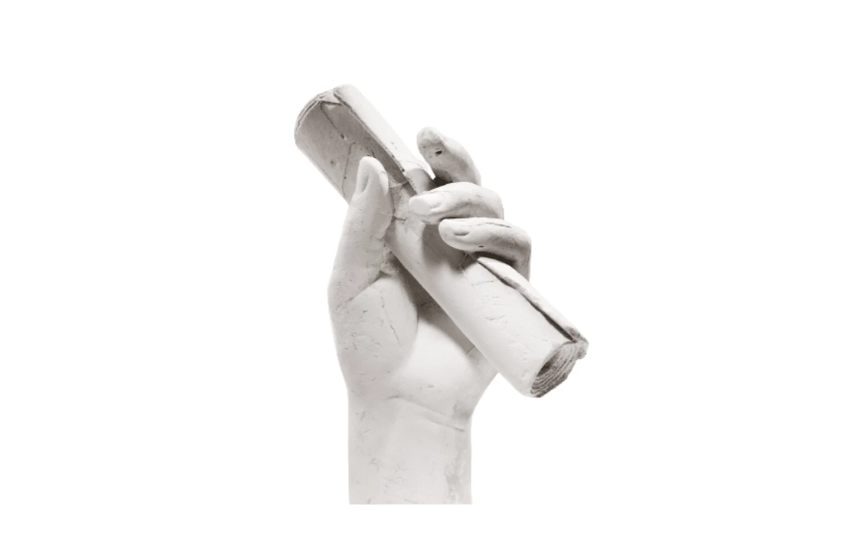
The development of tolerance and the promotion of critical thinking are just some of the most notable properties of culture and art.
In a globalized and interconnected society, today’s youth face a life path that is richer in experiences and opportunities but also more complex and overwhelming. Being young can be stimulating, but it can also be alienating in the face of the dizzying advances in technology, which have become the center of gravity around which their lived experience revolves. An experience that algorithms condition, measure, and monetize relentlessly and without scruples. In the face of this new paradigm, digital narratives adapt to the urgent need for platforms to capture and retain the attention of young people. Content thus submits to the tyranny of the superficial, the frivolous, the insubstantial, and the concise, even to the false, while likes and a large array of emojis exalt and collectively legitimize it. In this context, it is more urgent than ever to reclaim culture as an essential tool for empowering youth and as an antidote against digital manipulation.
Etymologically, the Latin word “culture” refers to “the care of the land” or “agriculture,” but over time it has taken on a metaphorical meaning to describe “the care or cultivation of the mind and spirit.” However, today, there are many manifestations that fall under the umbrella of an excessively lax conception of culture, often eliciting contradictory viewpoints. For some, football can be considered a cultural phenomenon in its own right, and a play by Messi could well be equated to the supreme category of artwork. For others, however, football is nothing more than a mass sport that, while it stirs passions, does not elevate the spirit to those levels of sublimation that only true art is capable of achieving.
In this article, however, we will refer to culture as the intellectual practice and development of individuals through humanistic disciplines; that is, those focused on understanding human experience, its history, its thought, its social dimension, its language, or its creative expression.
Clearly, culture contributes in various ways to the growth and development of young people. Firstly, culture fosters the critical spirit of youth in that stage of life where youth and inexperience make them more susceptible to certain influences. Culture brings young people closer to different ways of thinking, challenging them to question their own beliefs, values, and rules to form their own criteria. As the philosopher Francis Bacon explains, “the critical spirit is having the desire to seek, the patience to doubt, the inclination to meditate, the slowness to affirm, the willingness to consider, the care to arrange, and the aversion to all kinds of imposture.” All these virtues are undoubtedly developed and promoted by the humanistic essence of culture.
On the other hand, culture is also a vehicle for developing tolerance and dialogue among young people, because culture does not proclaim absolute truths. Quite the opposite, it shuns dogmatism in favor of an unrelenting search for truth. And as the recently deceased Italian thinker Nuccio Ordine acknowledges, “only those who love the truth can seek it continuously, because those who are certain of possessing it no longer need to search for it, no longer feel the need to engage in dialogue, to listen to the other, to confront authentically with the variety of the multiple.” From this perspective, culture is key in fostering an empathetic youth, capable of recognizing and valuing the diversity of human experience. Projects like the West-Eastern Divan Orchestra, created by musician Daniel Barenboim and philosopher Edward Said, which brings together young musical talents from Palestine, Arab countries, and Israel under the universal language of music, are prominent examples of how culture can unite traditionally rival peoples and promote tolerance as the foundation of peace.
Culture also allows young people to enrich their understanding of the world, as it provides them with a wide variety of knowledge and perspectives that they could hardly obtain otherwise. Literature, history, anthropology, sculpture, or painting, among other disciplines, enable youth to broaden their horizons and develop a more comprehensive view of the world in which they live. It would be difficult for today’s teenagers to understand the threats of political radicalization without knowing how the totalitarian regimes of Nazi Germany and Stalinist Russia were formed and developed.
Finally, culture is also a vehicle for fighting against social exclusion among the most marginalized youth. Facts show that when young people from less privileged communities are exposed to the arts in school or during extracurricular activities, the gap with their peers of higher socioeconomic status in terms of academic achievements and social adaptability narrows in the short and medium term. This can be significantly explained by the skills that young people develop through artistic experimentation, transversal thinking, creativity, reflective introspection, or communication.
In light of all the above, it must be clear that promoting culture among young people is a priority that cannot be wavering but, on the contrary, requires the firm support of public authorities, the private sector, and civil society. In this regard, facilitating access to culture under equal conditions has always been one of the historic commitments of the Social Work developed for nearly two centuries by the entities affiliated with CECA: our associates have invested over 1.3 billion euros since 2014. In conclusion, in a world where technology and globalization profoundly influence the youth experience, culture emerges as an essential tool to empower and protect young people against digital indoctrination. By promoting critical thinking, tolerance, and understanding of the world through culture, the Social Work of the entities of CECA undertakes the commitment to build a more inclusive and enriching society for new generations. It is our collective responsibility, as institutions and society, to ensure that culture is accessible and enriching for all young people, allowing them to flourish as citizens of the world with a critical, empathetic vision committed to social progress.
These cookies are essential for the website to function and cannot be disabled. They are generally set in response to actions made by you, such as setting your privacy preferences, logging in or filling in forms.
They enable enhanced functionality and personalisation, such as videos, live chat, preferred language and region.
They allow us to count visits and traffic sources in order to measure and improve the performance of our site. They help us to know which pages are the most and least popular.