



READING MATERIALS OF INTEREST
Spanish SMEs have been essential thus far in the development of sustainability in Spain. However, they warn that the obligations linked to environmental, social, and governance (ESG) factors are becoming a significant challenge. Specifically, 75% of the companies surveyed for a study consider it a priority to make efforts in ESG matters, and more than 80% identify barriers to their integration, primarily due to high costs and the size of the company.
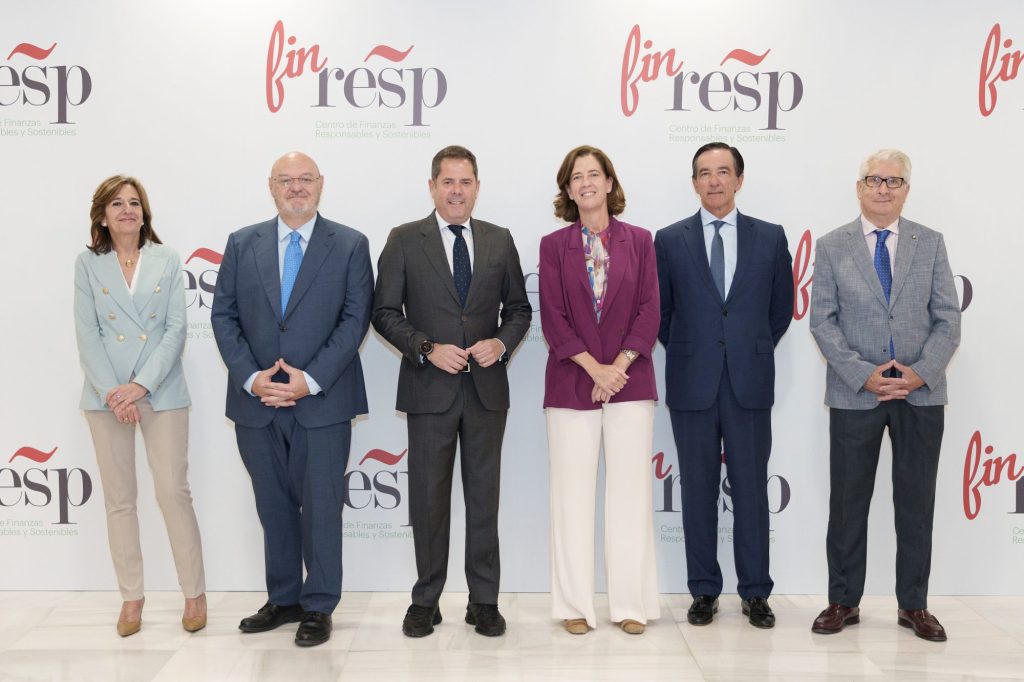
This is one of the main conclusions of the report on SMEs and sustainability in 2024, prepared by FINRESP (Center for Sustainable and Responsible Finance of Spain) and its promoting associations (AEB, CECA, INVERCO, Unacc, and UNESPA), along with CEPYME (Spanish Confederation of Small and Medium Enterprises), within the framework of the FINRESP SME Sustainability Observatory. The results were presented today in a face-to-face event that also included experts from the financial sector and the SME environment to analyze the current situation of these organizations regarding sustainability.
The Degree of Integration of Sustainability in SMEs, the Focus of the Event
José María Méndez, President of FINRESP, delivered the opening speech of the event, emphasizing that “from FINRESP, we focus our efforts on generating a knowledge exchange that promotes the need to transition towards a more sustainable productive fabric. In this context, SMEs play a crucial role as a key actor in the Spanish economy. With this objective, today we advance in this work by presenting the Sustainability Observatory for SMEs and sharing the results of the report on the situation of this business segment in this matter.”
Gerardo Cuerva, President of CEPYME, closed the event, highlighting that: “the Spanish SME has been a driver of progress in sustainability in Spain, even if it does so without realizing it. However, right now, sustainability has become an overregulation and an excess of burdens that represent a significant cost for the small ones.”
The presentation of the report conclusions was carried out by Jerusalem Hernández, Partner of Sustainability and Good Governance at KPMG Spain and head of technical secretariat of FINRESP. Jerusalem highlighted the participation of more than 200 entities, which indicated the benefits that sustainability will bring, where: “three out of four surveyed companies find it beneficial to make efforts in ESG matters, especially due to reputation improvement. In this sense, she pointed out the work being done beyond the implementation of environmental measures: “42% of SMEs are already implementing initiatives in the social area, highlighting focused activations in work-life balance or to enhance the climate in the organizational environment, among others.”
There was also a dialogue about the main benefits and barriers in implementing sustainability in the business of SMEs, as well as the necessary resources to face them. They also analyzed various sustainability strategies in SMEs and within the value chain.
The panel was moderated by Francisco Vidal, Director of Economics and Sector Policies of CEPYME, who delved into how companies have advanced in sustainability and their challenges to adapt it to the reality of SMEs. Also participating were Arturo Revenga, CEO of Revenga, who highlighted that: “sustainability is a key tool that helps us become more competitive, which is why we have tried to integrate technologies to achieve low emissions and be at the forefront; Patricia Vázquez, Communication Director of RIC Energy, who stated that: “for years, we saw that it is not just about having a sustainable activity, like renewables. In our case, we have taken more steps to integrate environmental and social activities with the local communities where we operate, as the rural world carries significant weight for us; and Nuria Herrero, HR Director of Divisegur, who analyzed challenges such as “the difficulty in finding prepared human resources or in regulatory matters. Our goal is to be a socially responsible company in our day-to-day operations, as we are aware of everything we can contribute.”
Main Impressions and Challenges of Small and Medium Enterprises
The report provides key data that explain the current situation of small and medium enterprises concerning sustainability, offering a clear view of the current state of this type of entity, which represents 99% of the Spanish productive fabric.
In this context, the study highlights that 71% of SMEs have implemented sustainability measures in the last three years. The vast majority of these companies (60%) have implemented environmental measures, which include improvements in areas such as waste management and energy efficiency. In contrast, only 25% of organizations have executed measures for improving corporate governance during that period.
On the other hand, the report highlights the sector’s challenges for the coming years regarding sustainability. Thus, almost half (48%) of SMEs do not know or know little about the existence of financial and insurance products with sustainability criteria. Among those who do have knowledge, only one in four companies has accessed sustainable financial and/or insurance products.
Regarding resources for the integration of sustainability for this segment of companies, the fundamental role of public-private collaboration is highlighted in supporting SMEs in their transition to more sustainable practices through resources, training, and adequate funding in the coming years. Regarding regulation, 86% of companies say they are affected by sustainability regulations, with 35% feeling very affected.
A trend expected to continue in the future, with the implementation of new regulations already approved. One example is the new Corporate Sustainability Reporting Directive (CSRD), which came into effect in early 2023 and will extend its scope to listed SMEs starting in 2026. In addition, they will not only have to face regulatory requirements but also the processes of evaluation and approval of suppliers by large companies, which increasingly integrate more information and performance criteria regarding sustainability.
These cookies are essential for the website to function and cannot be disabled. They are generally set in response to actions made by you, such as setting your privacy preferences, logging in or filling in forms.
They enable enhanced functionality and personalisation, such as videos, live chat, preferred language and region.
They allow us to count visits and traffic sources in order to measure and improve the performance of our site. They help us to know which pages are the most and least popular.